

CNI News
3 July 2026
Military and political analysts are sharing their assessments on whether non-Bamar ethnic minorities are demanding autonomy for their regions as a matter of dignity.
Demanding autonomy does involve a sense of dignity, and it can be viewed as an opportunity to gain more rights rather than having no recognition at all, Colonel Khun Okkar, Chairman of the Pa-O National Liberation Organization (PNLO-NCA/S), a signatory to the Nationwide Ceasefire Agreement (NCA), told CNI News.
"Demanding autonomy is partly about dignity. Moreover, it provides at least some opportunities to shape our own destiny. For example, in the three townships that have achieved Pa-O self-determination and autonomy, we have been able to carry out development and public welfare projects. It is considered that we get more opportunities compared to having no designated status at all," he said.
Most ethnic groups demand self-administered zones with the primary goal of developing their regions and uplifting the local ethnic populations, U Li Paw Reh, Chairman of the Lisu National Development Party (Dulei Party), told CNI News.
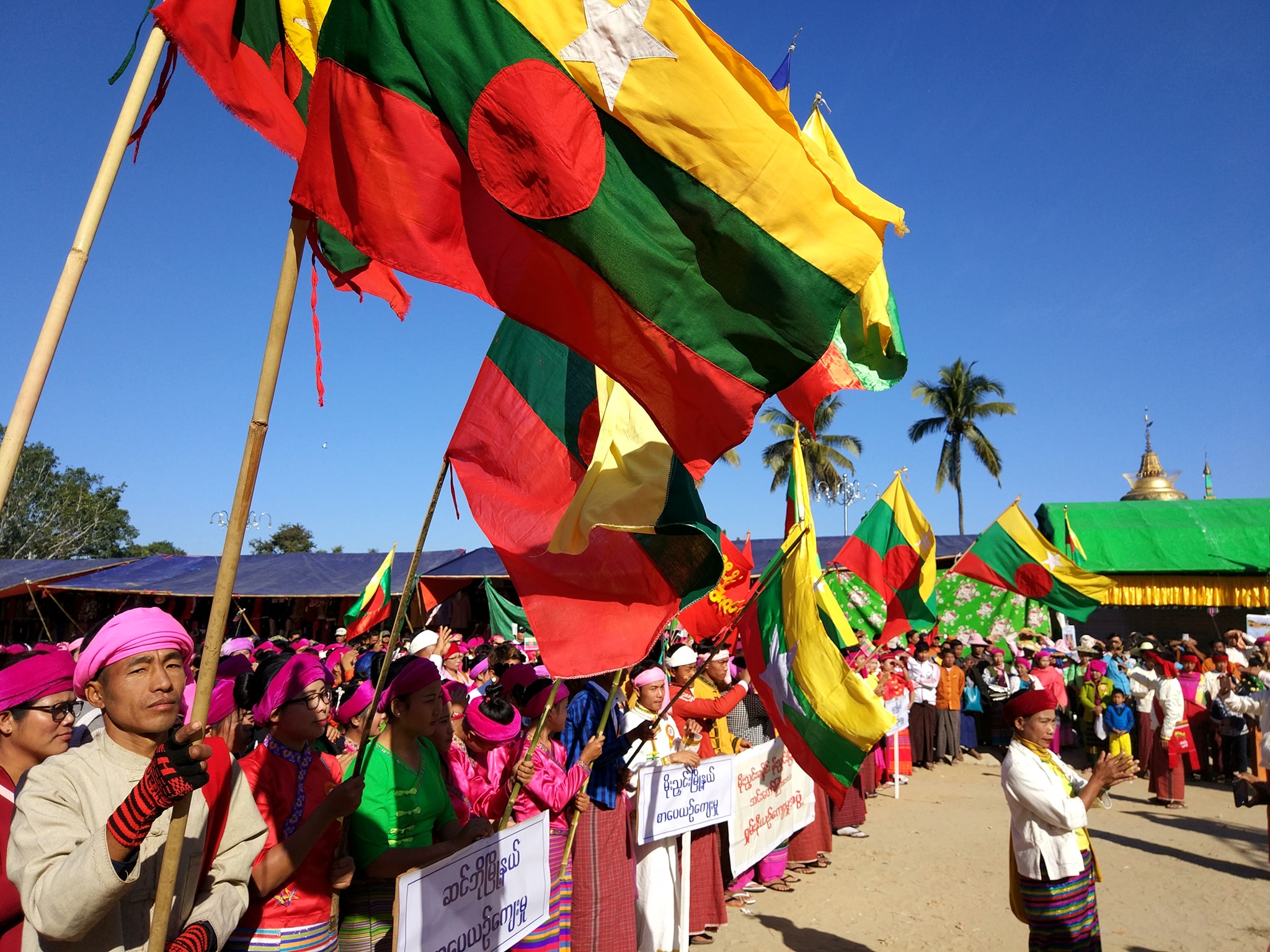
Shanni ethnic people demanding statehood
"Mainly, most of the regions demanding autonomy are those that are significantly lagging behind in development, underprivileged, and slow in social welfare progress. Therefore, I believe they are demanding it primarily for regional development and the advancement of the ethnic people living there. Ethnic people wish for the heads of state leading the nation to appoint ethnic personnel and grant them promotions in ethnic regions. However, at present, the authority to do this remains solely within the Bamar ethnic group. So, if the Bamar side could accommodate this, we would be overjoyed beyond words," he said.
Ethnic people do not want to downgrade the political status they have already achieved and want to manage their respective territories, which is why they are demanding self-administered zones, political analyst Dr. Aung Myo told CNI News. However, he noted that he cannot accept some autonomous regions handing out capital punishment (death penalties) based on their own rules.
"You can say that demanding autonomy is for dignity. But rather than talking about dignity or anything else, it is what they genuinely want. Who would want to downgrade their current status? For the most part, they want to manage their own territories. Mainland politicians can also accept this concept. We accept the right to self-management. However, one issue is that for matters like executing the death penalty, doing so according to their own will without seeking approval from the Union, and without respecting the Supreme Court of the Union or the President's right to pardon, is unacceptable. So, even though it is autonomy, there must be boundaries. It depends on how much autonomy is granted. We accept granting it up to a certain extent. I believe most of our politicians would accept this," Dr. Aung Myo said.

Ethnic youths
Under the 2008 Constitution, Myanmar has designated one self-administered division and five self-administered zones.
Furthermore, under the current political landscape, ethnic armed organizations are increasingly demanding self-administered regions. Ethnic groups such as the Shanni, Lahu, Lisu, and Akha are making demands through dialogue sessions to be designated as self-administered zones or states.
On March 10, 2026, President U Min Aung Hlaing, before stepping down as the Commander-in-Chief of the Defense Services, stated that the demands of ethnic armed groups, matters regarding constitutional amendment, and agreements and discussions necessary for the regions and the country would be brought back to parliament for further deliberation.
Military and political analysts point out that a "self-administered zone" and the "demand for autonomy" should not be conflated in Myanmar. This is because despite having designated self-administered zones, they still operate under centralized control, which prompts non-Bamar ethnic groups to demand actual governing authority under the name of autonomy.