
CNI News
1 July 2026
Colonel Saw Kyaw Nyunt, spokesperson for the 7 EAO Alliance, told CNI News that divergent views have emerged between the two sides regarding preconditions when implementing peace processes.
On June 26, 2026, President U Min Aung Hlaing stated that if Ethnic Armed Organizations (EAOs) genuinely desire peace, they should come forward to talk, adding that he would engage in discussions without any preconditions.
Political analysts point out that peace talks should avoid preconditions and instead focus on discussions aimed at genuine political change. They noted that while the concept of a federal system is allegedly accepted, the practical implementation remains confined within the framework of the 2008 Constitution, which lacks true federal characteristics.
Colonel Saw Kyaw Nyunt, spokesperson for the 7 EAO Alliance, told CNI News that the government and ethnic armed groups hold differing perspectives on what actually constitutes a "precondition" in political dialogues.
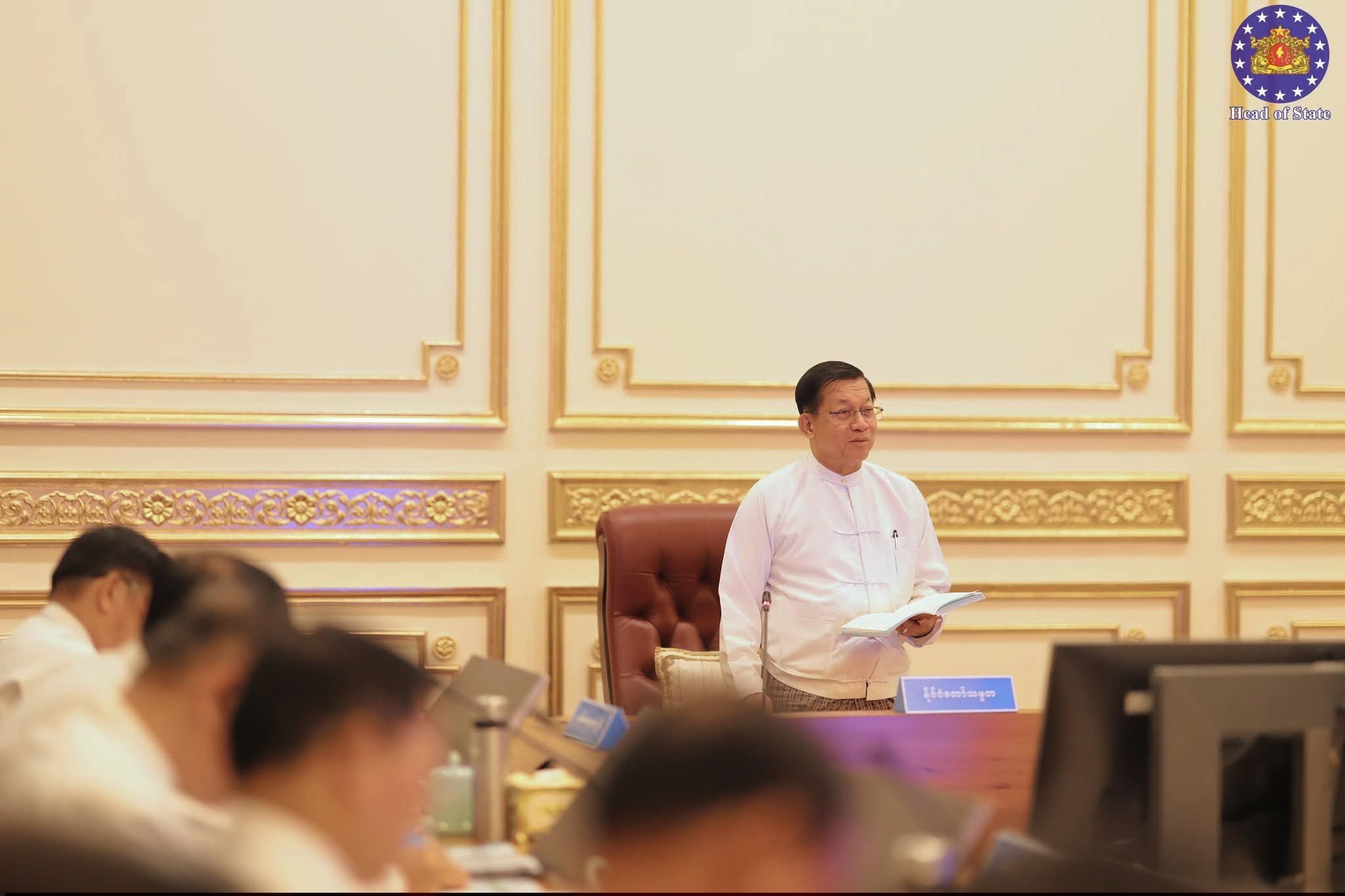
President U Min Aung Hlaing seen during an event.
He said, "Even though one side says no preconditions are being set, the other side views the situation differently. For instance, if talks must be conducted under the 2008 Constitution, the other side sees that as a precondition. Similarly, this side might view territorial restrictions or similar limitations as preconditions as well. Regardless, whether something is a precondition or not can only be resolved when we talk and establish a mutual understanding. Under the current circumstances, we simply do not see eye-to-eye on what is or isn't a precondition."
Military and political analysts also highlighted that while ethnic armed groups have issued statements favoring political solutions over military means, concrete and definitive dialogues have yet to materialize.
Saw Khun Kyaw Win, spokesperson for the Pa-O National Organization (PNO), told CNI News that it will not be practical if the government demands that peace dialogues proceed strictly within the framework of the 2008 Constitution.
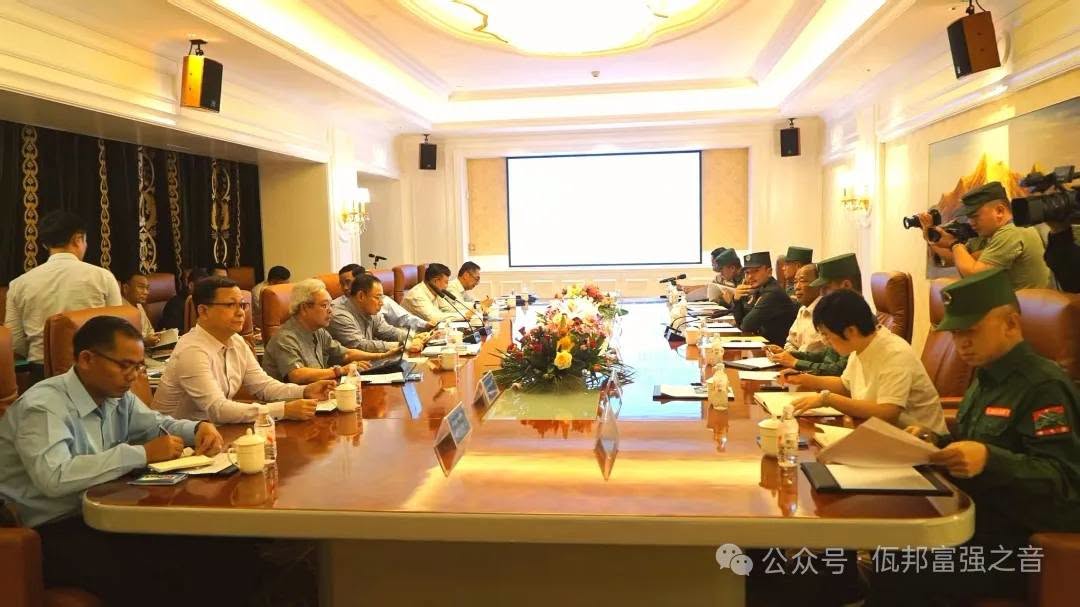
A dialogue session between the NSPNC and the UWSA.
He said, "The main thing is that if preconditions are set, some organizations will feel that it won't lead to the outcome they want. Thinking that attending won't make a difference, they might choose not to come. Only when there are no preconditions will parties feel closer during talks, whether an answer is immediately found or not. Therefore, the absence of preconditions makes it smoother for organizations to negotiate with one another. From our perspective, EAOs need to understand that the government currently runs the state machinery based on the 2008 Constitution. While insisting on moving forward strictly within the 2008 framework might not go smoothly, everyone needs to acknowledge that the state machinery is currently operating under it. On the other hand, when the government holds talks with ethnic groups, it must listen to and accept the desires of the armed organizations. Concessions must be made where possible. If everything that benefits the country and its future is discussed and negotiated in the peace process until an agreement is reached, the ethnic groups can adjust with the government and secure a viable agreement."
Political analysts suggest that ethnic armed organizations still hold a very low level of trust in the current government's peace process, and it can be inferred that definitive incentives have not yet been offered to bring them onto the path of peace.
Military and political analysts pointed out that only when there are no prior rules or conditions can both sides make open demands during negotiations. They added that if any baseline requirement is to be set, it should focus on adhering to the Nationwide Ceasefire Agreement (NCA) rather than demanding the acceptance of the 2008 Constitution.