
CNI News
30 June 2026
Economic and political analysts have pointed out that efforts to achieve peace in Myanmar should be pursued simultaneously with economic development.
In his New Year’s greeting, Myanmar President U Min Aung Hlaing stated that efforts would be made to achieve economic development—a key necessity for the country—alongside building peace.
Political analyst U Htet Aung Kyaw told CNI News that along with working toward peace in contemporary Myanmar, efforts must also be made to ensure the livelihoods of the general public are stable and prosperous.
He said, “The most critical point is that peaceful regions—both the mainland and the states—need to develop. Peaceful areas must achieve exponentially greater progress compared to non-peaceful ones, and implementation plans must be launched to ensure this growth. While working for peace is one part of the equation, working toward economic development is another. If people in non-peaceful regions look at peaceful areas and see immense development, it creates an incentive: ‘If we achieve peace, we will develop like this too.’ Right now, there is no such incentive. In our country, the conflict-based economy is thriving, making it seemingly easier to make money. It’s upside down right now; over there, there is no rule of law, and people can extract gems and oil however they please. It appears easier to earn money that way. If this illegal, conflict-based economy thrives while the legitimate, formal economy struggles, how can you offer an incentive? The illegal side will only grow stronger. To flip this dynamic, we must pursue peace while simultaneously ensuring that the livelihoods of the public in peaceful regions are highly stable and prosperous.”
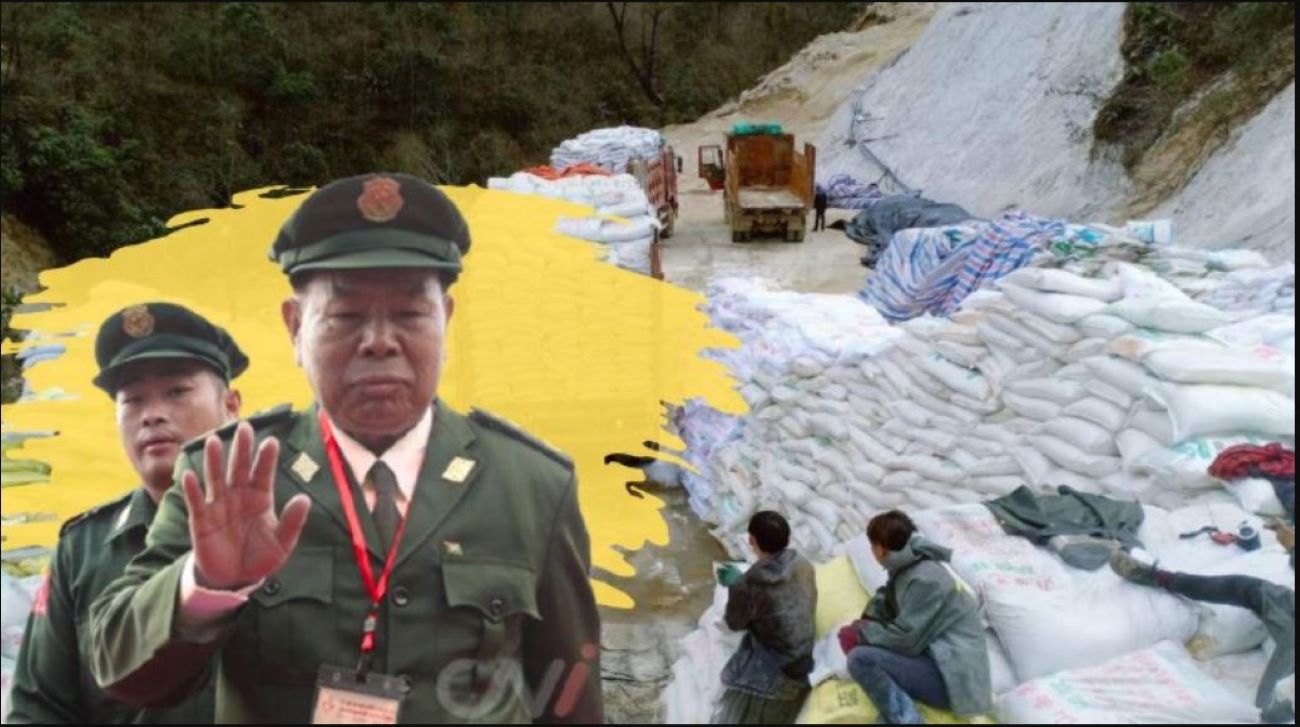
KIA extracting rare earth elements.
Peace is an indispensable foundation for economic development, analysts noted, adding that internal and foreign investments will only flow in when the country stabilizes. This stability would also allow local businesses to operate freely, particularly in commercial hubs like Yangon.
Economic analyst U Htay Aung Kyi told CNI News that politics and the economy are intertwined in a nation, and administrative bodies cannot look at economic matters through a purely administrative lens.
He said, “The economy is severely impacted. Without peace, military expenditures rise. When military spending spikes in developing countries, it creates significant issues. Therefore, I agree with the idea of moving forward by combining peace and the economy. Sometimes, we must systematically consider what to prioritize. However, generating growth and prosperity cannot be done everywhere. It must be done in areas that have the necessary foundations—for instance, transportation, communications, water, electricity, and a literate workforce, among many other factors. Politics and the economy are actually intertwined. Crucially, the departments, people, and administrators handling the economy must change their perspective; they cannot look at things from a purely administrative standpoint. In my view, that mindset desperately needs to change.”
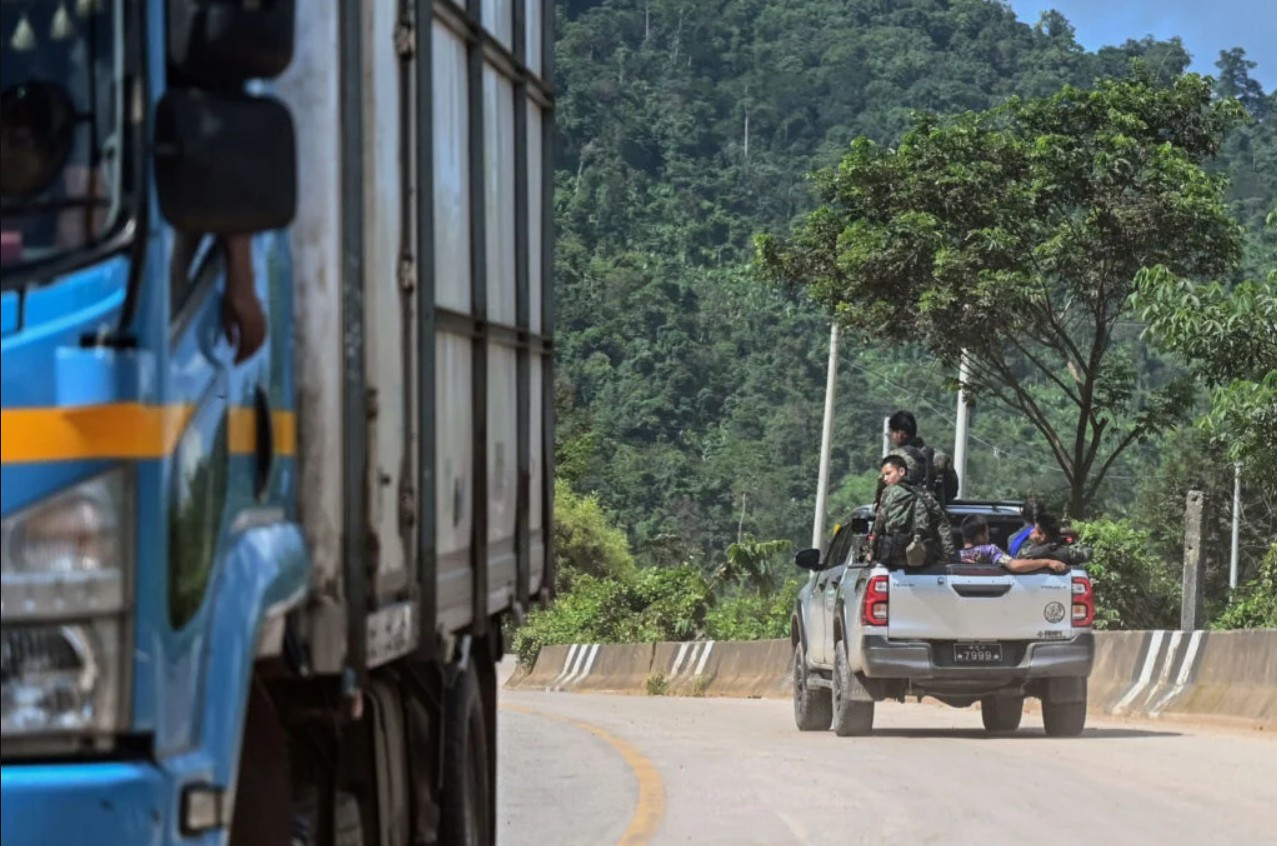
Armed individuals seen on a trade route.
Economic analysts pointed out that ending armed conflicts and uplifting the country’s socio-economic conditions are interdependent, and sustainable peace can only be built in the long term if the economy develops.
They also highlighted that abundant job opportunities are required to secure the daily livelihoods of the public. Priority should be given to implementing small and medium enterprises (SMEs) and manufacturing industries rooted in local agriculture and livestock farming.