
CNI News
30 June 2026
Regardless of the policies held by the current transitional government of Myanmar, it must prove itself in practice to gain the trust of ethnic groups, political analyst Dr. Aung Myo told CNI News.
He emphasized that only when such trust is established can the country achieve the positive outcomes it deserves.
Dr. Aung Myo said, "In terms of policy, the current administration has already accepted [the principles]. This is evident in the President’s speeches, where commitments have been made to amend the constitution and grant more authority. So, the policy framework is agreed upon. What is needed now is to show the ethnic groups practical implementation. Currently, they say these points will be submitted to parliament. However, just submitting them to parliament is not enough. I believe they should take actions that demonstrate practical implementation so that ethnic groups can actually see it. For instance, regarding the appointment of Chief Ministers for Regions and States, they mentioned it would be submitted to parliament. Putting that submission aside—if the Union government had extended an invitation saying, 'Tell us who your parliament wants to appoint as Chief Minister,' it wouldn't even need to go through parliament. It would immediately show that the Union is complying with the wishes of the states and regions. That is the kind of approach that should have been taken. But that option is no longer available since the appointments have already been made. My main point is that no matter what the policy is, we must practically demonstrate it to win the trust of the ethnic groups. That is how we will get everyone to the negotiation table. Once their trust is gained, the country will achieve the outcomes it should, and everything will improve."
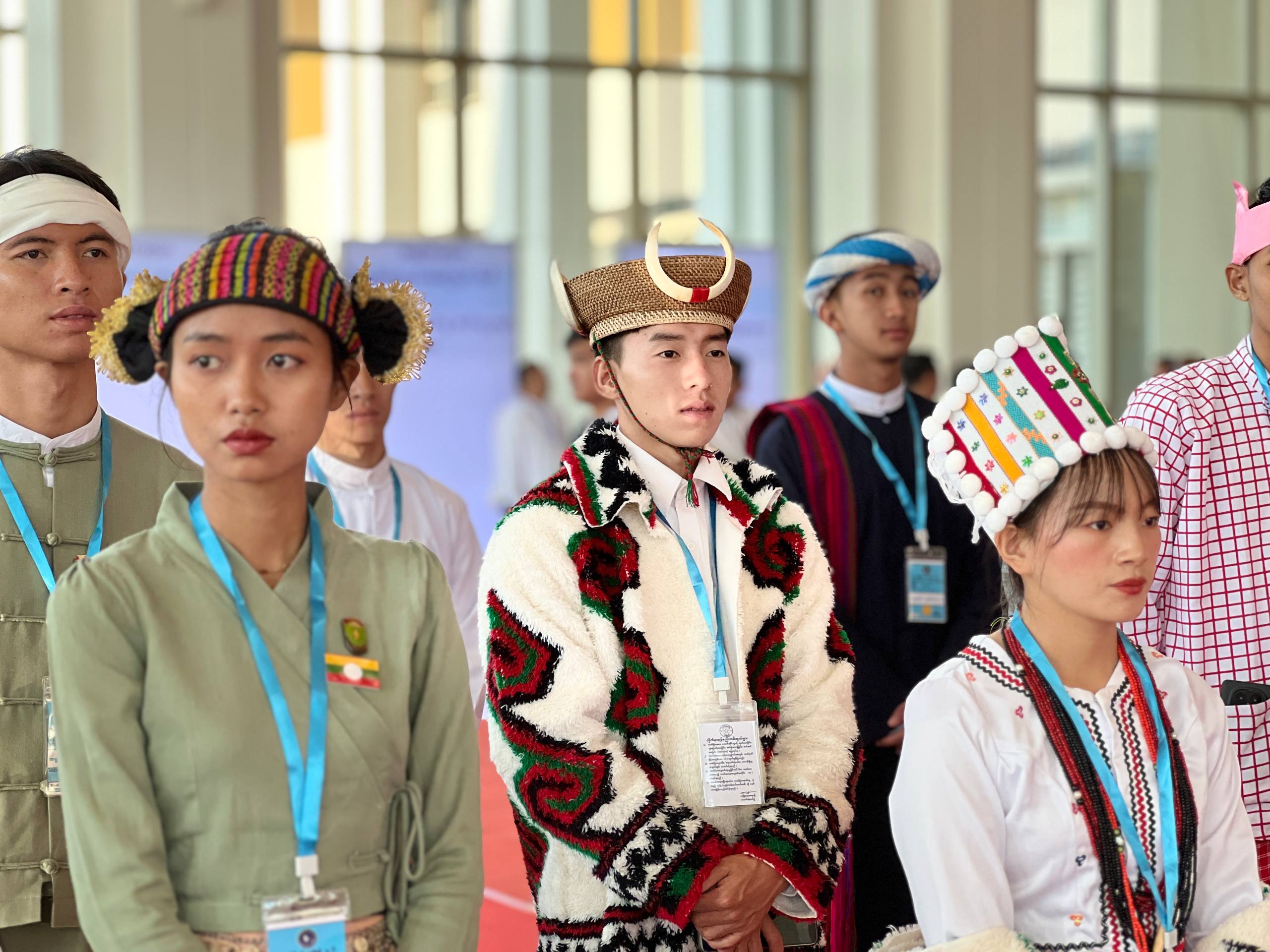
Ethnic youth seen together.
Military and political analysts point out that throughout successive eras, the perceptions and attitudes of ethnic minority groups toward Myanmar's central governments have been built upon feelings of broken promises, discrimination, and the loss of self-determination.
Under the 1947 Panglong Agreement, ethnic groups cooperated with Bamar (Burman) leaders because they believed they would achieve equality and self-determination.
However, analysts highlight that after gaining independence, trust in the government began to fracture due to the failure to fully incorporate the Panglong commitments into the constitution, the emergence of Bamar-centric chauvinism, and the civil war that erupted as early as 1948.
Furthermore, analysts note that after General Ne Win came to power, the federal principles demanded by ethnic groups were suppressed under the accusation that they would lead to the disintegration of the Union. Due to the military's "Four Cuts" strategy, severe human rights violations occurred in ethnic areas. As a result, ethnic groups firmly perceived the central government and the Myanmar military as invading enemies who came to oppress them.
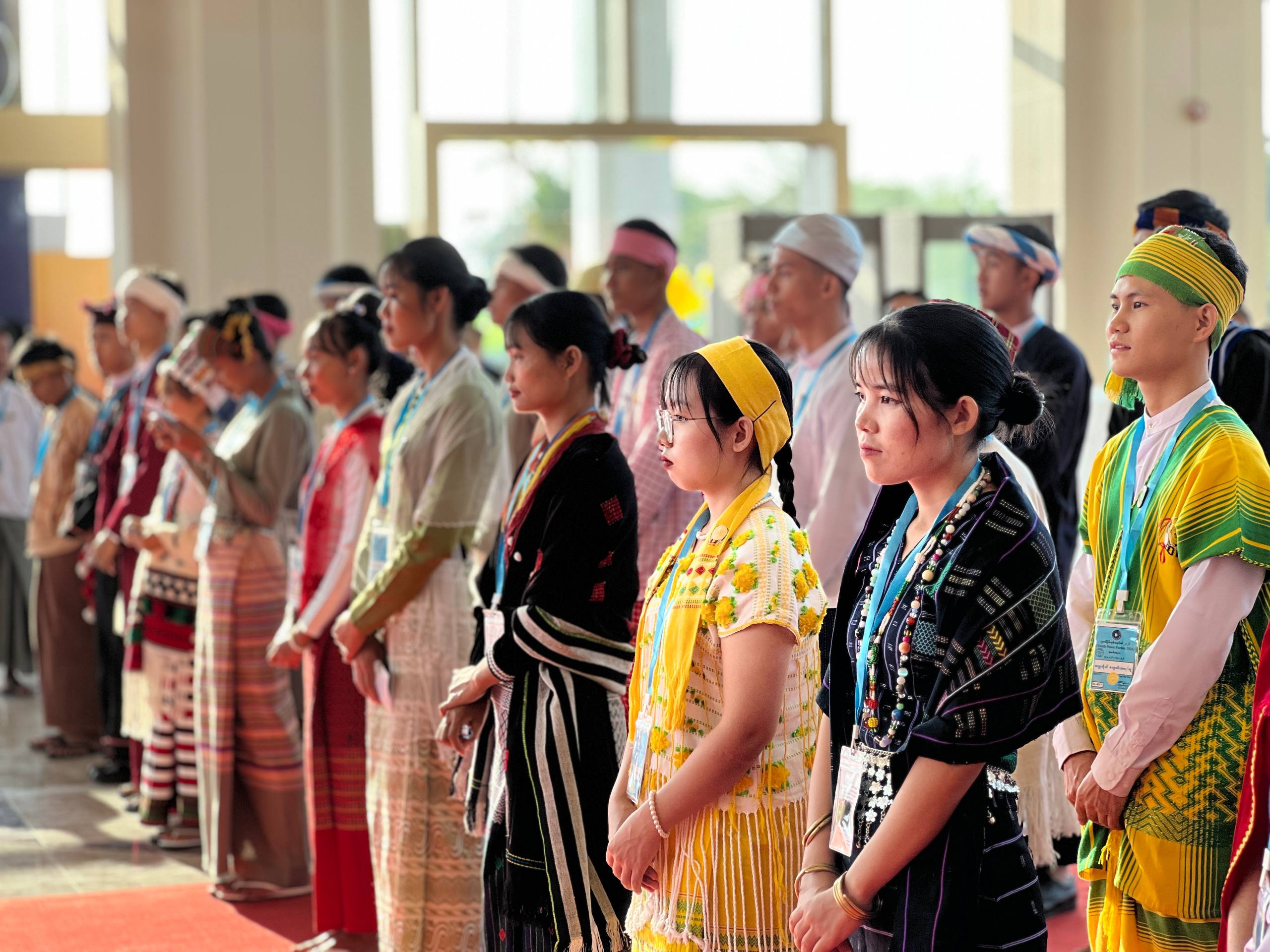
Ethnic youth seen together.
If the government wants to build trust among ethnic groups, focusing on the local indigenous populace is more vital than focusing solely on the ethnic armed organizations, U Li Paw Yeh, Chairman of the Lisu National Development Party (Dulei Party), told CNI News.
He said, "To gain the trust of ethnic groups, it's not that the armed organizations are completely unimportant—they are important. However, the key lies with the local indigenous populations. For example, if there are 100 local indigenous residents, less than 10 of them are in the armed organizations, speaking in terms of percentage. Therefore, the Union government needs to act in a way that satisfies these local indigenous peoples, building their trust and reliance on the government."
Following the events of 2021, trust among ethnic groups fractured even further, leading them to join forces with revolutionary groups to practically establish autonomous states and allied territories.
Some ethnic armed organizations have gone so far as to demand goals such as confederation or complete independence.