
CNI News
24 June 2026
Military and political analysts are raising questions over how the government will manage and what kind of rights it will grant to Ethnic Armed Organizations (EAOs) that are striving for autonomy by using the United Wa State Army (UWSA)—the strongest EAO with full self-determination and self-administration—as their benchmark.
Under Myanmar’s 2008 Constitution, a total of six areas were designated: one Self-Administered Division and five Self-Administered Zones. The "Wa" region holds the official status of a Self-Administered Division.
Because the UWSA exercises full self-determination and total self-administration over all Wa territories—often described as a miniature state within Myanmar—other EAOs desire a similar political status. The Arakha Army (AA), which controls 14 out of 17 townships in Rakhine State as well as Paletwa Township in Chin State, has officially declared its intention to secure a political status no less than the "Wa" model, or to move toward a confederation status.
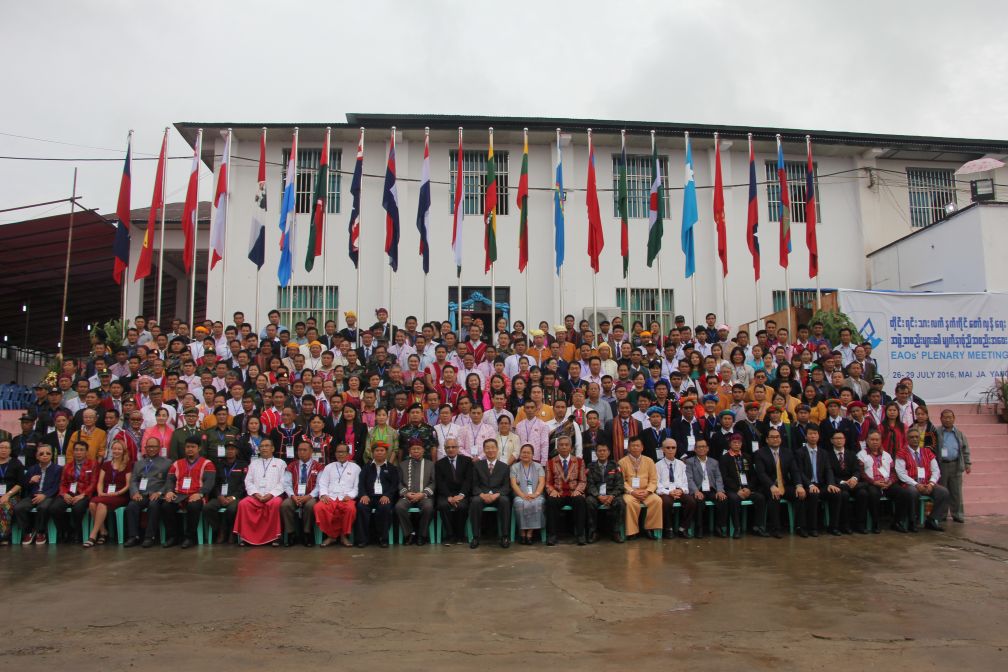
Ethnic armed leaders
Sai Htay Aung, Chairman of the Tai-Lai (Shanni) Nationalities Development Party, told CNI News that if ethnic armed groups emulate the "Wa" model and the authority of the Union fails to apply to them, it could pose a severe threat to the Union in the future.
"Right now, the 'Wa' have achieved a confederation status that goes beyond federalism. They handle their own local defense and manage their own judiciary. Because the Wa manage everything independently, other ethnic groups look up to them. This is not a good sign for the Union. If other ethnic groups and armed organizations follow the same path and the Union's authority ceases to have effect, it could pose a major danger to the Union in the future. The reason ethnic groups admire them is because the Wa enjoy total independence in their governance. However, the Union must maintain a balance. To prevent other regions from turning into a 'Wa' model while steering the country toward a federal system, we must play a game of give-and-take based on what the Wa want, ensuring that the Union's authority still reaches the Wa region. It is not surprising that other ethnic groups admire them, given how the Wa region has developed through self-management. However, I view this as a potential danger to the Union," he said.
Sai Htay Aung added that since parliament has now emerged in Myanmar, the situation should be navigated by negotiating what the Wa desire versus what the government can feasibly grant.
"What the Wa want can be debated in the newly formed parliament. Following those debates, if we can work out how much the state can concede and to what extent the Constitution can be amended, I believe the Wa region will become a state integrated within Myanmar's borders. Consequently, other ethnic groups' fascination with emulating the Wa model will diminish," he said.
Military and political observers point out that granting self-administration to the "Wa" was viable due to specific factors: its location on the Chinese border, its financial power, manpower, weaponry, and its capacity to securely control the region. They note that other states and regions lack such a tightly knit and compact organizational structure.
Dr. Hla Kyaw Zaw, a China-Myanmar affairs analyst, told CNI News that since groups like the Wa, Mong La (NDAA), and MNDAA have secured their respective territories in Myanmar, other organizations are now striving to achieve the same.
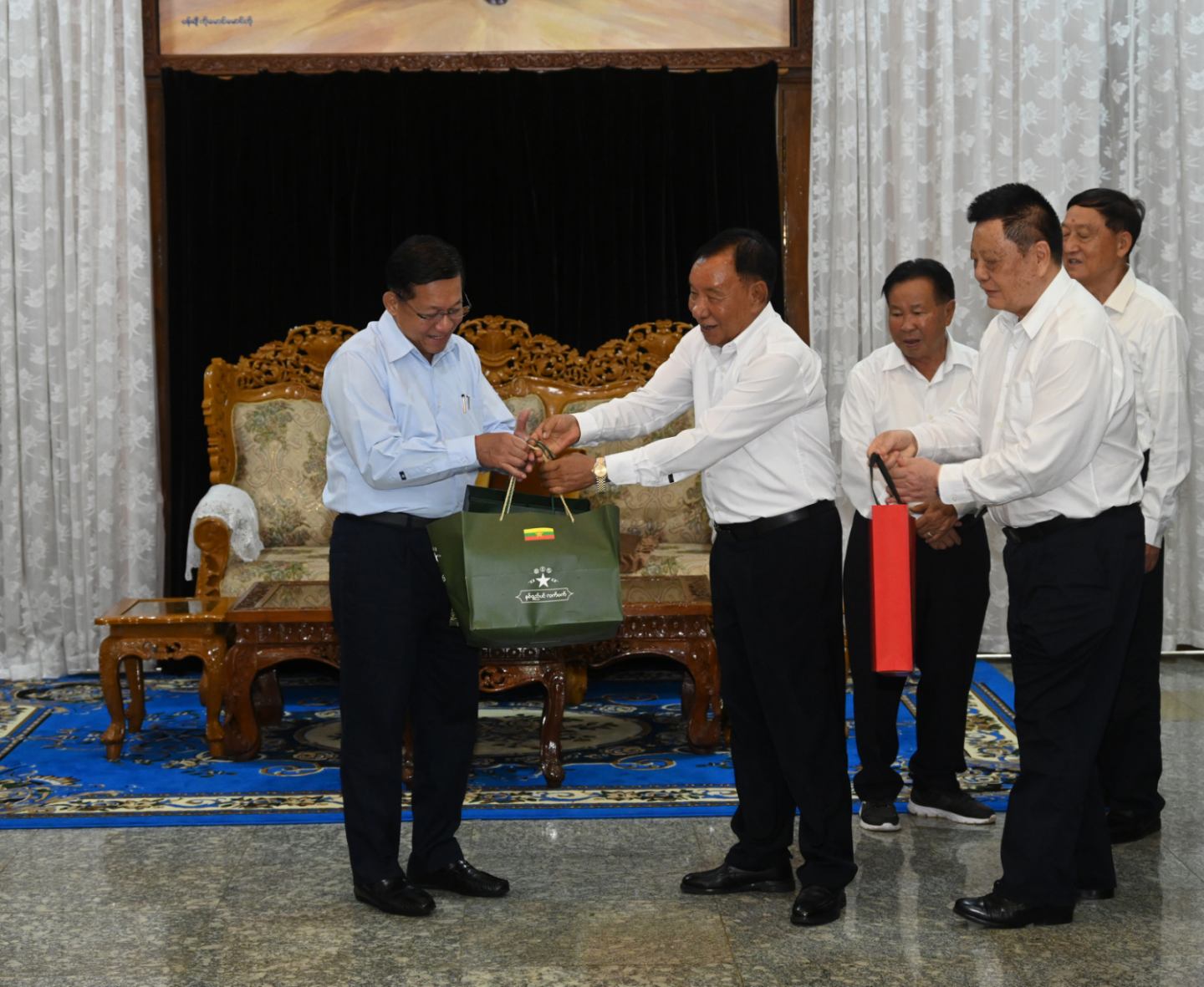
Myanmar President U Min Aung Hlaing and the NDAA
"The 'Wa' region has already become like an autonomous state. The same goes for Mong La and the MNDAA; they have secured their own territories. Other organizations are trying to achieve the same outcome. To make that happen, all of us need to unite and launch harder offensives against this military. Only then will we have bargaining power, and only then will they make concessions. Up until now, they haven't conceded an inch. Looking at the rhetoric of (U) Min Aung Hlaing and other military generals, they still seem to calculate that they can win," she said.
Currently, although the Wa region is designated as a Self-Administered Division under Section 56(f) of the 2008 Constitution, the central government holds no authority over the territory, and the United Wa State Army (UWSA) administers it as an independent entity.
Political analyst Dr. Aung Myo told CNI News that granting other ethnic groups the same rights as the Wa is inappropriate, and that groups are acting this way only because national unity has fractured.
"The current status of the 'Wa' is inappropriate. That is no longer federalism; it has become a confederation. Rights should certainly be granted—they should be more than what is currently offered, but not to the extent of the 'Wa' model. It should fall somewhere in between. They are acting this way only because national unity has fractured in the country. Honestly speaking, the Wa population is only about the size of Hlaingthaya Township. They enjoy this status because they are basking in the reflected glory of Myanmar's strategic importance; they should realize this. The threat to national security exists because they are trafficking and selling black-market weapons instead of fighting. If the state takes decisive action against them, they will collapse. In reality, ethnic groups must be granted cultural freedoms and a reasonable degree of resource management," he said.
The UWSA independently manages all administrative processes across the entire Wa region, including military and political affairs, the judiciary, healthcare, education, economy, customs, and immigration.
Meanwhile, KIA leader Lieutenant General Gun Maw has previously stated that beyond 2025, ethnic groups will begin considering options that go past federalism. He also noted that to secure Kachin State, they must intercept the enemy from Sagaing Region, pointing out that the "Triple-K" operation (Kanbalu-Kawlin-Katha) is being executed in Sagaing to liberate the entire northwestern corridor of Myanmar (Kachin-Sagaing-Chin-Rakhine).
Similarly, KNU (Karen National Union) Chairman Padoh Saw Kwe Htoo Win has stated intentions to establish an autonomous "Kawthoolei Karen State," while the Kokang army (MNDAA) is striving to build an autonomous Special Region. Furthermore, the TNLA is working toward establishing a Ta'ang (Palaung) State, while the SNA and NDAA are actively pushing to secure their own self-administered zones and states.