
CNI News
24 June 2026
Given the current geopolitical landscape, it is not easy for the Kachin Independence Army (KIA) to push China aside and form a partnership with India, Dr. Hla Kyaw Zaw, a China-Myanmar affairs analyst, told CNI News.
"The KIA is very shrewd. They won't just blindly follow everything China says, but cutting out China to align with India is also highly unlikely. Geographically speaking, they are directly connected to China. Disobeying China on certain matters is one thing, but completely switching sides to deal with India is a different story. Moreover, India cannot offer the KIA the kind of opportunities and access that China currently provides. Therefore, rumors of the KIA engaging in secret dealings with India are likely just intentional leaks designed to pressure Beijing—a tactical move to ease some of China's pressure on them. The KIA leadership is quite clever. They control rare earth mineral sites, but the catch is that these deposits are located right along the Chinese border. Furthermore, rare earth extraction and refining are incredibly hazardous to the environment. China has established dominance in this tech and infrastructure for decades, making them very difficult to replace. Even if you look at the G7 statements, they express a desire to reduce dependency on China for rare earths, yet most countries are reluctant to handle the actual processing due to the severe environmental toll. Since China has invested in this for over 20 years, buying from them remains the easiest option. Thus, it is highly improbable that the KIA can extract and sell rare earths through a partnership with India," she said.
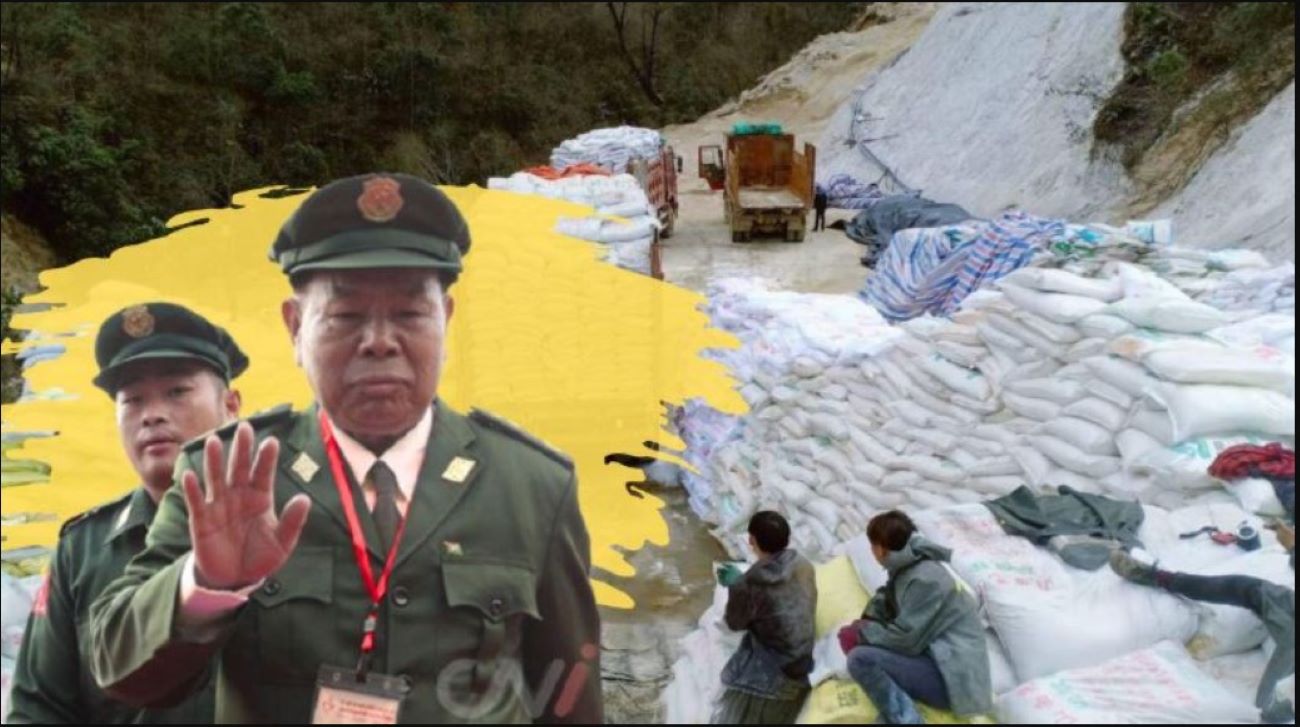
Rare earth mining activities by the KIA
In December 2025, the US-based *Silicon Valley Times* reported that a special investigative intelligence report uncovered a secret agreement signed between India and the KIA. According to the reported terms, India would gain access to Myanmar’s rare earth resources, and in return, would supply the KIA with weapons, medical supplies, and other logistical aid. The partnership allegedly included a covert plan to construct a second strategic highway connecting the KIA headquarters in Lizha, passing through the Sagaing Region, all the way to Rihkhawdar in Chin State.
However, military and political analysts point out that because China directly borders Kachin State and holds major investments there—including rare earth mining, the suspended Myitsone Dam project, power plants, and agricultural businesses—the KIA essentially has no choice but to maintain relations with its powerful neighbor. While the KIA avoids direct confrontation with China and routinely pledges to protect Chinese economic interests, they also cleverly employ stalling and negotiation tactics to avoid giving in to Chinese pressure when it compromises their military objectives.
On the other hand, India has openly upgraded its security and military ties with the official government of Myanmar, relying heavily on the Myanmar military (Tatmadaw) to secure the border and suppress insurgents operating out of Northeast India. Since India shares no direct border with the KIA and traditionally views the group with suspicion as a Chinese proxy, analysts believe it is highly unlikely the KIA would seek India out as a primary ally. Instead, observers note that the KIA is focusing its attention on territorial military advantages and cooperating with PDF forces in the Sagaing Region, which sits close to the Indian border.
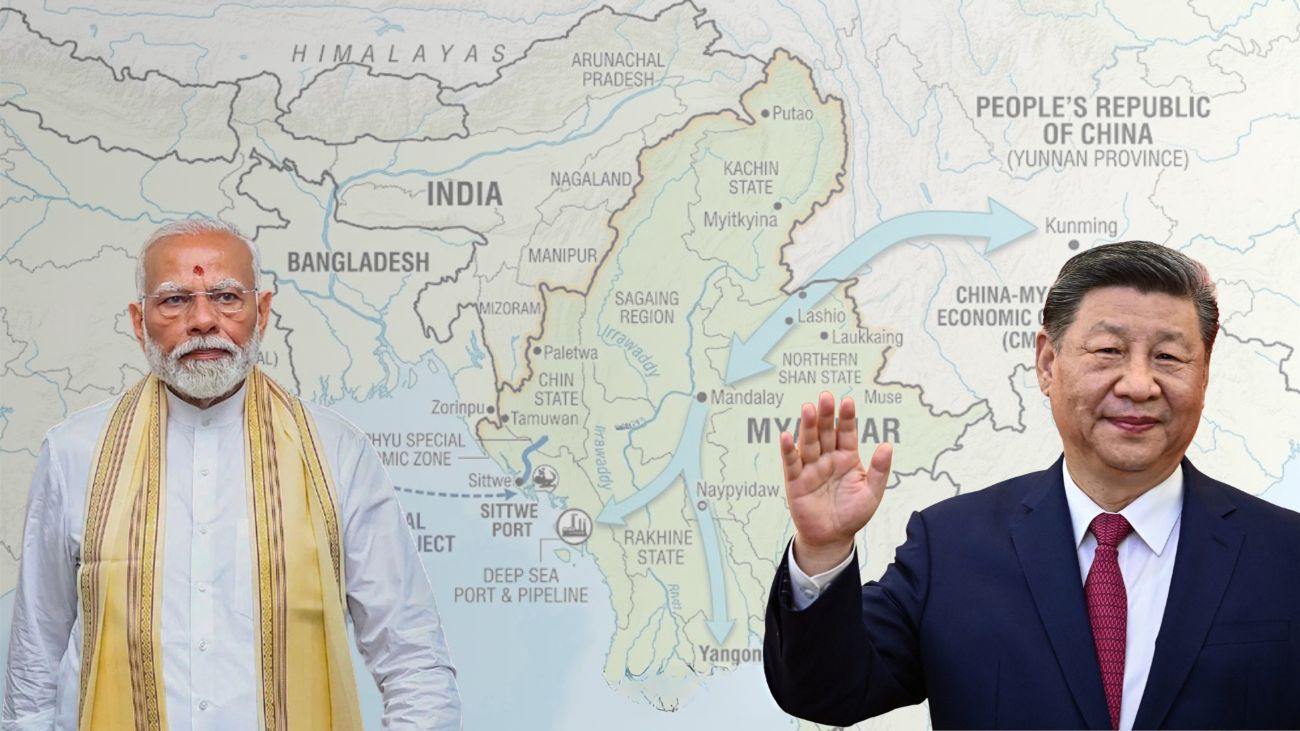
The leaders of China and India
Political analyst Dr. M Kawn La told CNI News that because the KIA primarily controls the rare earth production zones, handling resource trade through peaceful means will inevitably lead back to involving both China and India.
"When it comes to rare earths, we eventually need to have Government-to-Government (G-to-G) talks with both China and India. But for that to happen, these mining areas must first come under our official administration. There are still many stages and a mountain of work left to reach that point. We have to consider two options: pursue a peaceful settlement, or let the conflict be decided conclusively on the battlefield. Fighting to the bitter end means heavy casualties and massive collateral damage, so a peaceful approach is obviously better. How we navigate that will inherently tie back to China and India. We need to think deeply before taking action on these matters. Right now, these resources are just fueling the war. If we shift our mindset to view these resources solely for national development, our entire approach will change. Currently, the operations involve small-scale Chinese companies. The major corporations don't dare to come directly because it would ruin their reputation; the small companies don't need G-to-G agreements because it’s illegal mining. This is the work of rogue miners. Eventually, larger companies buy the illicit materials from them. Once the rare earths are refined and enter the supply chain step-by-step, it becomes an official export. Understanding that entire supply chain is critical," he said.
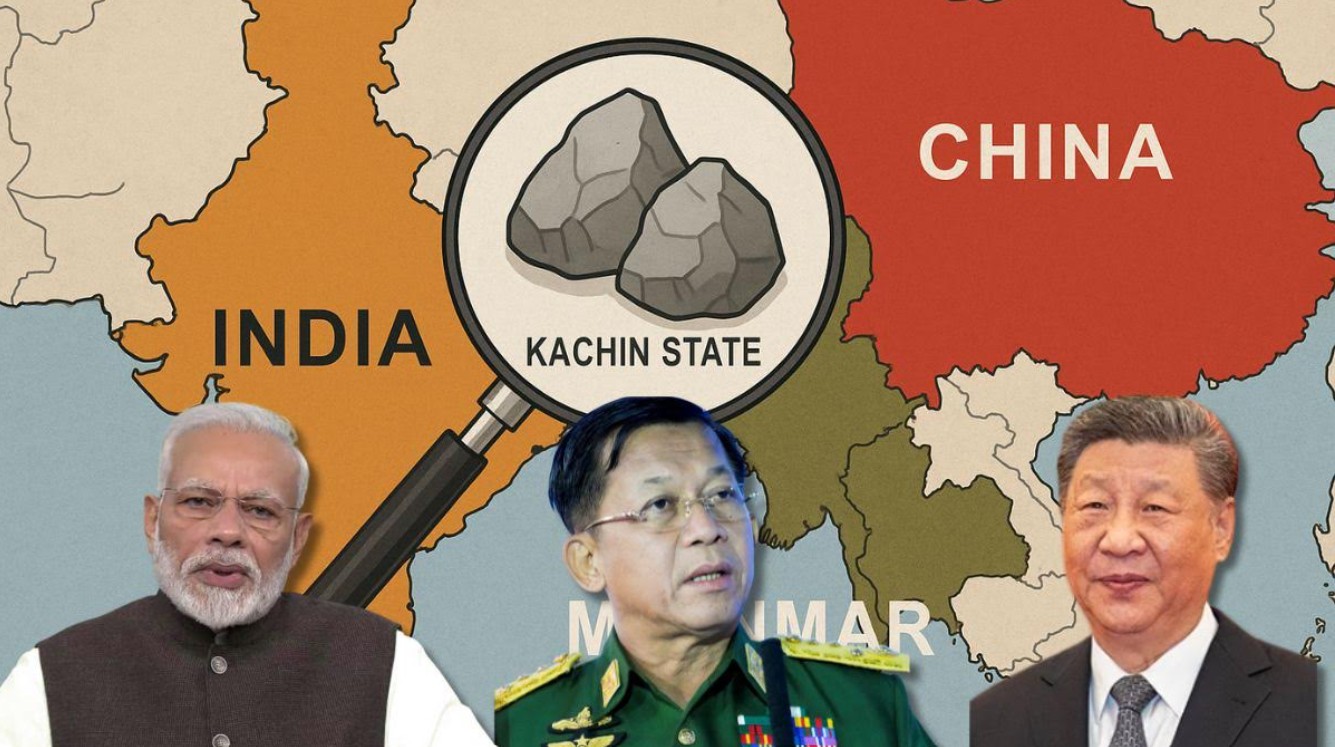
The leaders of China, Myanmar, and India
Military and political analysts view Myanmar as the ultimate geopolitical crossroads between two Asian giants, China and India.
China's major strategic projects traverse Rakhine State, Magway Region, Mandalay Region, Shan State, and Kachin State—corridors where armed groups like the UWSA, MNDAA, TNLA, SSPP, KIA, AA, and various PDF forces operate. Meanwhile, India’s key infrastructure initiatives, such as the Kaladan Multi-Modal Transit Transport Project and the India-Myanmar-Thailand Trilateral Highway, cut through Rakhine State, Chin State, and Sagaing Region—areas active with the AA, CNF, CDF, SNA, alongside Naga and Kathe (Meitei) armed factions.