
CNI News
23 June 2026
Questions are being raised regarding the practicality of the joint counter-rebellion efforts discussed between Myanmar President U Min Aung Hlaing and Indian Prime Minister Narendra Modi to eliminate insurgent groups along the India-Myanmar border.
President U Min Aung Hlaing visited India from May 30 to June 3, 2026, where he held separate meetings with Indian Prime Minister Modi, India's National Security Advisor, and India's Minister of External Affairs.
Daw Saw Mra Raza Linn, Chairwoman of the Arakan Liberation Party (ALP), told CNI News that she learned the discussions focused on clearing insurgent groups from both sides of the India-Myanmar border and addressing mutual concerns.
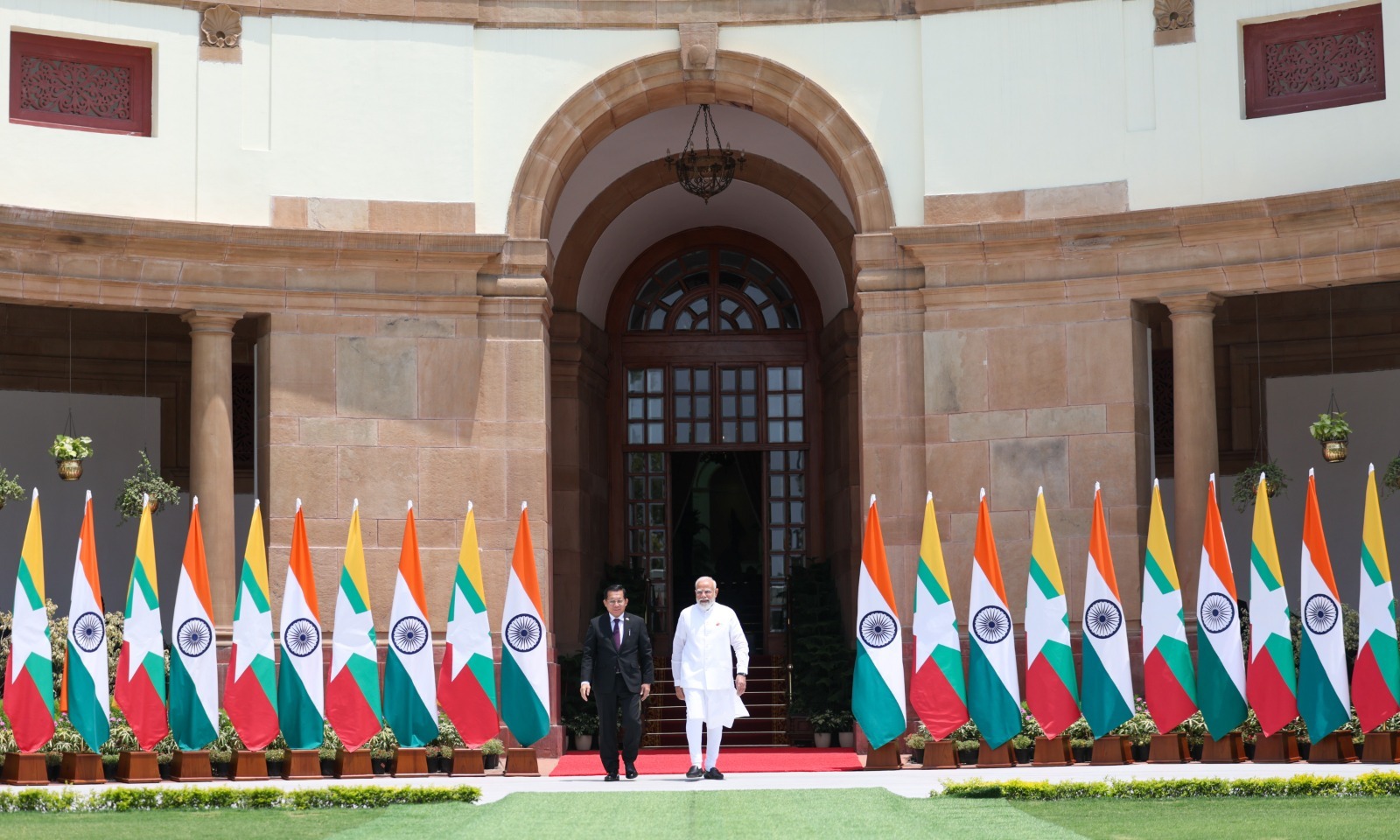
Myanmar President U Min Aung Hlaing and Indian Prime Minister Modi seen
"The State President’s trip to India reflects a desire to make India, a powerful neighbor, a true and genuine friend of Myanmar. Similarly, India has interests in Myanmar, indicating a relationship built on mutual necessity between friendly nations. India wants to ensure that Naga insurgents do not base themselves on the Myanmar side. India has faced massive issues with the Naga insurgency. Although the Nagas held peace talks with the Indian government in 1997, we understand that disagreements resurfaced later. Looking at this context, India clearly does not want Myanmar to serve as a safe haven for Naga insurgents. On the other hand, Myanmar does not want Rakhine armed revolutionary organizations operating from the Indian side. I believe both sides discussed these mutual concerns," Daw Saw Mra Raza Linn said.
According to India’s ANI news agency, Myanmar pledged to India on June 1 that it would take all necessary measures to crack down on Indian insurgent groups operating inside Myanmar to ensure they do not become a security threat to India.
This crucial commitment emerged during a summit held at Hyderabad House in New Delhi between Indian Prime Minister Modi and visiting Myanmar President U Min Aung Hlaing.
Briefing the media on the visit, Vikram Misri, Secretary of India's Ministry of External Affairs, revealed that Prime Minister Modi placed significant emphasis on the issue of cross-border insurgent activities during his talks with the Myanmar President.
Meanwhile, U Chin Maung, Chairman of the Peace Making Committee of the NSCN-K/AM, told CNI News that his armed group operates under the designation of a "government" and therefore rejects the label of "insurgents" (rebels).
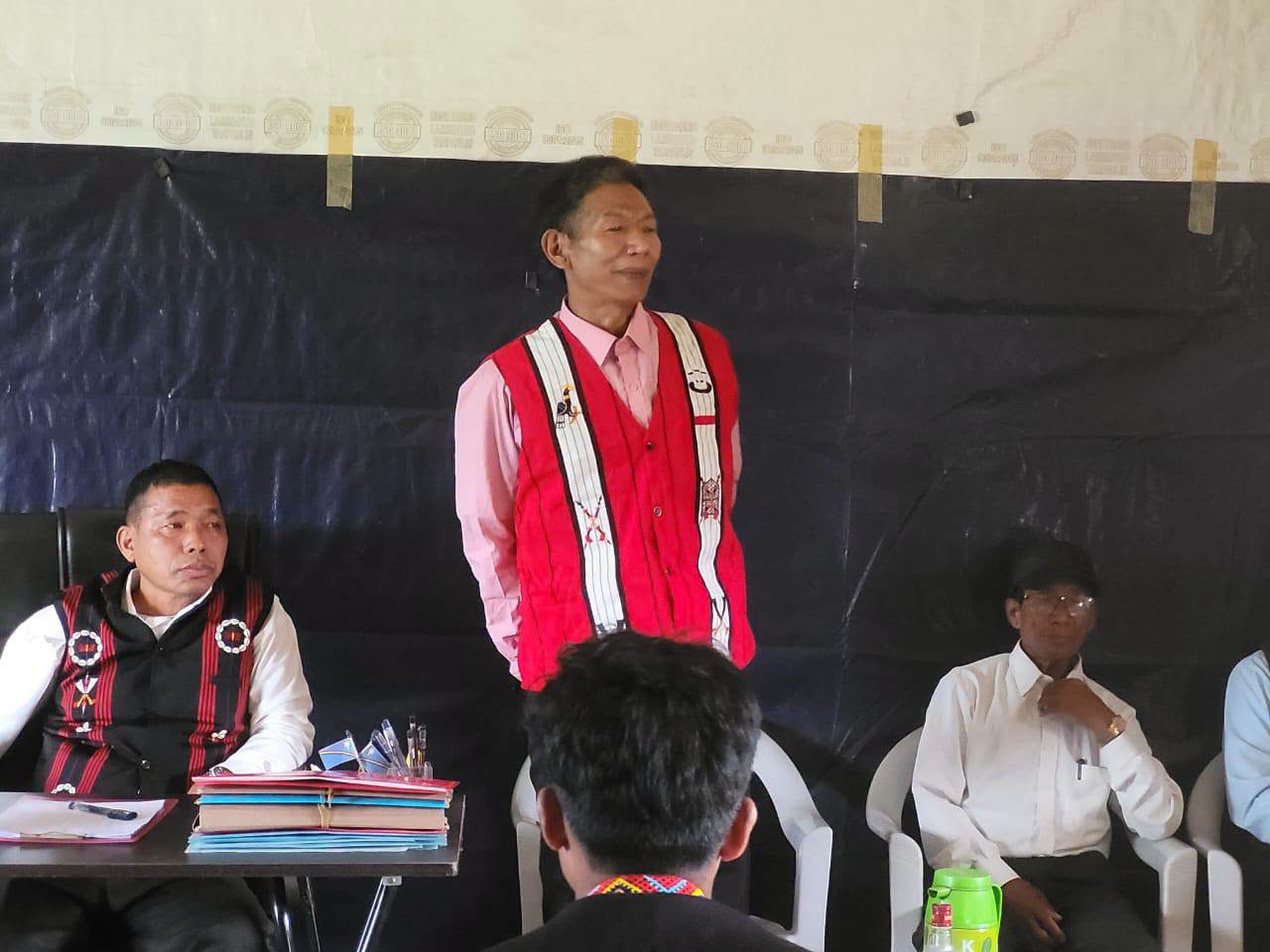
Leaders of the NSCN-K/AM group seen
"We do not want to accept the term 'insurgent.' We have been operating our ethnic political organization under the title of a government, so we reject that label. For us Nagas, this is a national cause, no matter what. We are mainly protecting and defending our national cause, and moving toward the path of 'Sovereignty and Independence' for the Naga people. That is why we reject their terminology of 'insurgents.' This is India's policy. India employs a divide-and-rule policy to cause rifts among organizations, which is what destroys peace," U Chin Maung said.
Political analysts point out that while ethnic groups may be armed organizations or revolutionaries striving for political demands or self-determination, simply labeling them as "insurgents" diminishes their history and fundamental rights.
On the other hand, the Myanmar government and the military refer to ethnic armed organizations in Myanmar as "insurgents" or "insurrectionists" because they take up arms against state sovereignty, violate the law, and threaten national stability.
Currently, several anti-India armed groups operate within Myanmar, including Naga armed groups such as NSCN-K/AM, NSCN-K/YA, NSCN-IM, NSCN-IM/HS, ENDA/ENNO, NNC, and NPDF, as well as Meitei armed groups like MPA, UNLF, PLA, and PREPAK.
Similarly, anti-Myanmar government armed groups such as the AA, KIA, CNF, and PDF move back and forth and operate within India, utilizing necessary resources from there, while foreign mercenaries are also reported to be moving across the border.