
CNI News
June 18, 2026
Economic and political analysts point out that Myanmar-China border trade gates could reopen due to Myanmar President U Min Aung Hlaing’s trip to China.
It is observed that the current delegation to China includes the chief ministers of Kachin and Shan states—which border China—along with the minister of economy, bankers, and business associations.
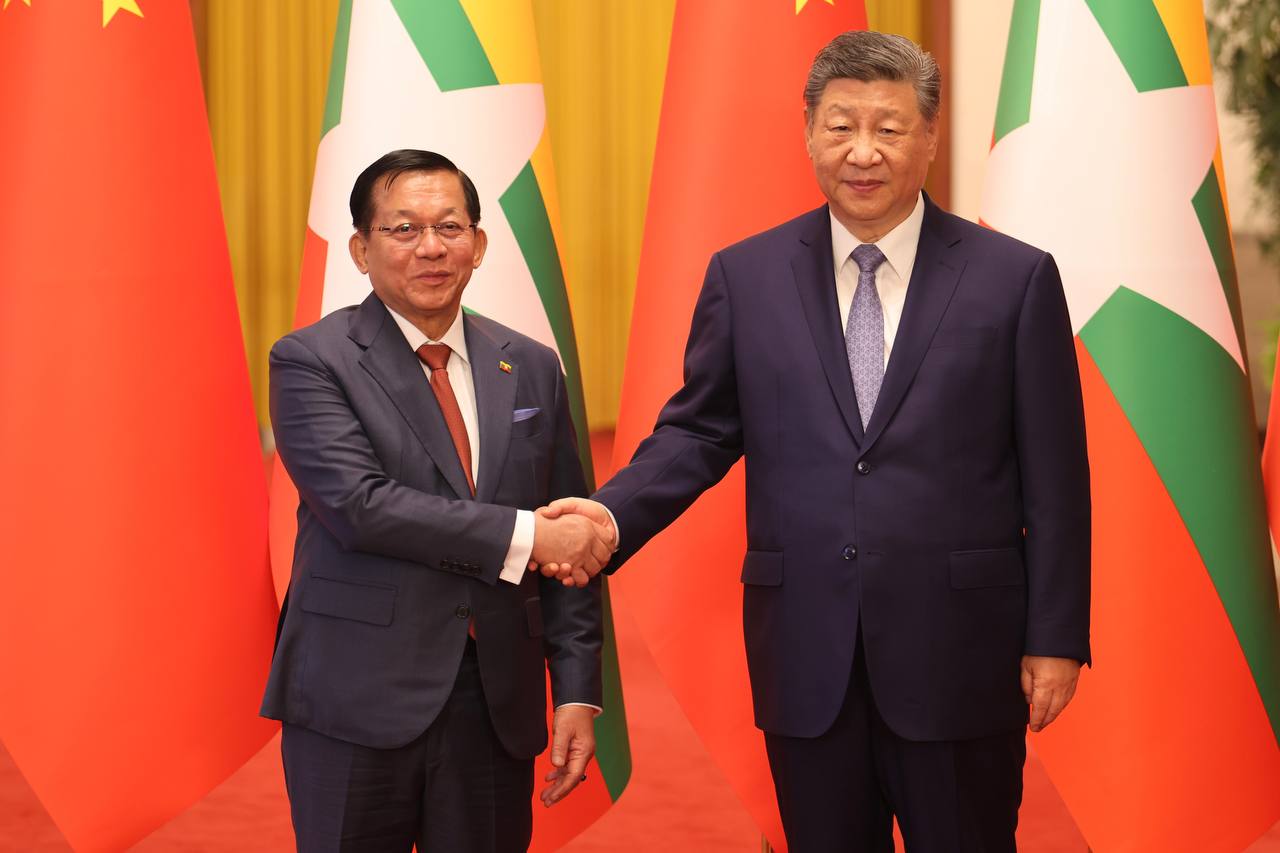
At the invitation of Chinese President Xi Jinping, President U Min Aung Hlaing is visiting China from June 15 to 19, 2026.
U Htay Aung Kyi, an economic and banking expert, told CNI News that rather than the Kachin border trade, the northern Shan border trade—where the Kokang group (MNDAA) and Ta'ang group (TNLA) operate under Chinese influence—could reopen as a result of President U Min Aung Hlaing's trip to China.
"In border trade with China, northern Shan State is the main hub, though Kachin State is also important. That is why the chief ministers of Kachin and Shan states are included in this trip. When it comes to trading, Kachin primarily has rare earths and such. Leaving rare earths aside, talking about those matters is quite broad. For regular, ordinary trade, northern Shan State is crucial. To be honest, since northern Shan State houses organizations that are under Chinese influence, this trade route will likely open up," he said.
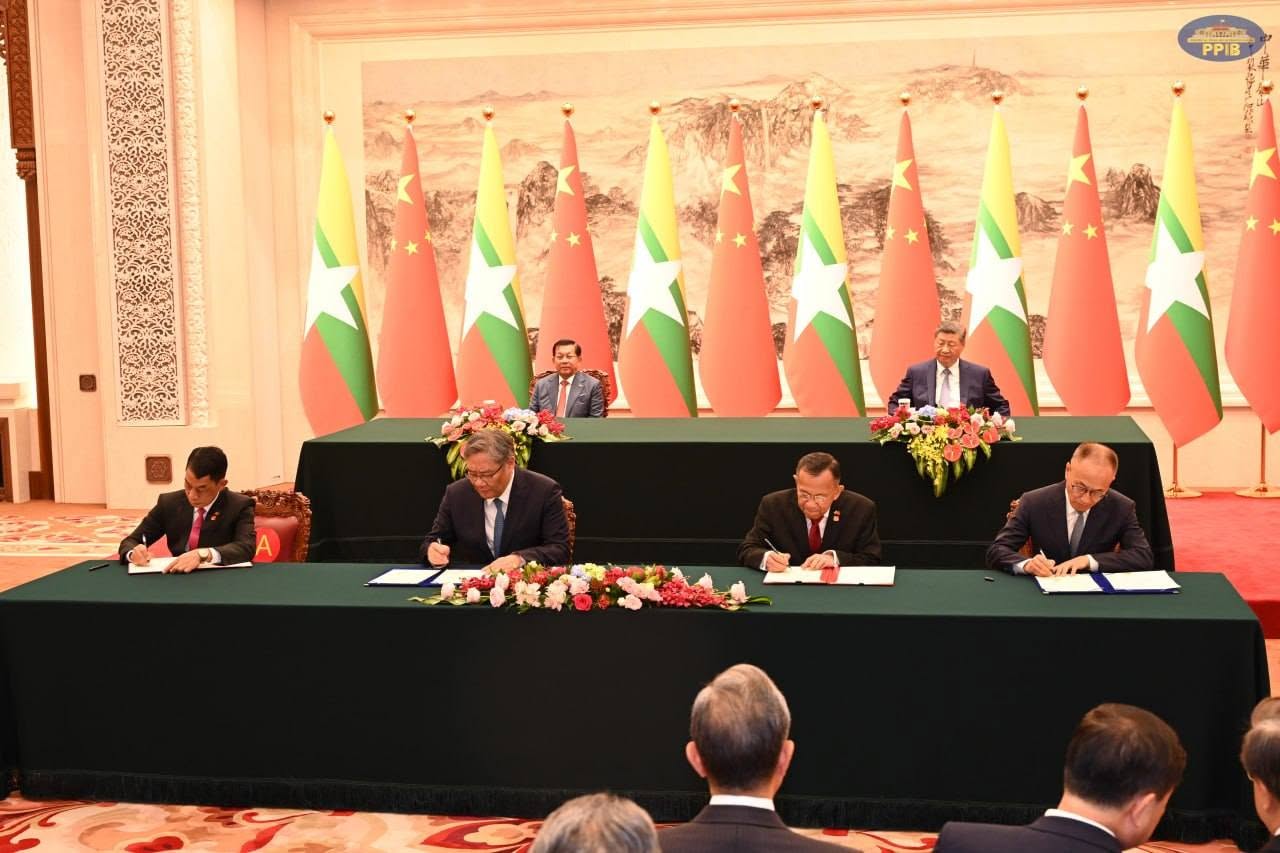
The signing ceremony of 18 Memorandums of Understanding between China and Myanmar.
He further pointed out that due to high basic labor wages in China's manufacturing sectors, an environment could emerge where China comes to invest in Myanmar, where labor costs are lower.
Similarly, because business-related figures are included in this trip, it could lead to the resumption of not only border trade but also investments, project matters agreed upon during previous administrations, and currently suspended projects. Myanmar needs to work on establishing a good peace and economic environment.
Regarding President U Min Aung Hlaing's visit to China, political analyst U Htet Aung Kyaw told CNI News that while peace might be the main focus, a large number of economic agreements could be achieved.
"Since other things can only proceed once there is peace, I view that they will focus primarily on discussing peace. As soon as peace is achieved, the major border trade routes will reopen. Following that, there are China-backed projects, specifically those related to the BRI (Belt and Road Initiative). There are projects signed during previous administrations. We have to see what else will come up to implement such projects further. China is Myanmar's trading partner; it is the main trading partner in both general and border trade. Furthermore, China is also the primary investor in Myanmar. That is why all the key figures are included in this trip. Therefore, I anticipate that many economy-related agreements could be signed during this visit," he said.
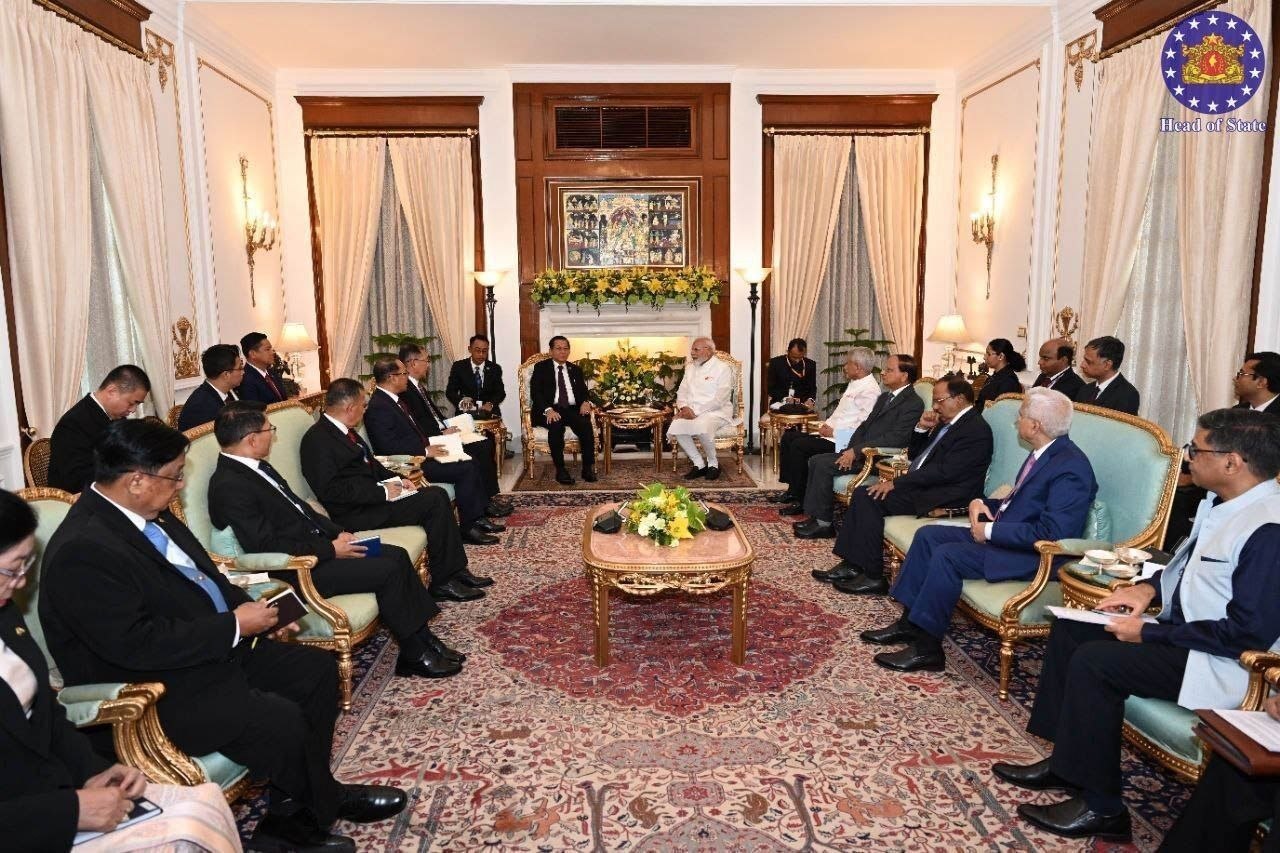
Indian Prime Minister Modi and Myanmar President U Min Aung Hlaing seen together.
Currently, China-Myanmar border trade is closed due to armed conflict. Because there is no official trade, local residents in northern Shan State are facing difficulties in the flow of goods.
A businessman from northern Shan State told CNI News that if discussions during President U Min Aung Hlaing's current trip to China cover the opening of the Myanmar-China border trade in northern Shan State and enabling the flow of goods via the Union Highway, and if successful, it will bring economic opportunities and development to the country.
"As for us in northern Shan State, our roads are currently blocked. We analyze that if they discuss and successfully negotiate with China regarding the flow of goods via the Union Highway, the economy will develop for our country," he said.
During his visit to China, President U Min Aung Hlaing met for talks with Chinese President Xi Jinping as well as Chinese Prime Minister Li Qiang, signing 18 bilateral Memorandums of Understanding (MoUs).
On the other hand, President U Min Aung Hlaing also visited India from May 30 to June 3, 2026, where he held discussions with Indian Prime Minister Modi, the Indian President, the Indian National Security Advisor, and the Indian Minister of External Affairs.