
CNI News
June 18, 2026
Economic, military, and political analysts are questioning which force holds the key to resuming the Kaladan Multi-Modal Transit Transport Project, a bilateral agreement between India and Myanmar that is currently halted.
The agreement for the Kaladan Multi-Modal Transit Transport Project was signed between India and Myanmar in 2008, and implementation activities began in September 2010.
Currently, the project is at a standstill due to intense clashes taking place in Rakhine State and Chin State between the Myanmar military and the AA-CNF-PDF coalition.
Economic analyst U Htay Aung Kyi told CNI News that foreign investments and projects in Myanmar involve political and military perspectives alongside the economic aspect, and it remains to be seen how cleverly Myanmar will navigate between China and India.
"At the moment, the AA practically controls the territory—that is the realpolitik of it. Another thing is that we have to think about this in connection with the positions of China and India. We cannot just look at it from a local perspective. Regarding the Kaladan basin project, India claims it is purely for their economy. Indeed, it is reasonably beneficial for the economy. However, we also have to see how China views it. We must consider that our situation has reached a very sensitive stage. It is hard to say what China's perspective is on the Kaladan River basin project. That is a factor that must be factored in. People will also consider whether there are underlying security issues. High-level politics means taking all of these into account. It is not just an economic view; it involves political, military, and security perspectives on all fronts. China will wonder whether the Kaladan project is strictly economic for India or if there are other hidden motives behind it. They will definitely think about it; the only difference is whether they analyze it a little or a lot. To put it briefly, what will China's stance on the Kaladan basin project be? We will have to watch how cleverly Myanmar manages its relationships between China and India," he said.
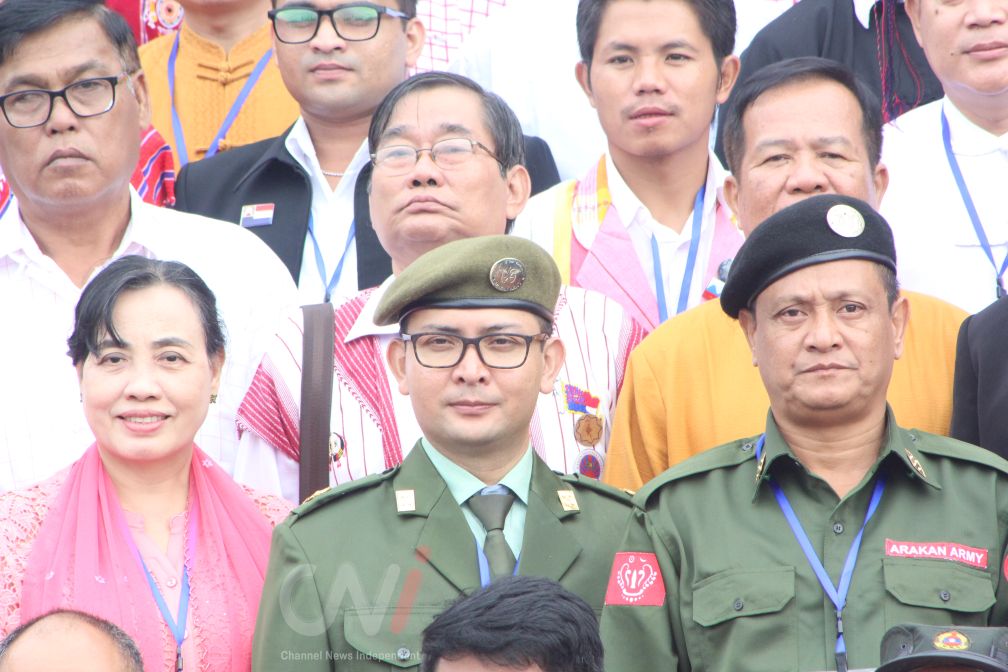
Two leaders of the AA seen together.
Military and political analysts assess that the stances of China and India toward Myanmar are based on their own national interests, geopolitical competition, and border stability.
Rakhine State offers access to the sea and hosts China's Kyaukphyu Deep Sea Port project, India's Kaladan River project, and border trade with Bangladesh.
Analysts point out that even if India and China do not officially recognize the Arakan Army (AA), they will have to engage in discussions because the AA currently holds de facto sovereignty over Rakhine State.
However, political analyst Dr. Aung Myo told CNI News that the government is more likely to launch an all-out offensive against the AA to implement the India-Myanmar bilateral Kaladan project.
> "First of all, there is no need for the AA to be involved because there is no trust in them. This situation came about because the Indian side assumes that the flame of the AA will only last a brief moment. India does not talk to anyone who does not hold official sovereignty. Furthermore, as India firmly believes that the AA will never be able to successfully establish an Arakan State in Rakhine, they continue to work only with the Union Government—that much is certain. There can be no compromise with the AA. Making peace with an organization that might create trouble unpredictably despite being given benefits from this project would only be temporary; it will not last forever. Military supporters and Myanmar nationalists will not accept this either. The military will launch an all-out offensive to reclaim these areas. The AA is claiming Paletwa as its territory as well. Therefore, India will wait until the current Myanmar government can fully control this entire route," he said.
The Indian government maintains a stance that it wishes to complete the implementation of the Kaladan Multi-Modal Project, which passes through Rakhine State and Chin State (Paletwa), by the end of 2027.
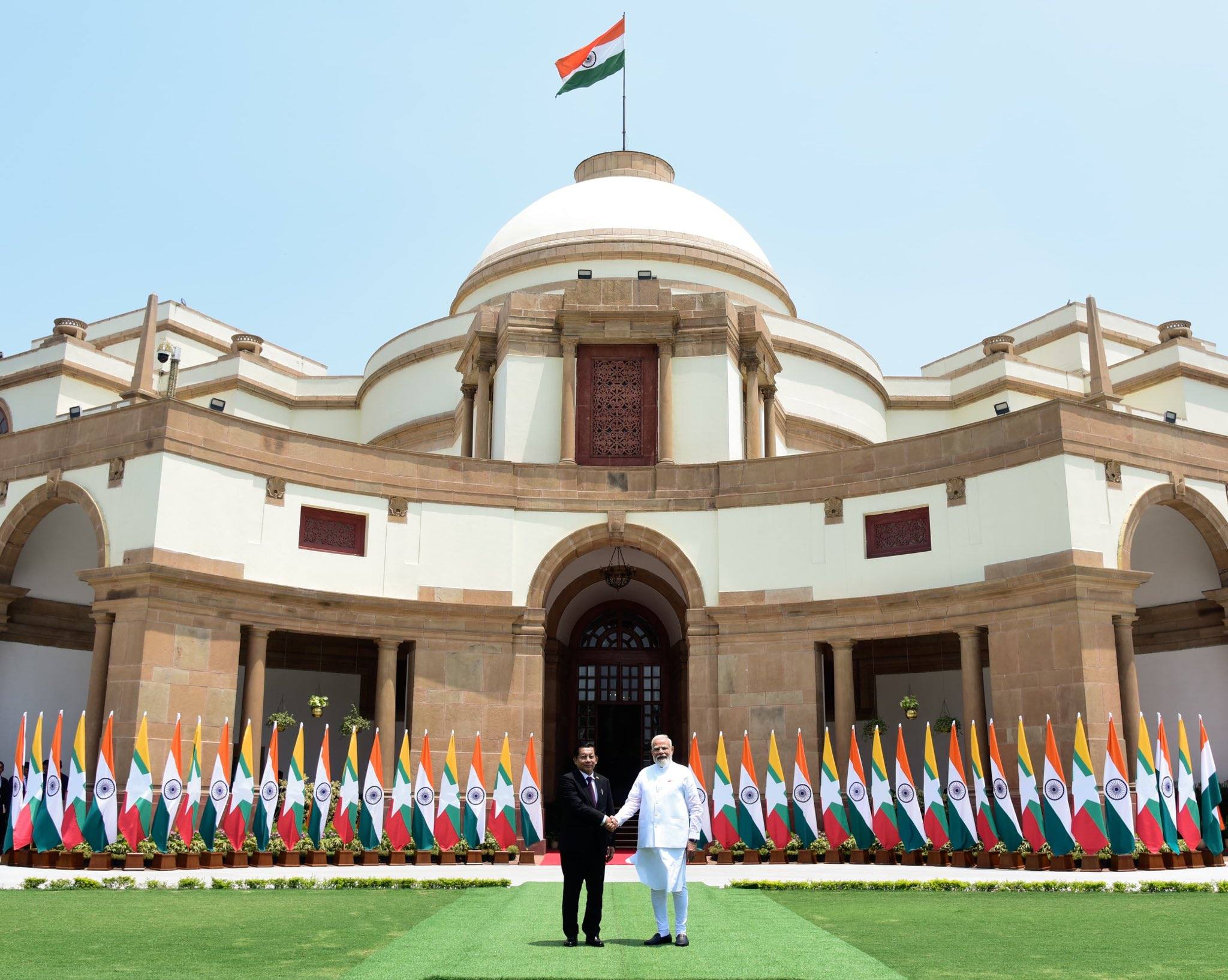
Indian Prime Minister Modi and Myanmar President U Min Aung Hlaing seen during their discussion.
During a meeting between Myanmar President U Min Aung Hlaing and Indian Prime Minister Narendra Modi in New Delhi, India, on June 1, 2026, they discussed the implementation of the Kaladan Multi-Modal Project, the India-Myanmar-Thailand Trilateral Highway project, and the suppression of insurgents within both countries.
Given the current landscape, Sai Htay Aung, Chairman of the Tai-Lai (Red Shan) National Development Party (TNDP), told CNI News that it is impossible to proceed with the Kaladan River project without involving the AA.
"Under the current circumstances, it is impossible without the AA's involvement. However, the AA is an armed organization revolting against the state. In truth, if we are talking about Government-to-Government (G-to-G) operations, the state government should implement what has been discussed between the central governments of India and Myanmar. I am talking about how it should be during a period of peace. Now that armed organizations are dominant, I think a lot will depend on how the policies of India and Myanmar view the AA. As for the government, the responsibility for the whole of Myanmar lies solely with the central government. If concessions and opportunities are granted to an armed organization that is revolting, the central government will have to give the same to all others who take up arms and revolt in other states in the future. If that happens, the situation for the country will not be very good," he said.
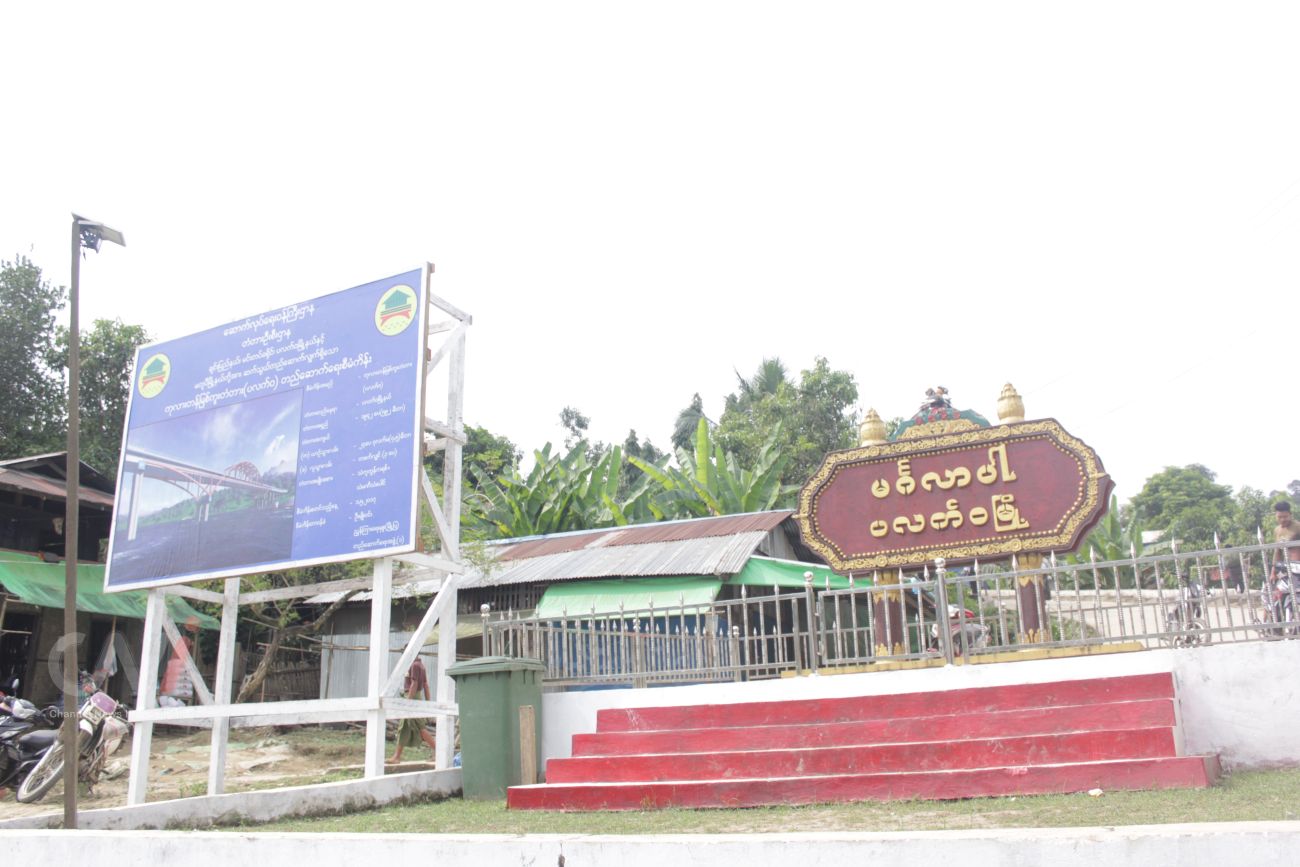
The Kaladan Multi-Modal Transit Transport Project includes the expansion of Sittwe Port, dredging the Kaladan River to allow international vessels to navigate, and constructing a highway from Paletwa in Chin State to Mizoram State in India.