

CNI News
13 June 2026
Although the third parliamentary session resumed in the first week of June and members of parliament (MPs) are already working across regions and states, lawmakers and political analysts point out that the government branch needs to work in sync with the parliament.
U Nyo Ohn Myint, an advisor to the Myanmar Narrative Think Tank, told CNI News that since MPs are currently asking questions that are genuinely useful for the public during this parliamentary term, the legislature is already doing its job. Therefore, the government must also step up and work in alignment with parliament.
"For instance, USDP (Union Solidarity and Development Party) MPs are asking questions. The vocabulary and phrasing they use might be a bit formal and protocol-driven, though. Even if they don’t explicitly say, 'Do you have the will to amend this or not? The public is telling you about this issue, so the Union Government should handle it,' their words carry exactly that meaning. I’ve never been an MP myself, so I wouldn’t know firsthand. However, it is constructive. No matter what, parliament is already doing its job. Now, it’s the government side that needs to work," he said.
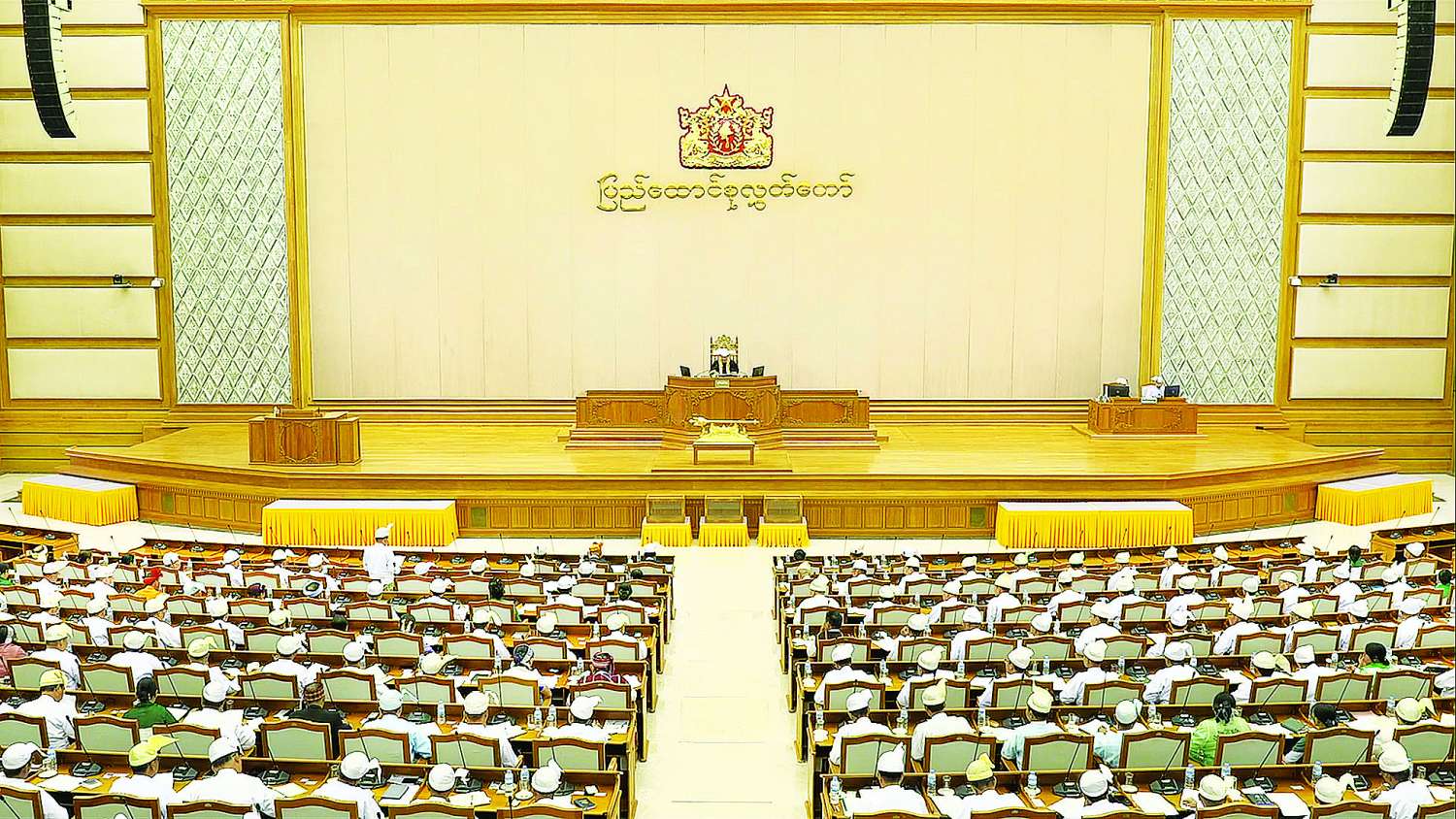
A session of the Pyidaungsu Hluttaw (Union Parliament) in progress
While representatives in the Regional and State Hluttaws, Pyidaungsu Hluttaw (Union Parliament), Amyotha Hluttaw (House of Nationalities), and Pyithu Hluttaw (House of Representatives) are actively asking questions regarding beneficial projects for the public, ministries have failed to provide definitive answers. This lack of clear responses has left the public feeling unsatisfied and disappointed.
Critics point out that some questions related to state policies are simply brushed aside with replies stating that the policy "will remain in place," effectively turning a blind eye to the will of the people.
Regarding this situation, U Kyaw Min Htet, an MP from the People's Pioneer Party (PPP), told CNI News that lawmakers need to take their queries a step further by submitting formal motions of urge to secure a parliamentary vote and approval, rather than just leaving them as standard questions.
"Let's say a question is asked regarding a policy matter. If the lawmaker who raised the question is not satisfied with the response, they can take it to the next level and submit a motion of urge. If an MP is unsatisfied, wants to change a policy, or wants to see a specific matter pursued, they can introduce a motion of urge as a second step. If that motion passes by a majority vote in parliament, the respective government has a duty to comply with it. Therefore, if lawmakers are unsatisfied with the answers, they will need to submit a motion of urge as a next step. Ultimately, whether to submit a motion or not is the decision of the respective lawmaker," he said.
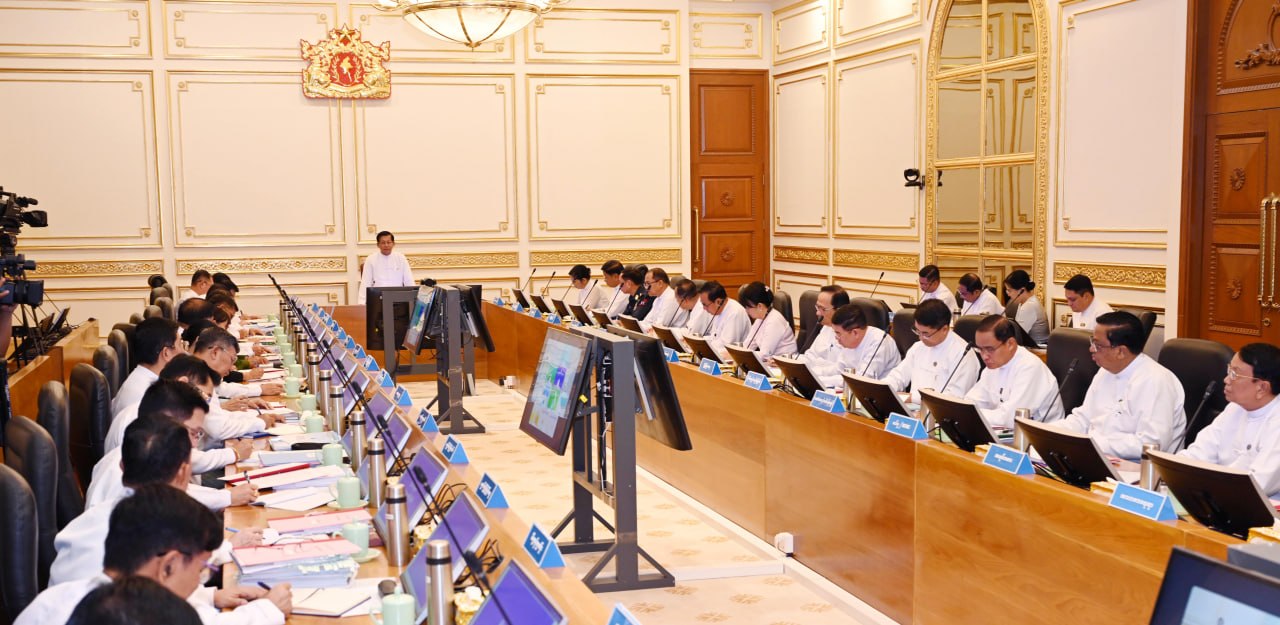
President Min Aung Hlaing seen at the Union Cabinet meeting on June 9, 2026
Because politics must be practiced based on patience and broad-mindedness, lawmakers themselves must remain patient and magnanimous to ensure that the voices of the people can be widely and effectively amplified within parliament.
Sai Htay Aung, Chairman of the Tai-Leng (Red Shan) Nationalities Development Party (TNDP), told CNI News that since some questions asked by MPs relate to state-issued policies, the government needs to conduct field inspections to evaluate whether these policies genuinely benefit the public. Following such evaluations, the government should either repeal or amend the policies.
"Take the current 'Even/Odd' matter (a regulation restricting vehicles to driving only on designated days based on license plate numbers) as an example. Lawmakers are taking the public's voice as the voice of parliament and bringing those public grievances into the legislature. The government has the full authority to set policies. However, before they implement them, they should consider how it will affect the public. Furthermore, after a policy is set, they must review whether it brings positive or negative consequences to the people.If it's beneficial, keep it. But if it causes negative impacts and the MPs who represent the public start speaking out about it, I believe the government should conduct ground surveys and then repeal what needs to be repealed and amend what needs to be amended. In their responses, they just end the matter by saying, 'Since it is a state policy, it will remain in place.' Even if it is a state policy, it is ultimately a directive. I want to emphasize that ministers must answer the voice of parliament with respect.Since parliament and the government are just starting to work together again, there might be gaps. However, the government side also needs to be patient and open-minded in politics. If they operate with that approach, I believe that one day, public representatives will be able to speak up much more frequently for the people inside parliament," he said.
Amidst these discussions, State President U Min Aung Hlaing spoke during a Union Government Cabinet meeting on June 9, 2026. He noted that while the difficulties faced by citizens must be resolved in accordance with prescribed laws and procedures, care must taken to avoid creating unnecessary burdens for the public. He added that officials must thoroughly understand the legal procedures and collaborate to implement them effectively.