
CNI News
June 11, 2026
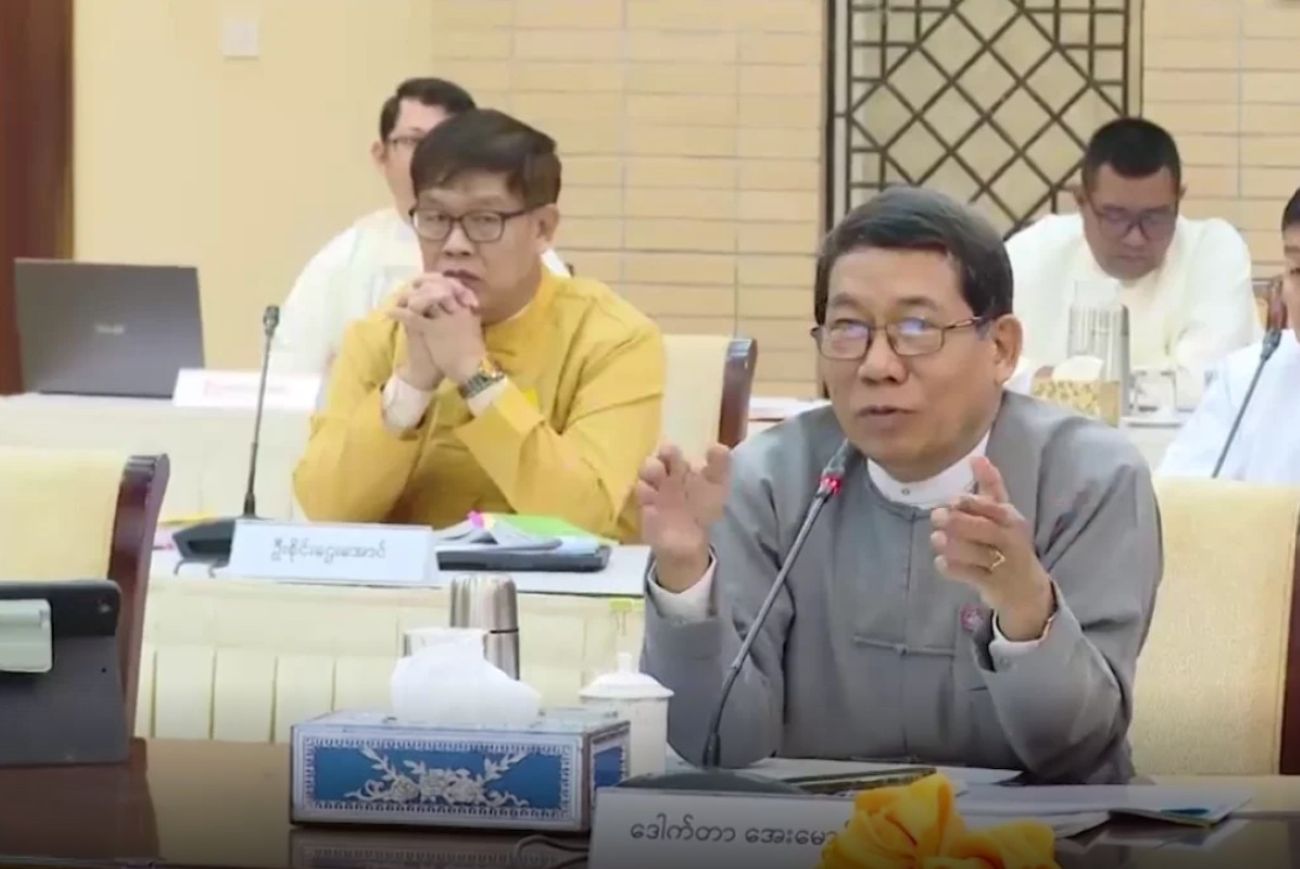
Dr. Aye Maung, Chairman of the Arakan Front Party (AFP), told CNI News that the current third term of the Hluttaw (Parliament) could potentially become the only parliament in the history of the 2008 Constitution to successfully amend numerous articles for the first time.
The National Solidarity and Peacemaking Negotiation Committee (NSPNC), Ethnic Armed Organizations (EAOs), and political parties have held discussions and agreed upon 43 points to amend the 2008 Constitution.
President Min Aung Hlaing has stated that these 43 agreed points will be submitted to the Hluttaw for discussion and amendment.
Dr. Aye Maung, Chairman of the Arakan Front Party (AFP), shared with CNI News his view that this current parliament could make history by becoming the first to successfully pass these constitutional amendments.
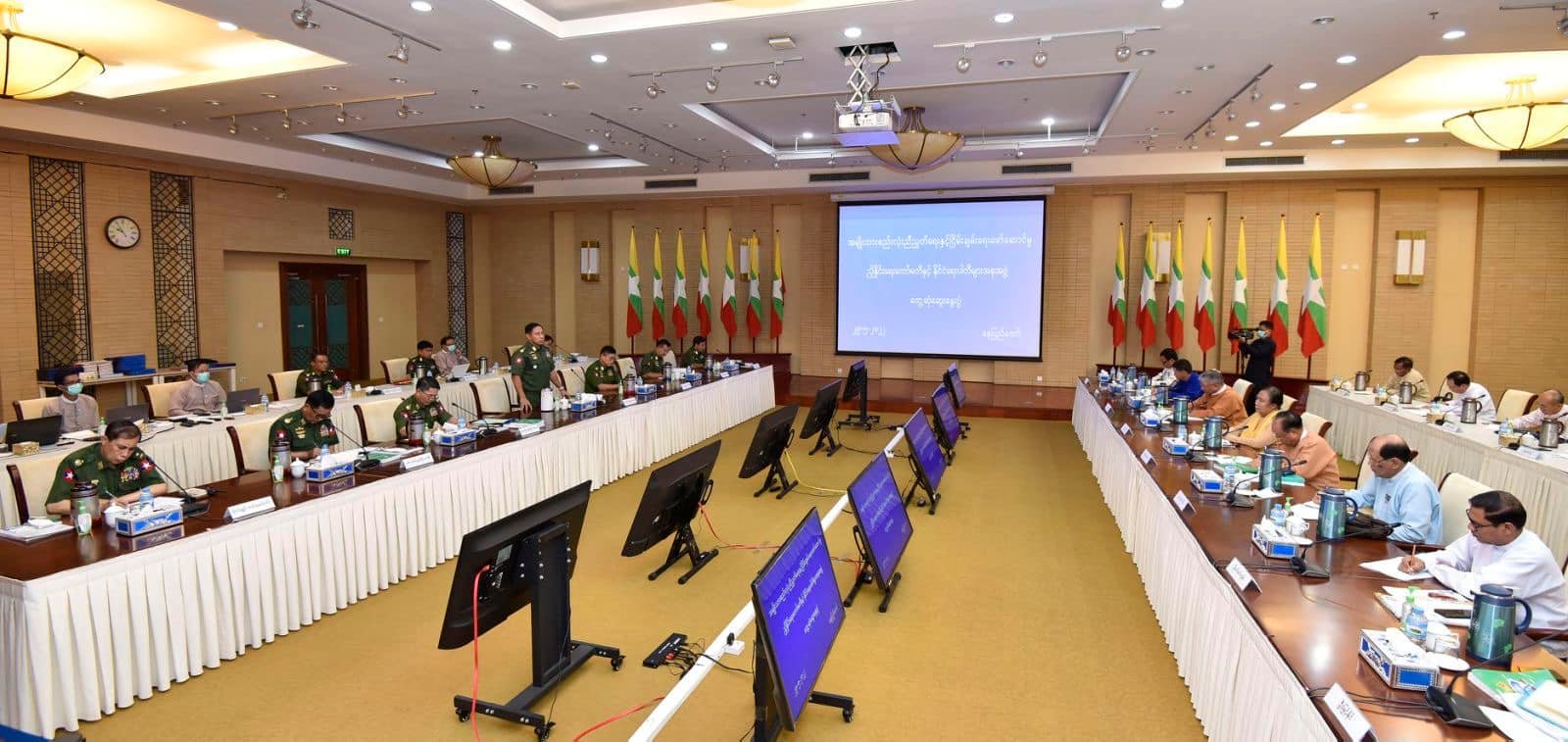
Discussion between political parties and the NSPNC.
"During the first Hluttaw term, efforts were made to amend the constitution. We formed a committee within the parliament—I believe it was first a review committee, and then a working committee consisting of 45 members, led by the vice-speakers. In that constitutional amendment working committee, we agreed on an article-by-article basis. However, when a large number of amendments were submitted to the parliament, they did not make as much headway as expected. No matter how much we tried to alter the terminology of many articles, it was difficult to get approval within the parliament. We submitted proposals to grant more authority to Regions and States. But in the end, everything required the approval of the Union Hluttaw, so the laws that could be enacted by State and Region parliaments were sidelined. Even if our State and Region parliaments had the right to legislate in certain sectors, those laws only became valid if the Union Hluttaw agreed. This was the Union central government retaining control. In this third Hluttaw, however, the 43 points have become solid. A time may soon arrive that stands as the only period in the history of the 2008 Constitution where numerous articles can be amended. In the coming period, this could become a great parliament capable of amending and approving many articles of the constitution, leading to constitutional amendments approved by the entire Union," Dr. Aye Maung said.
The procedures for amending numerous articles of a law or constitution for the first time in a parliament primarily depend on the rules of procedure of the respective parliament and the provisions laid down in the constitution itself.
It is learnt that the National Solidarity and Peacemaking Negotiation Committee (NSPNC), the Union Peace Dialogue Joint Committee (UPDJC), and the political parties bloc had agreed to amend Article 261 of the 2008 Constitution. However, some participants in the meeting noted that, in practice, the likelihood of reaching a final consensus to amend Article 261 remains low.
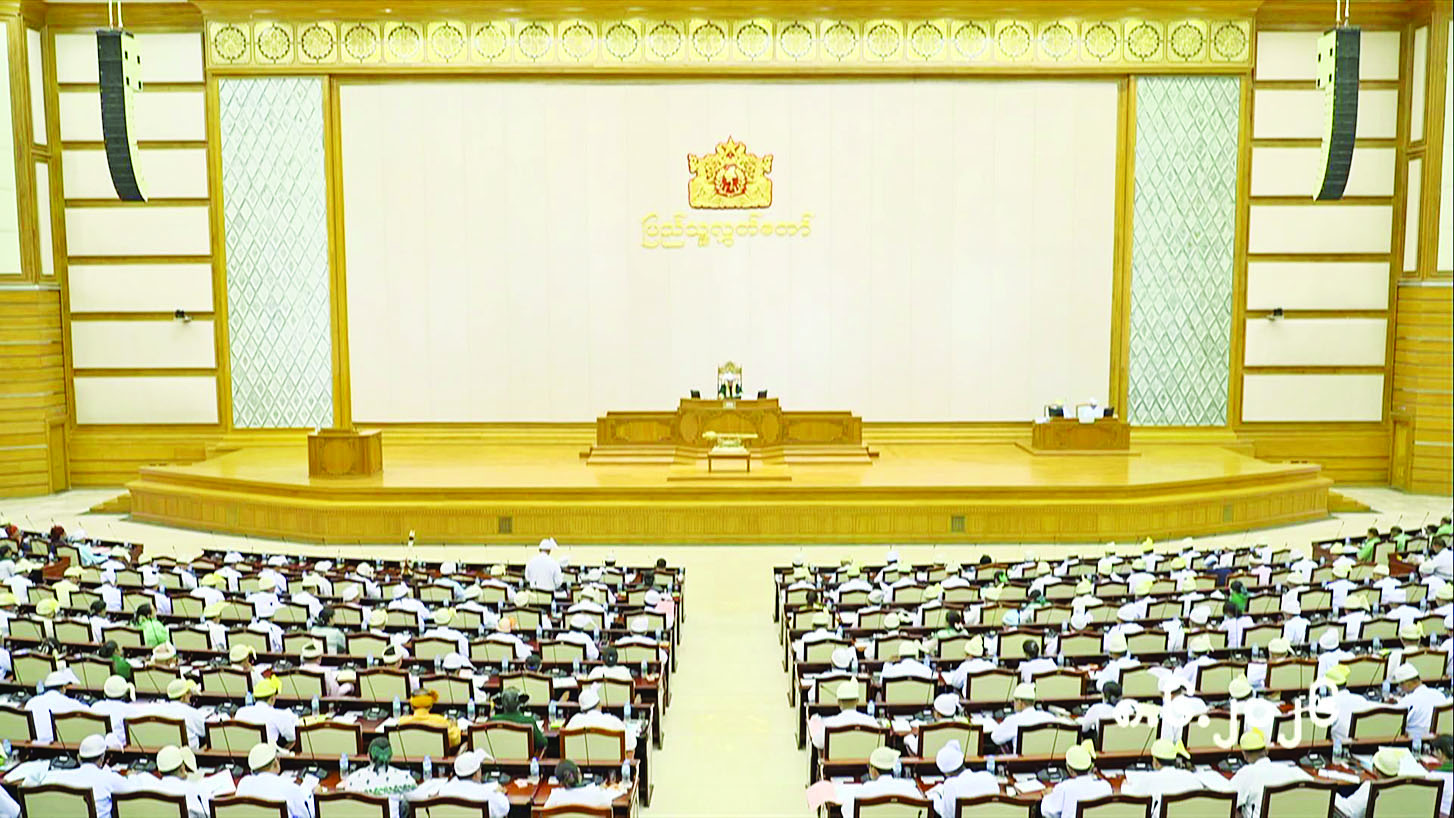
A session of the Union Hluttaw in progress.
Political analyst Dr. Aung Myo told CNI News that because the current parliament lacks political diversity, there is unlikely to be much division. However, he noted that the parliament is heavily influenced by party policies and ideologies, making deep constitutional amendments difficult.
"The current parliament lacks diversity; there won't be much difference of opinion. Just like the NLD-majority parliament during the NLD era, it has now become a USDP-majority parliament. Consequently, the party's control impacts the parliament. When that happens, party policies come into play, and they will have to act only when the party dictates. The USDP holds the vast majority of power, and the parliament will be dominated by the party's ideological policies. So, we will have to wait and see. We need to see how much pressure comes from the local public. We also have to see to what extent they will amend the constitution. Take something like Article 261, for instance. Is it impossible to manage without amending it? It is quite possible. Without amending it, the President could just ask the respective Region/State parliament, 'Who do you want to nominate? Give me the list of names,' and that would settle it. Therefore, regarding the constitutional amendment, I think it will be difficult to make deep, profound changes in reality. There are situations where things can be done as long as there is no conflicting law, so we will just have to wait and see," Dr. Aung Myo said.
Previously, during the second Hluttaw term under the National League for Democracy (NLD) government, military representatives submitted a proposal to amend Article 261, but it failed due to objections from the NLD. Similarly, during the President U Thein Sein-led Union Solidarity and Development Party (USDP) government, the military and the USDP had objected to amending Article 261.
According to Article 261 of the 2008 Constitution, the President selects his preferred candidate from among the local parliament representatives and appoints them as the Chief Minister of the respective Region or State.