
CNI News
June 10, 2026
The government should provide a guarantee that the interests of the local populace will not be harmed by the growing dominance of Chinese nationals in northern Shan State, peace process participant U Khun Sai told CNI News.
He emphasized that even when pursuing mutual interests as neighboring countries, Myanmar must not suffer losses. If the country loses out, it could ultimately impact all of "Our Three Main National Causes" in the long run.
U Khun Sai stated: "The concerns of our public have existed for a long time; this didn't just happen yesterday or today. However, we have seen this dominance (by Chinese nationals) grow significantly, especially over the past three years. Because of this expansion, relevant organizations, neighboring countries, and our own government should reassure the public that there is nothing to worry about. They must provide a guarantee that not only our national security interests but also the livelihoods and overall interests of our citizens will not be affected. This primarily depends on our government. Our government is one that must constantly engage with neighboring countries. Therefore, whether dealing with India, China, or Thailand, if we are engaging in mutual and shared interests, it is crucial that our side does not suffer losses. If our side loses out, the government might sustain itself temporarily, but it will cause problems in the long run. Moreover, since we proclaim the non-disintegration of national solidarity and the perpetuation of sovereignty, these will be impacted. I believe the military, which drafted and enacted these Three Main National Causes, and the current government know better than we do that these causes will be affected."
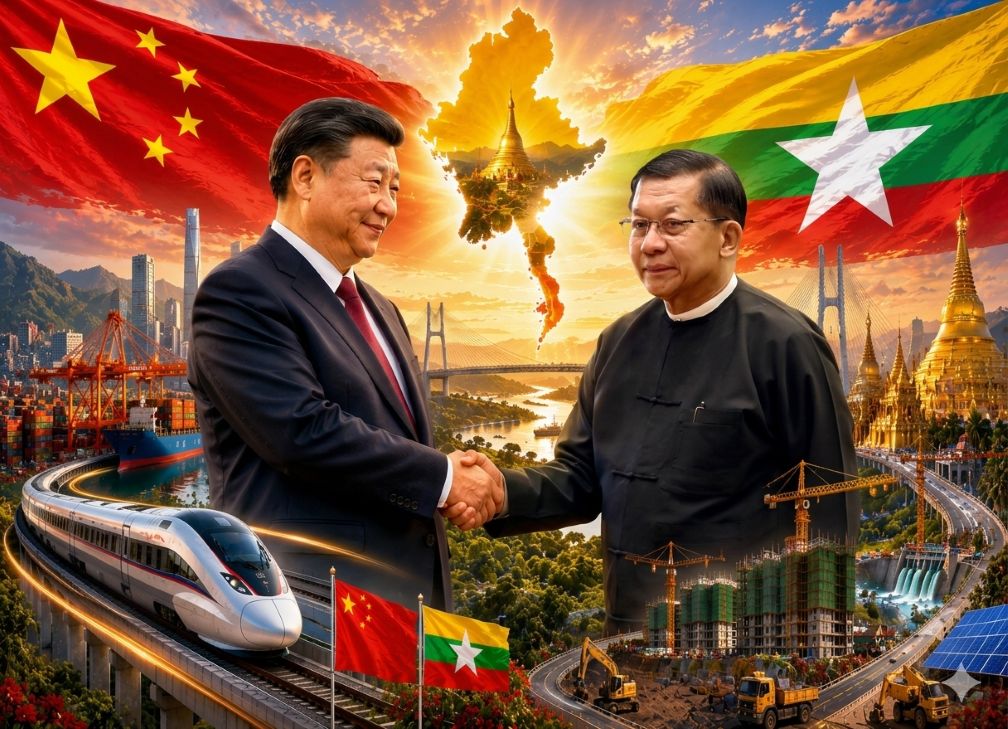
Chinese President Xi Jinping seen with Myanmar President U Min Aung Hlaing.
Military and political analysts, along with Shan politicians, pointed out that following "Operation 1027," the influx of Chinese nationals has worsened significantly compared to the past under the administration of the Kokang army (MNDAA), which controls most areas in northern Shan State.
Furthermore, they highlighted that Chinese nationals are increasing their economic encroachment in certain regions, including Mandalay and northern Shan State, by operating under the names of Myanmar citizens while making discretionary financial investments behind the scenes.
In northern Shan State—particularly in Lashio, Muse, Kutkai, and border towns—Chinese nationals and people of Chinese descent are using financial leverage to monopolize various sectors, including trade, hotels, restaurants, gold, gems, and agriculture.
Additionally, intense competition in the real estate market has caused property prices to skyrocket exponentially. As a result, local ethnic residents are facing situations where they have to sell off portions of their own land and relocate to the outskirts of towns or remote areas.
Sai Tun Lin, a Member of Parliament from the Shan and Nationalities Democratic Party (SNDP), told CNI News that the Chinese seem to be taking over all economically strategic locations, and while the Shan people feel deeply resentful, they lack the power to retaliate and are forced to bear it in silence.
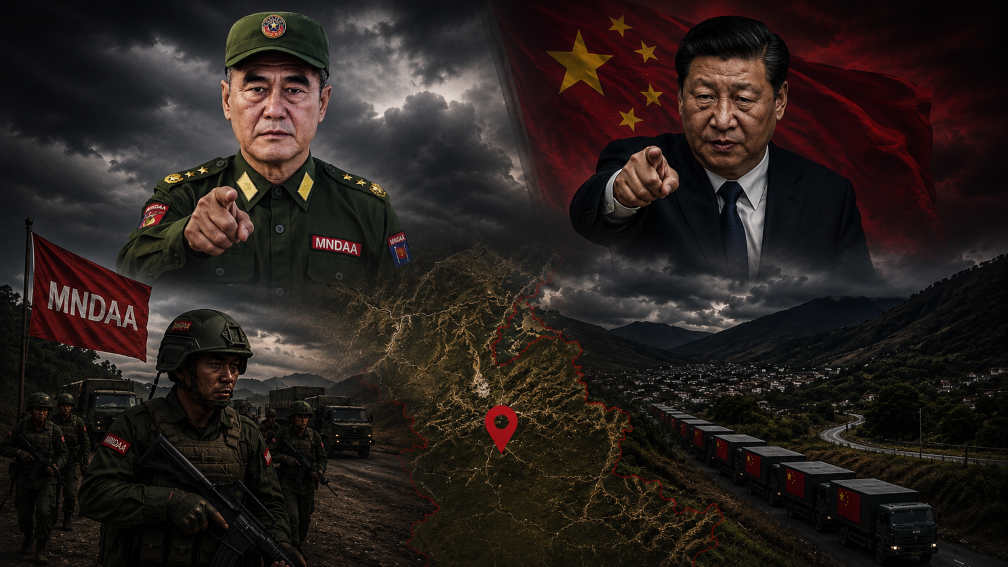
An illustration depicting Chinese President Xi Jinping and the MNDAA leader exercising a monopoly.
Sai Tun Lin stated: "The majority of the population consists of Shan people. They (the MNDAA) are an armed group that fought and captured this territory during Operation 1027. In reality, their actual population isn't that large. However, what we are hearing now is that Chinese nationals and business owners from China are aggressively buying up land even if locals don't want to sell, essentially taking over all economically strategic locations. It is as if the locals have no opportunity to engage in key businesses, and they (the Chinese) are monopolizing everything. It is deeply concerning. They have monopolized the economy, and next are the customs and traditions, starting from culture itself. To put it plainly, they are systematically dominating the economy, education, social affairs, and traditional customs. It is a very ugly situation. Frankly speaking, because the Shan people do not have the power to counter them, they are forced to endure it. Anyone would feel quite resentful."
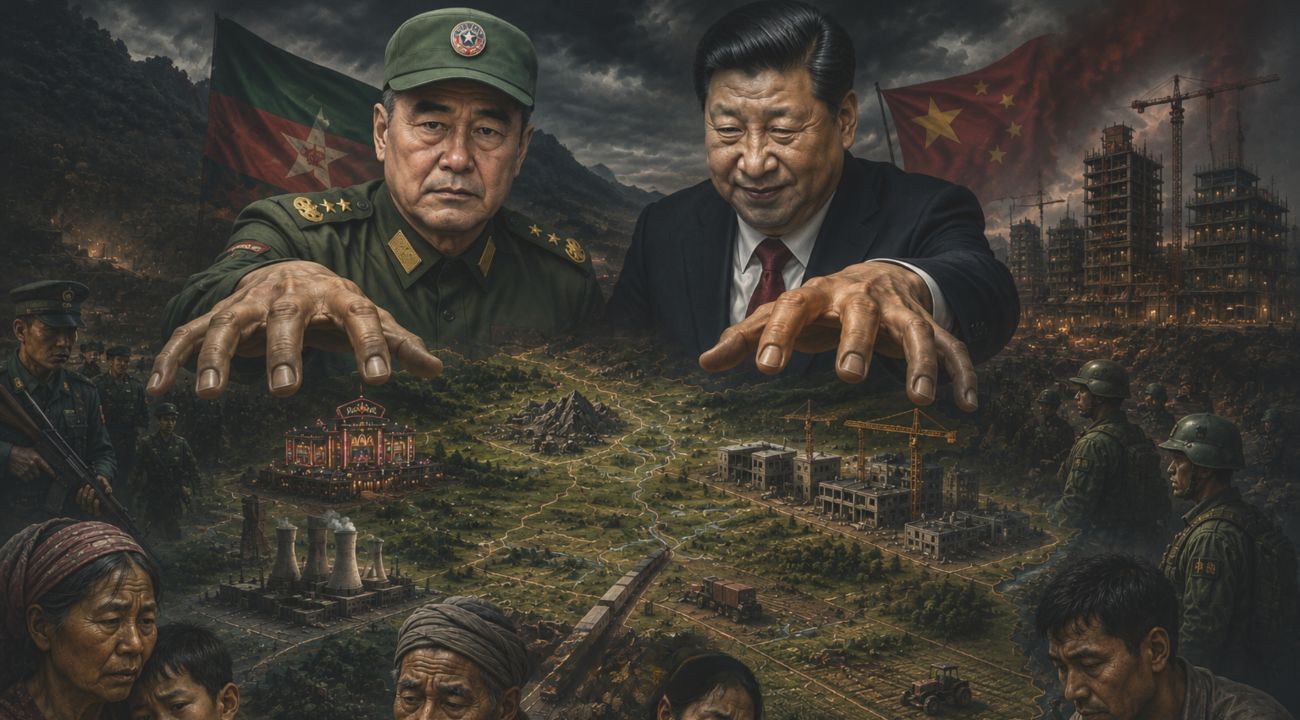
Military and political analysts assess that the growing Chinese presence and influence in northern Shan State is not a simple case of migration. Instead, it represents a dangerous encroachment—not just economically but demographically—by exploiting Myanmar's political instability and weak rule of law.
They point out that without a national policy and a robust administrative mechanism capable of systematically controlling this situation, northern Shan State faces a major long-term challenge: while it may remain on the map of Myanmar, it could realistically transform completely into a client territory under China's sphere of influence.