
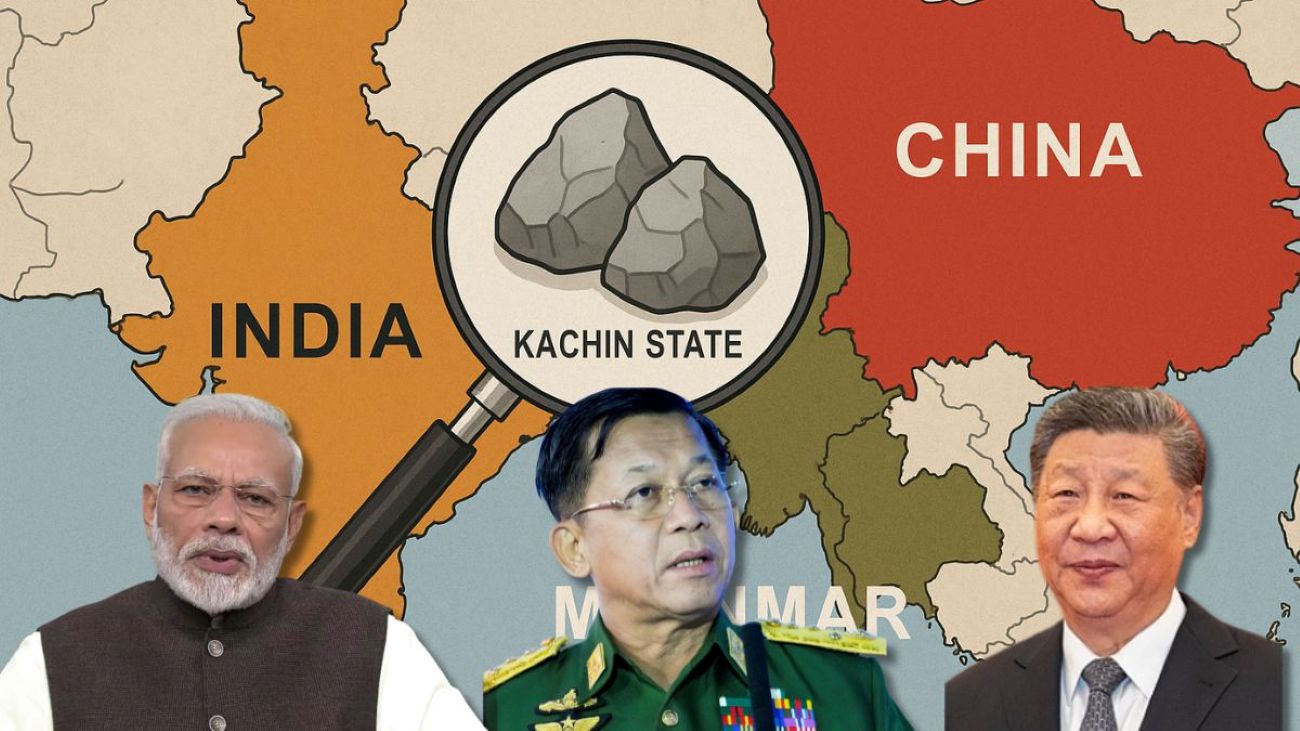
CNI News
June 6, 2026
Myanmar needs to maintain a balance of power among major nations rather than focusing on a relationship with just a single major power, political analyst Dr. M Kon La told CNI News.
Myanmar is a neighbor to two major powers, China and India, and plays a geopolitically significant role across multiple sectors, including the strategic interests of both nations.
The start of President U Min Aung Hlaing’s visit to India followed consecutive meetings between China’s Foreign Minister and Ambassador with the President and Vice President of Myanmar.
China and India are observed to be practicing a mutual policy of monitoring and containment against each other, political analyst Dr. M Kawn La told CNI News.
"Every country has to practice this in terms of diplomacy. For Myanmar, our geopolitical importance lies in the fact that we are in the western part of the Indo-Pacific. The center of the Indo-Pacific is currently the South China Sea. From India's perspective, it is difficult to accept Myanmar being under the control of a single country. Similarly, Myanmar must work to balance major powers rather than dealing with only one.
China is also applying a containment policy against India. How? By establishing relationships with Bangladesh and Pakistan, and now even Afghanistan is becoming closer to China. So, China uses Afghanistan, Bangladesh, and Pakistan to practice a containment policy against India. If India wants to counter this and apply its own containment policy against China, it must establish a closer relationship and balance with our country and Bangladesh, which serve as a land bridge. These mutual dynamics exist, and every country situated in a geopolitically vital location operates this way," he said.
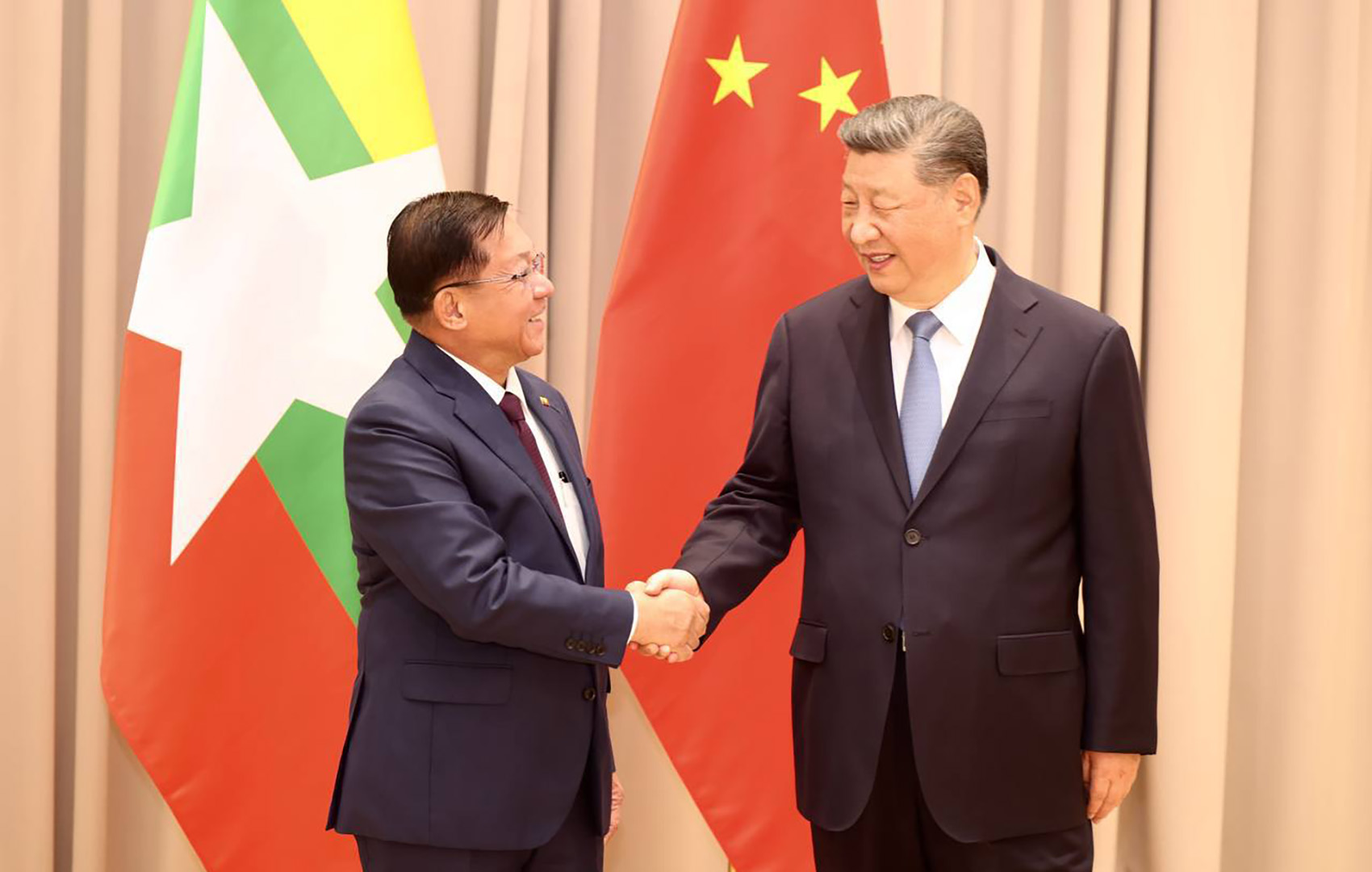
Chinese President and Myanmar President
Military and political observers point out that Myanmar should play its political cards smartly between its two powerful neighbors, China and India.
The regions in Myanmar connected to China and India include Shan, Kachin, Chin, Sagaing, and Rakhine states and regions. Analysts emphasize that caution is required regarding all areas bordering these two major powers.
Military and political analysts assess that the attitudes of China and India toward Myanmar are based on their respective national interests, geopolitical competition, and border stability. They point out that China’s primary objectives are access to the Indian Ocean and economic benefits, while India’s objectives are the security of its northeastern border and countering China.
Myanmar should engage not only with China and India but also with Western Blocs, and it should act in accordance with a "3G Plus One" ideology, Dr. M Kon La told CNI News.
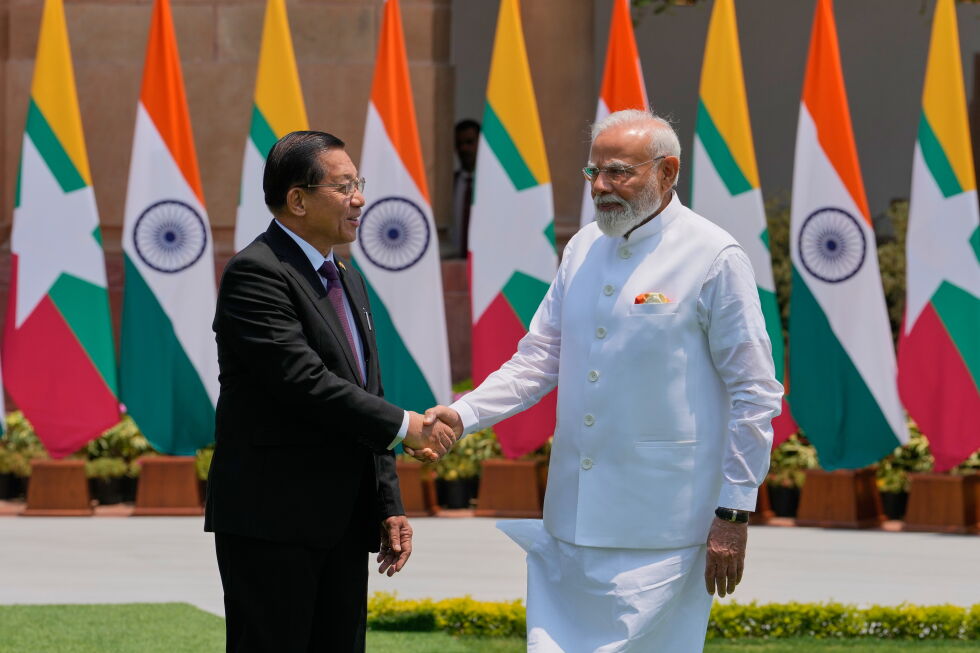
Indian Prime Minister and Myanmar President
"The current government of President U Min Aung Hlaing is doing well with its initiatives. It must respect and implement treaties and agreements. Collaborating with India to avoid appearing solely dependent on China is also a good move. Likewise, we must engage with the Western Bloc. If they don't impose sanctions, we must engage with them. The widely discussed concept is the '3G+1 Geopolitical Ideology.' This is an excellent ideology and one that Myanmar should adopt right now. '3G' represents relationships with Russia, China, and India, while 'Plus One' means establishing relations with the Western Bloc. This is because Myanmar is currently involved as a Strategic Partner in the Shanghai Cooperation Organisation (SCO). Looking at the map, the SCO includes Central Asia, Russia, India, and China. Myanmar serves as the SCO's maritime outlet to ASEAN. Since Myanmar has become a Strategic Partner with close ties to the SCO, ports in member states like Russia and transit ports are becoming important. Therefore, we must implement this 3G+1 Geopolitical Ideology to balance not just China and India, but other major powers as well. Myanmar might even be able to create a new axis in the Indo-Pacific. Current political institutions in Myanmar are considering this, which is a positive sign," he said.
China-Myanmar affairs observers note that the Chinese government is likely to finalize its Belt and Road Initiative (BRI) projects and the Kyaukphyu Deep Sea Port project in Myanmar within the next five years.
Similarly, India is implementing the Kaladan Multi-Modal Transit Transport Project and the India-Myanmar-Thailand Trilateral Highway.
Furthermore, India is showing interest in rare earth elements in Myanmar, which are currently being primarily mined and operated by China. This matter was discussed during the meeting between President U Min Aung Hlaing and Indian Prime Minister Modi. Consequently, military and political analysts are closely watching how the Myanmar government will navigate the rare earth issue between China and India.