
CNI News
June 1, 2026
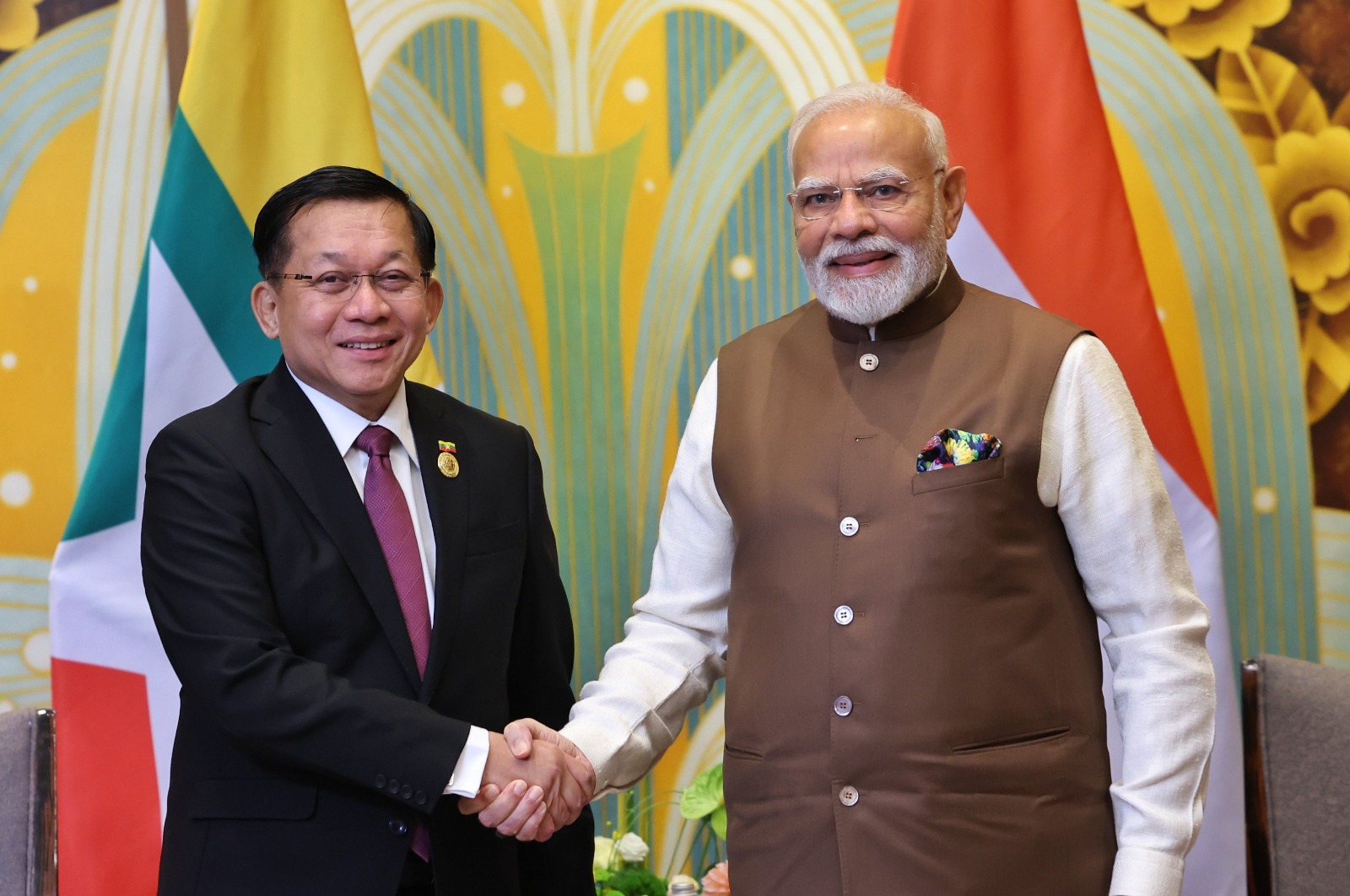
Myanmar’s President U Min Aung Hlaing will visit India, and military and political analysts point out that rare earth minerals and security issues are likely to be key topics during the trip.
President U Min Aung Hlaing is set to travel to India within days at the invitation of Indian Prime Minister Narendra Modi.
During the visit, he will meet and hold talks with India’s President as well as Prime Minister Modi, and also meet senior members of the Indian government and business leaders, according to a May 28, 2026 statement from Myanmar’s Ministry of Foreign Affairs.
A political analyst told CNI News that as the United States looks for ways to reduce its reliance on China for rare earths, Myanmar could become part of that conversation, and the upcoming India–Myanmar meetings may be oriented toward rare earth issues.

Rare earths and armed groups
He said: “The main thing is, I think the U.S. wants to open up a route to purchase Myanmar’s rare earths via that region (India). Not long ago we saw a pact between the U.S. and India. When we looked into it, it was assessed as an important step for the U.S. to reduce its heavy dependence on China for rare earths. Will India produce rare earths domestically and supply them? Or, if it’s connected with the KIA, will they import rare earths? That’s what worries us. Perhaps U Min Aung Hlaing is also concerned and will go to discuss these matters. If India is going to move rare earths connected with the KIA, then it would have to provide the KIA with the weapons and ammunition it needs. So the prospects for that region are somewhat concerning. India’s past policy was not to get involved in Myanmar’s internal affairs. India also has armed groups operating in its own territory, so maybe the two militaries would mutually help suppress them. Is the trip to maintain that approach? It’s hard to say—just thinking it through.”
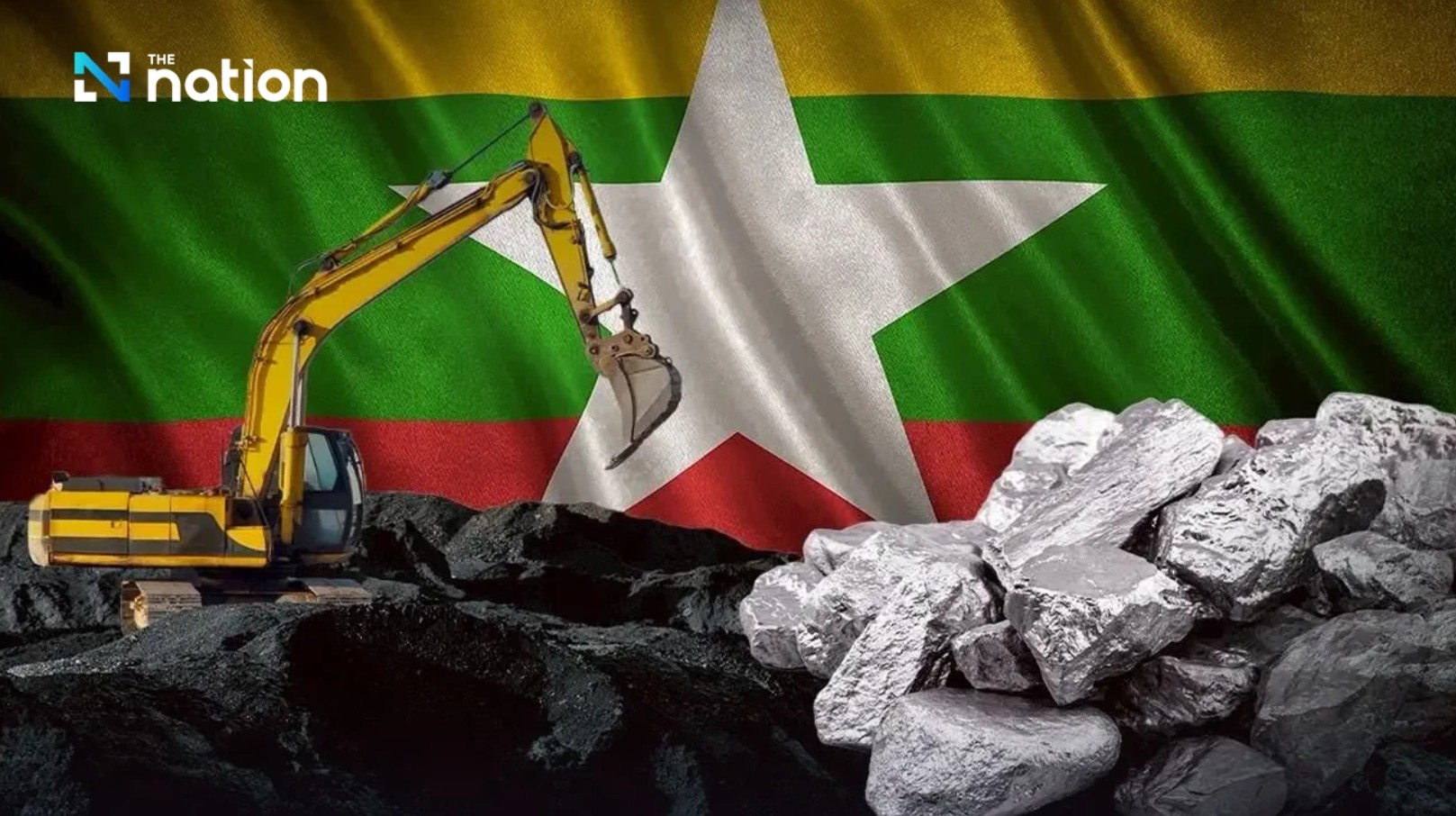
In Myanmar, most rare earth mining operations are run by Chinese entities. Mining is ongoing in the Panwa–Chipwi area of Kachin State under KIA control, as well as in areas of Shan State controlled by the NDAA and UWSA.
Subsequently, the KIA launched the “three K” (Kanbalu–Kawlin–Katha) operation in Sagaing Region and has been trying to use Rakhine State’s maritime outlet—via routes running from Kachin State through Sagaing and Chin State—to export rare earths to Western countries and Europe.

China, Myanmar, and armed groups
Similarly, the KIA is working on military and commercial corridors to export rare earths into India by using the Tanai Township–Shinbwayyan route in Kachin State and passing through the Pansaung gate in the Naga area of Sagaing Region.
As a neighboring country, India is reportedly interested in purchasing rare earths originating in Myanmar, and international articles have claimed that India has a secret agreement with the KIA.
However, political analyst U Htet Aung Kyaw told CNI News that Myanmar’s illegal rare earth trade cannot simply be attributed to the policies of the Chinese and Indian governments.
He said: “Some of this is Chinese business people coming into Myanmar to do business, which may or may not strictly follow China’s official policy. It’s easy for Chinese businesspeople to operate in Myanmar. The rule of law in Myanmar is weak. In those areas in particular, the Myanmar government’s reach doesn’t extend. If they coordinate with local groups, they can get things done. It’s not that China’s state-owned giants are officially coming to mine rare earths; it’s private Chinese businesspeople operating with understanding. So it’s hard to call it China’s policy. India is similar. We hear that such things will be done. I don’t think that necessarily reflects the Indian government’s policy either. Our problems arise because we ourselves are not united. We cannot put the blame on other countries. India can control its own territory, but it cannot come and control what happens inside Myanmar. When the Myanmar government doesn’t govern those areas, such illegal businesses will occur. We shouldn’t shift the blame; this is something we ourselves must resolve.”
Myanmar’s rare earths and ongoing mining activities
Military and political analysts note that rare earths have effectively become a geopolitically usable “weapon.”
Major powers and developing countries around the world want Myanmar’s rare earths for their own technology sectors and for military hardware.
While rare earths may be scarce elsewhere, they are not scarce in Myanmar, he said, adding that it is not appropriate to sell them to anyone just for money in a “cash-and-carry” fashion, according to U Khun Hsai, who is involved in peace process activities.
In 2023 alone, Myanmar exported over 50,000 tons of rare earths to China—an increase of nearly 80 percent compared to 2022.
In addition, the trade value is around USD 1 billion annually, representing a very large sum for Myanmar’s economy, especially for border regions.