
CNI News
June 1 , 2026
Daw Saw Mra Raza Linn, Chairwoman of the Arakan Liberation Party (ALP), told CNI News Agency that discussions must be held on how to shape and implement the points generally agreed upon between the NSPNC and the seven Ethnic Armed Organizations (EAOs) that have signed the Nationwide Ceasefire Agreement (NCA) within the parliament.
The National Solidarity and Peacemaking Negotiation Committee (NSPNC) has reached agreements with the seven NCA-signatory EAOs, as well as with the bloc of political parties.
When proposals negotiated with political parties are submitted to parliament, lawmakers from the respective political parties can accept, debate, and approve them.
However, Daw Saw Mra Raza Linn pointed out that if the agreements made with the seven NCA-signatory EAOs are to be submitted and debated in parliament, representatives from the EAOs themselves are currently not present in the legislature.
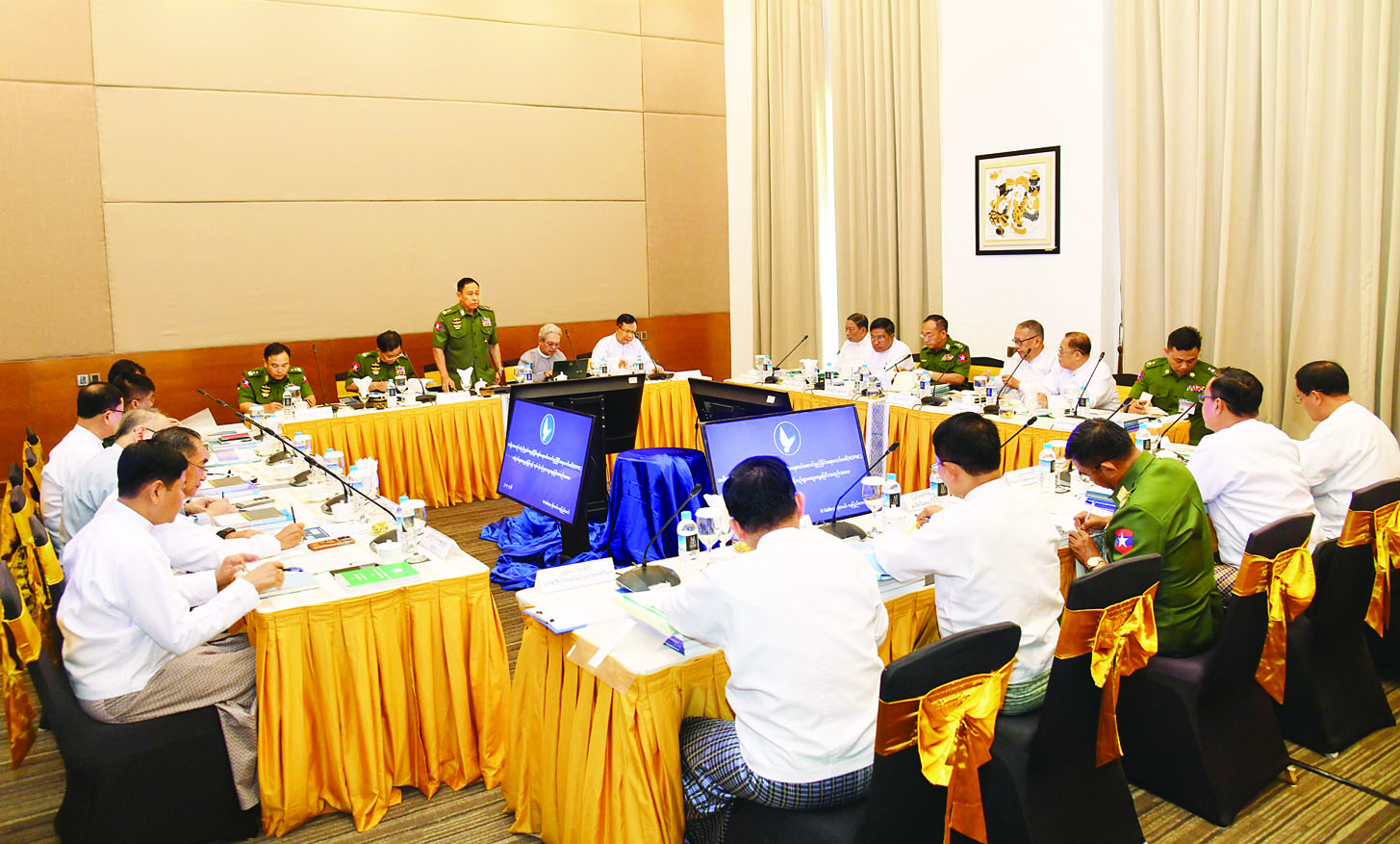
An ongoing NSPNC meeting.
"As ethnic armed revolutionary groups, we have points that have been generally agreed upon (with the military). There are also points agreed upon with political parties. There are talks that these will be combined and approved in parliament, and once approved, a political pathway will emerge to move forward.However, ethnic armed revolutionary organizations are not yet included inside the parliament. It seems as though what the ethnic armed revolutionary organizations have discussed with the NSPNC will just be submitted to parliament. There are still things to consider regarding how to approach this. The situation has now reached a point where we must continue discussions. We have already made an overture," she said.
Before stepping down as Commander-in-Chief of the Defense Services, the current President U Min Aung Hlaing stated on March 10, 2026, that the demands of the EAOs, matters concerning constitutional amendment, and necessary agreements and discussions for the regions and the country would be re-examined and discussed in the upcoming parliament.
Furthermore, upon being elected as President, he stated on April 10 that the 43 points to amend the constitution—which were agreed upon between the NSPNC and the working group of the political parties bloc—would be submitted to the Pyidaungsu Hluttaw (Union Parliament) for discussion.
During the previous government led by President U Thein Sein, the Union Peacemaking Work Committee (UPWC) was formed to negotiate with ethnic armed groups for peace.
The UPWC included Vice President U Sai Mauk Kham as Chairman, with Minister U Aung Min from the President’s Office, Chairman of the Pyithu Hluttaw Nationalities Affairs and Internal Peacemaking Committee U Thein Zaw, and while Deputy Commander-in-Chief Vice-Senior General Soe Win, Among them, Minister U Aung Min served as the chief negotiator, leading ground-level talks and meetings with ethnic leaders.
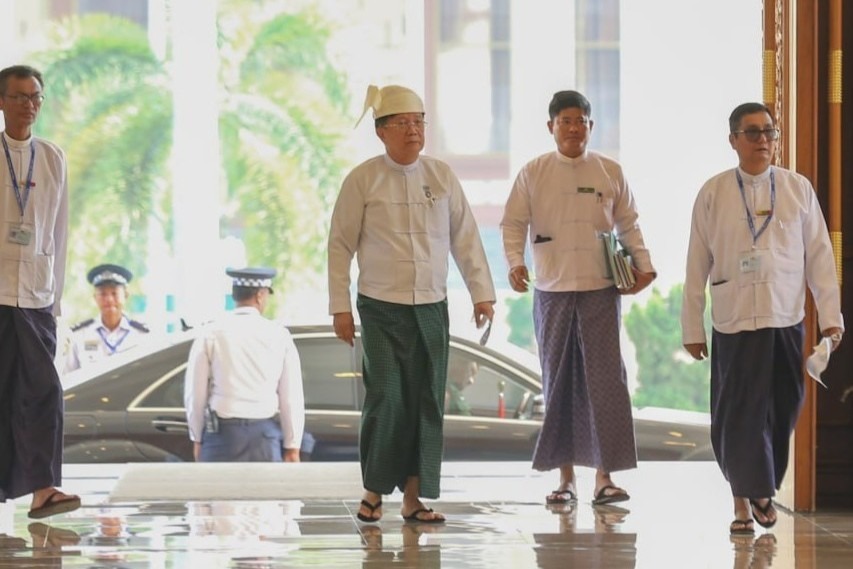
Amyotha Hluttaw Speaker U Aung Linn Dwe.
Daw Saw Mra Raza Linn told CNI News Agency that there is precedent showing that meetings between the UPWC, led by Minister U Aung Min, and the Nationwide Ceasefire Coordination Team (NCCT)—composed of ethnic armed groups—successfully allowed the draft NCA treaty to be approved in parliament without the direct participation of ethnic armed groups inside the legislature.
However, she noted that under the current new transitional government, the parliamentary sector is not included in the formation of the National Solidarity and Peacemaking committees. Therefore, finding out how to shape this process must be resolved through ongoing discussions.
"Back during the NCCT era, I was there as the very first woman to participate in the NCCT. We had deliberations within the NCCT back then. Now, those individuals remain within the armed revolution. When we had the NCCT, we entertained the idea that the ethnic armed revolutionary organizations negotiating along the NCA path should have the right to sit and speak from a position within the parliament. However, that did not materialize.
It is still not possible to say exactly how this will be considered moving forward. More discussions are needed within the EAOs. During the period led by Minister U Aung Min, we were in a position where the draft of the NCA treaty that we managed to negotiate could be approved in parliament. Now, how it will be shaped this time will only be determined through discussions," Daw Saw Mra Raza Linn said.
On April 11, 2026, the government announced the reconstitution of the National Solidarity and Peacemaking Central Committee (NSPCC), the National Solidarity and Peacemaking Work Committee (NSPWC), and the National Solidarity and Peacemaking Negotiation Committee (NSPNC).
Because the role of parliament is noticeably absent from these newly formed committees, military and political analysts are raising questions as to whether this implies that parliament is being kept separate from peace-related matters.