
CNI News
May 1, 2026
Achieving "all-inclusiveness" in the peace process is easy to talk about but difficult to implement in practice, Colonel Khun Okkar, Chairman of the Pa-O National Liberation Organization (PNLO-NCA/S), told CNI News.
Currently, the government led by President U Min Aung Hlaing has included peace dialogue as part of its "First 100-Day Plan." On April 21, 2026, President U Min Aung Hlaing invited armed organizations—including those that have signed the Nationwide Ceasefire Agreement (NCA), those that have not yet signed, and groups like the KNU, CNF, and ABSDF (who signed the NCA but have not held talks between 2021 and 2025)—to join peace negotiations by July 31.
Colonel Khun Okkar noted that while the concept of all-inclusive dialogue is simple in words, the reality of execution is fraught with challenges.
"We will only know the reality once we start. Furthermore, we have to distinguish between groups; their histories and origins are different," he said. "An organization like the KNU, which has been fighting for 70 years, cannot be equated with a PDF group that has been fighting for 4 or 5 years. Ethnic organizations have a specific 'legitimacy'—they have representative territory, a representative population, a political party structure, an armed wing, and a clear policy roadmap. Groups that meet these criteria will be invited to negotiate with dignity as equals. However, for groups that emerged in the last 4 or 5 years, if you measure them by those standards, they are likely to be lacking in one area or another. That is why 'all-inclusiveness' is easy to say but hard to do. If we can get 80% participation, that would be quite sufficient. The current administration must strive to reach that 80% mark."
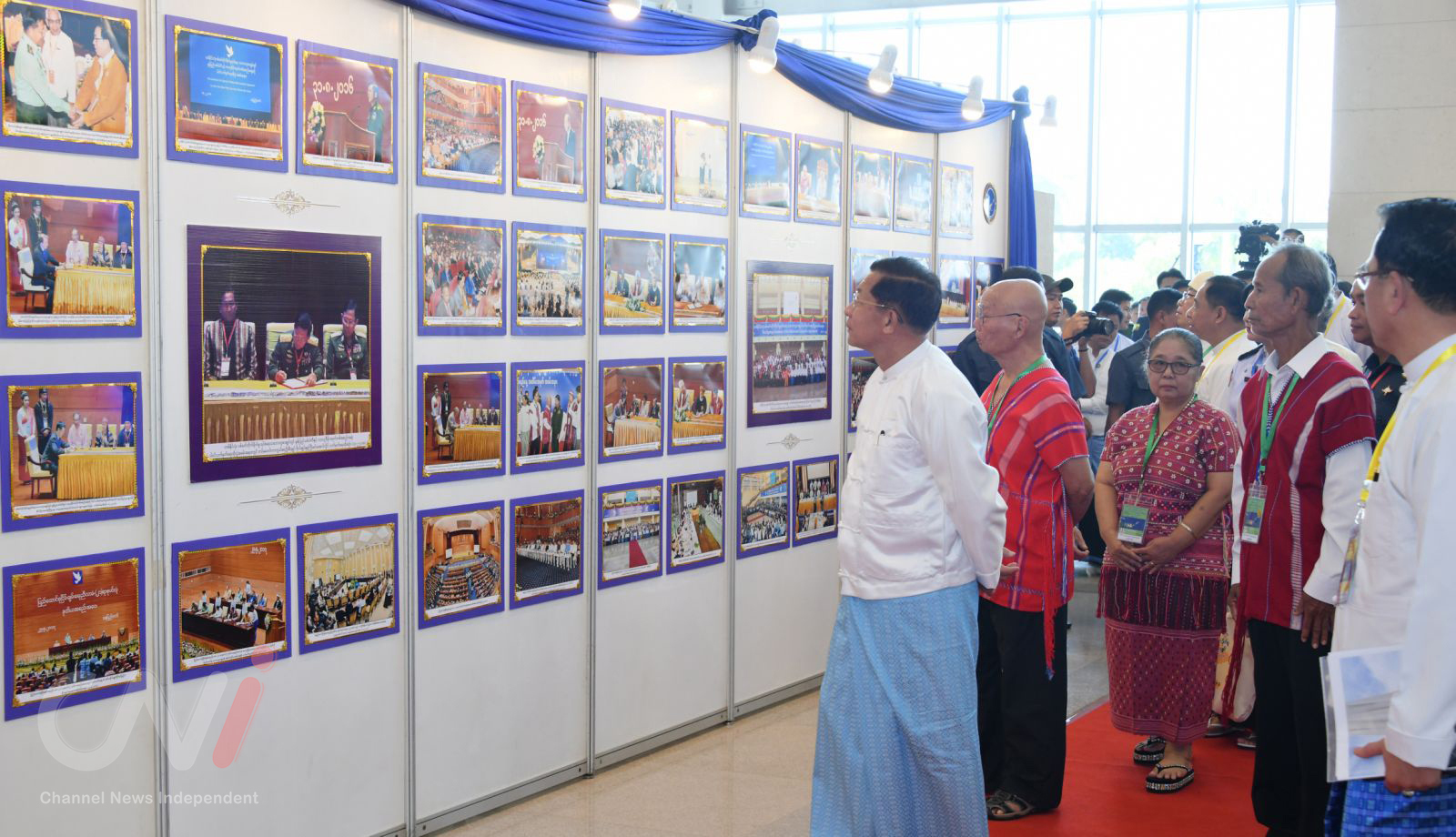
A display of the peace process record at an NCA anniversary ceremony.
There is also debate regarding whether the Shanni Nationalities Army (SNA) and the National Socialist Council of Nagaland (NSCN) are included in the peace invitation issued by the government. Colonel Khun Okkar recalled that the Naga group (NSCN) participated during President U Thein Sein's era but did not accept the concept of federalism.
"The Naga group joined the discussions with us before, but they did not accept the federal principle. Our country is moving toward a federal model, but they didn't agree. Their policy is to unite the Nagas on the Indian side and the Myanmar side to establish an independent Naga State. Because of this, while they participated in NCA negotiations, they walked out when we discussed the federal system and did not sign the agreement. If backgrounds, policies, and political goals differ, some will not join an 'all-inclusive' peace talk. 'All-inclusiveness' is a policy term; in practice, if 75% to 80% participate, it works. That’s how I calculate it," he explained.
Military and political observers point out that to achieve an inclusive peace process in Myanmar, trust must be rebuilt. They emphasize that accountability and responsibility are essential; without them, a successful peace process is unlikely.
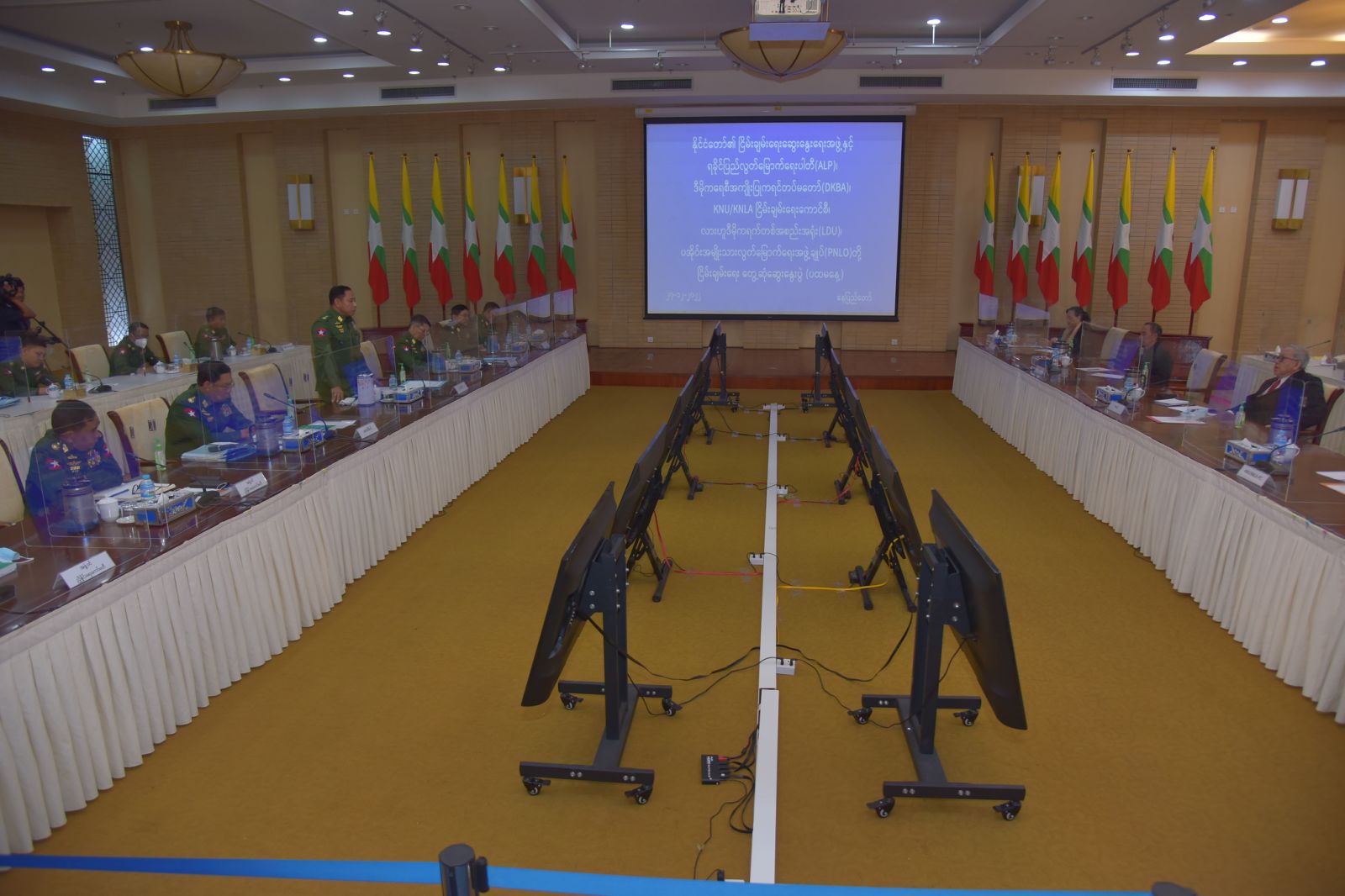
The National Solidarity and Peacemaking Negotiation Committee (NSPNC) meeting with NCA signatories.
Colonel Khun Okkar added that the journey to peace remains long, estimating that it could take at least seven years to finalize peace negotiations.
"Peace is still a long way off. By nature, peace is only achieved when political dialogues lead to political agreements. Before we talk about peace, we must see if political dialogues even happen. To get to political dialogue, we must start with preliminary ceasefire talks and trust-building. Once trust is built, conflicts and hostilities must be reduced step-by-step. Only then can we move to the political dialogue table. A firm peace is only possible when a political dialogue is properly structured for the country’s future, policies are agreed upon, and there are solid guarantees from neighbors like China and India, as well as ASEAN. This will take a long time. It won’t happen in a year or two. 100 days is just the beginning. The conflict has lasted 70 years; it will take at least 7 years to conclude the political negotiations."
Analysts further suggest that the peace process would benefit from removing pre-determined conditions.
They noted that the current government may face significantly more challenges than the U Thein Sein administration did during its peace efforts.