
CNI News
April 29, 2026
While the Myanmar government has officially declared the Myawaddy Asia Highway—a vital artery for Thai-Myanmar border trade—open, reports indicate that cargo trucks are still unable to traverse the route for commercial purposes.
Thai authorities are reportedly preparing to reopen the Myawaddy-Mae Sot No. 2 Friendship Bridge, a cornerstone of bilateral trade. However, on the Myanmar side, while the Myawaddy-Kawkareik Asia Highway has been declared open, border trade operations remain stalled.
A primary concern preventing the full resumption of trade is a potential deadlock between the Myanmar government and the Karen National Union (KNU). Fears are mounting that conflict could reignite along the route if the two sides cannot reach an agreement regarding the KNU’s demand for a 10% tax share on border trade.
Border traders, who have seen their businesses crippled for nearly two years, argue that the priority should be the resumption of trade and access to the Asia Highway, even if it means paying taxes to multiple parties. U Hla Thaung, an onion trader, shared his perspective with CNI News.
"When the military opens the road, the armed groups often say, 'The military only opened the areas they control; it doesn't include ours.' This makes traders afraid to move. Traders eventually negotiated at the border and found that they could proceed if they paid taxes to the armed groups. While the government opens the road, they might not want to officially permit paying taxes to these groups. But for a trader, like oil looking for a hole to seep through, we just want a way out. The main thing is simply to get the road open," he said.
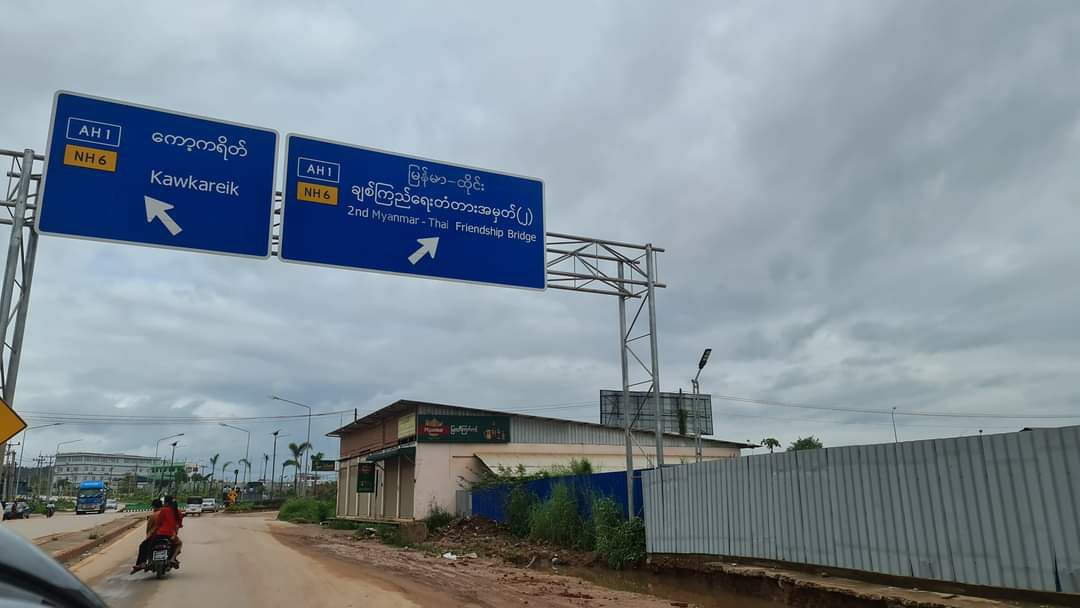
The Myawaddy-Kawkareik Asia Highway.
Thai authorities are currently making the necessary preparations to reopen the No. 2 Friendship Bridge, and cargo trucks are reportedly lined up on the Mae Sot side, ready to resume trade as soon as the gates open.
U Thant Zin Tun, Vice Chairman of the Myanmar Corn Industrial Association, told CNI News that since the Myawaddy-Asia Highway was closed, exports have been diverted through the Yangon-Kawthaung-Ranong sea route. He noted that reopening the Myawaddy border would provide traders with two shipping options, significantly speeding up trade.
"Travel and transport might not be perfectly smooth yet because the situation on the ground isn't fully clear. There are corn-related groups in Karen State as well. Once the road truly opens, corn exports will start flowing gradually. They say the roads are opening and the bridge will open; if that happens, we will have two choices: the sea route we are currently using and the reopened land route," he explained.
The reopening of the Myawaddy border trade is expected to boost exports of domestic agricultural products, including corn, chili, and onions, while also facilitating more imports. This increase in supply is anticipated to lead to a moderate decrease in domestic commodity prices.
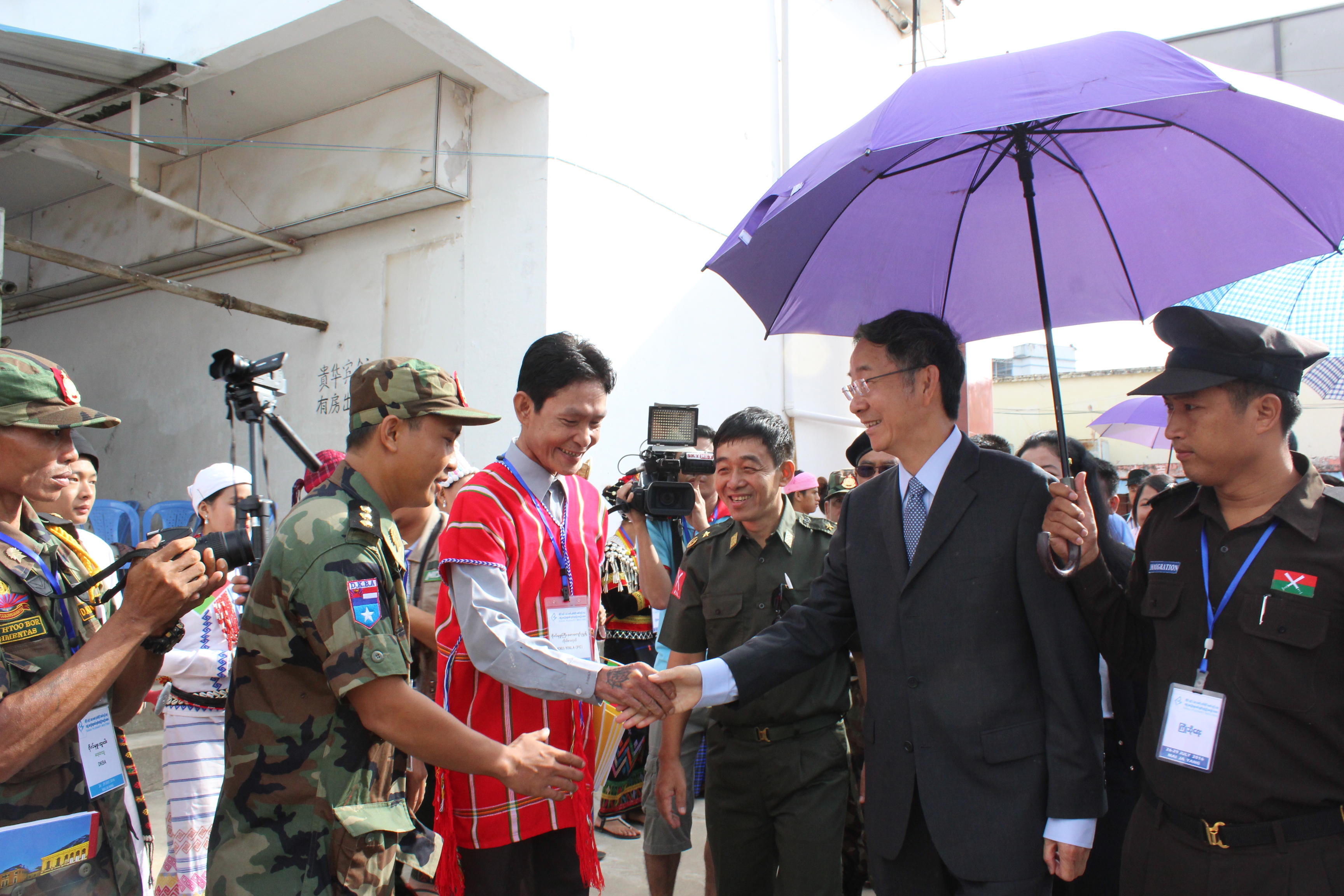
Leaders of the KNU/KNLA-PC and DKBA seen alongside a KIA leader.
During the two-plus years the Myawaddy-Kawkareik Asia Highway was closed, traders relied on alternative mountain routes through the Dawna Range—such as the "Old Road," Hto Kaw Koe, Kyat U Taung, and 108 routes—which are controlled by Karen armed groups. Traders had to pay taxes to these groups to move their goods.
Currently, the government has opened the Asia Highway section where Karen armed groups are not present, while simultaneously banning travel on the alternative mountain routes that traders previously utilized.
The Myawaddy-Kawkareik Asia Highway is located within Karen State, a region home to various armed organizations, including the KNU, PDF, DKBA, KNU/KNLA-PC, KTA, BGF, and KNA.