
CNI News
April 28, 2026
Military and political analysts are raising questions regarding how the Naga and Shanni armed groups should be considered within the peace invitation extended by the transitional government led by President U Min Aung Hlaing in Myanmar.
On April 21, 2026, President U Min Aung Hlaing invited armed groups—including those that have signed the Nationwide Ceasefire Agreement (NCA), those that haven't, and groups like the KNU, CNF, and ABSDF (who signed the NCA but have not held talks between 2021 and 2025)—to engage in peace negotiations by a July 31 deadline.
In light of this, questions have emerged regarding the status of the Shanni State Army (SNA) and the National Socialist Council of Nagaland (NSCN). Analysts are debating whether these groups are included in the invitation, and whether they should or should not be excluded from the process.
Sai Htay Aung, Chairman of the Tai-Leng (Shanni) Nationalities Development Party: Speaking to CNI News, Sai Htay Aung noted that it remains unclear whether the current government recognizes the Shanni as an Ethnic Armed Organization (EAO).
On the Naga: "The Naga have already signed agreements at the regional level, so it is likely they could be included in this invitation."
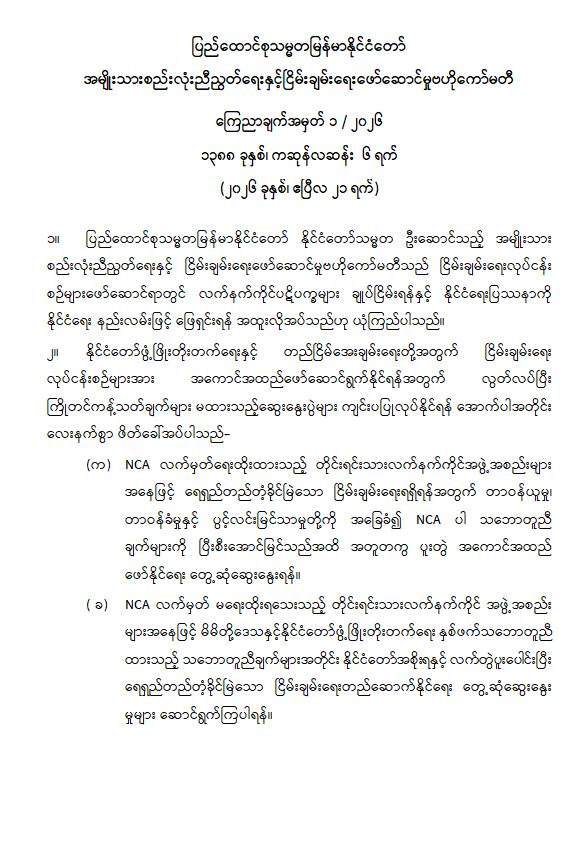
The government’s peace invitation notice.
On the Shanni (SNA): "The Shanni have not signed any agreements at the regional or state level. Furthermore, there is the question of whether the current government even recognizes them as an EAO. It’s hard to say if they are included. Ideally, peace invitations should be made after analyzing the desires of all armed revolutionary groups. If they are invited under a revised policy, it would benefit the peace process, though having more groups involved also increases the complexity of the negotiations."
On Political Goals: He mentioned that the SNA will likely follow its five-point policy toward the goal of establishing a Shanni State, but cautioned that achieving this beyond the current constitution is difficult. He cited the "Wa" region as an example—despite meeting requirements, they have not yet achieved statehood because it isn't in the constitution.
U Thein Tun Oo (Executive Director, Thayninga Institute for Strategic Studies): U Thein Tun Oo suggested that while the invitation is theoretically open to everyone, the practical implementation depends on existing bilateral agreements and the level of cooperation.
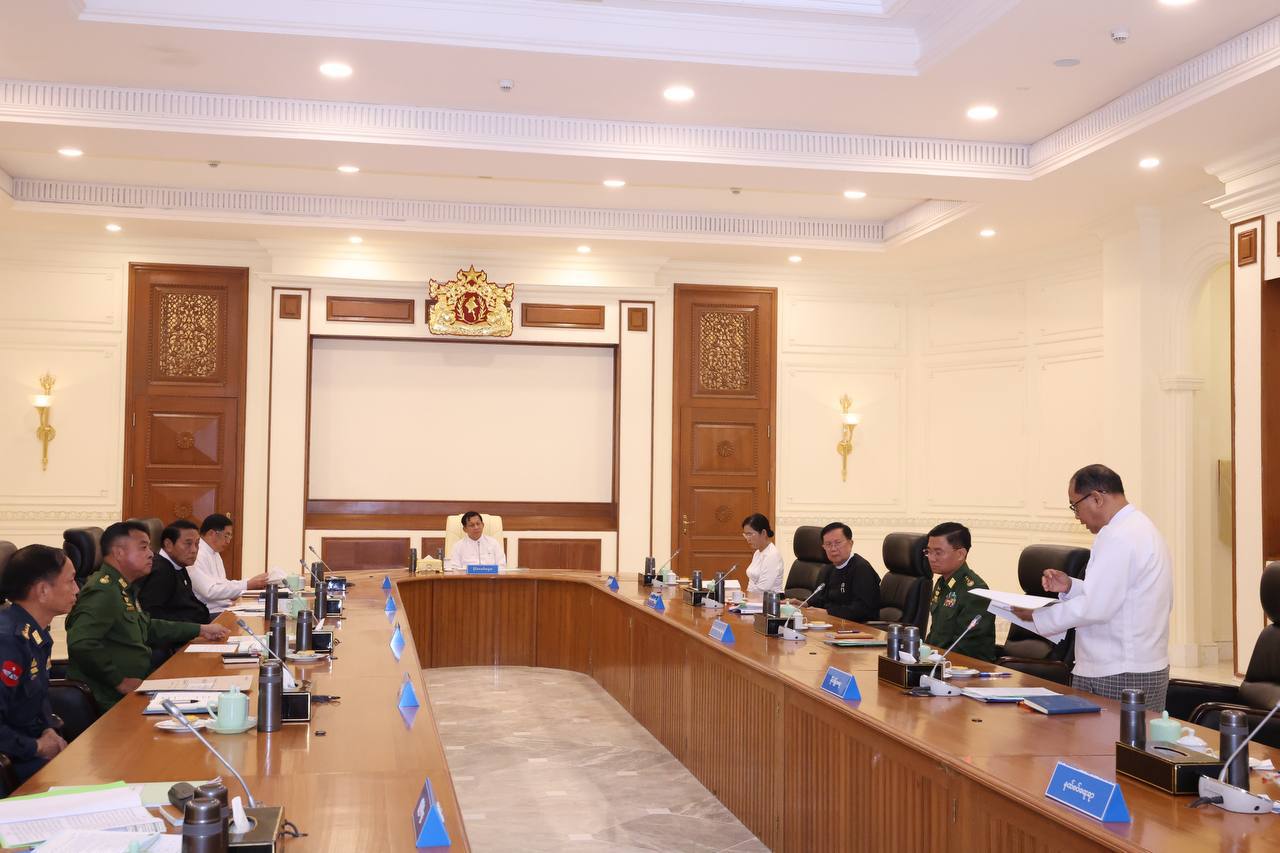
A meeting of the new government’s Nation Defense and Security Council (NDSC).
"The invitation is intended for everyone. However, discussions and cooperation will depend on existing bilateral arrangements. If groups operating within the government's administrative reach are not currently in active conflict but wish to proceed under the NCA framework, negotiations are necessary. However, it would be much more effective to negotiate with groups in areas where actual physical clashes are occurring."
Shanni State Army (SNA): An ethnic armed group striving to re-establish a Shanni State by unifying Mawlaik, Kalay, Hkamti, Katha, and Tamu districts in the Sagaing Region with Bhamo, Myitkyina, Mohnyin, and Mogaung areas in Kachin State.
National Socialist Council of Nagaland (NSCN): An ethnic armed group seeking to establish an independent Naga Federation, unifying Naga people living across the India-Myanmar border.
Military and political observers warn that if these two groups are excluded or ignored in the peace invitation, it could lead to the opening of new military fronts for the Myanmar military within Sagaing Region and Kachin State. They draw comparisons to 2015, when the exclusion of the AA, TNLA, and MNDAA from the NCA process contributed to the large-scale conflicts seen today.