
CNI Interview
April 27, 2026
Following the emergence of a transition government in Myanmar, President U Min Aung Hlaing invited armed organizations to peace talks on April 21, 2026. On the other hand, armed forces have been conducting territorial seizure battles to realize goals of "Confederation" status or secession.
CNI News Agency contacted Dr. Kyaw Swe, a Member of Parliament (Pyithu Hluttaw), to interview him regarding these situations.
Q: Now that a government and parliaments have emerged, how should peace processes be carried out?
A: There is a lot to do regarding peace. We see the main issue as a lack of trust between various organizations. Trust is paramount. There needs to be trust from the armed groups toward the government’s peace invitation. Conversely, there must be trust that the armed groups—after accepting the government's commitments and offered opportunities—genuinely desire peace and will follow through. Currently, I see a situation where mutual trust has vanished.
The main point I want to make is that armed groups need to see that laying down arms does not mean their interests or benefits will diminish. Rather, they must realize that only peace can effectively support regional development.
Q: How should the government extend the peace invitation?
A: Based on the current invitation letter, the government has made many concessions. Since we already have the NCA (Nationwide Ceasefire Agreement) path in place, I believe continuing implementation through this NCA route is more convenient. It already includes all international monitoring processes.
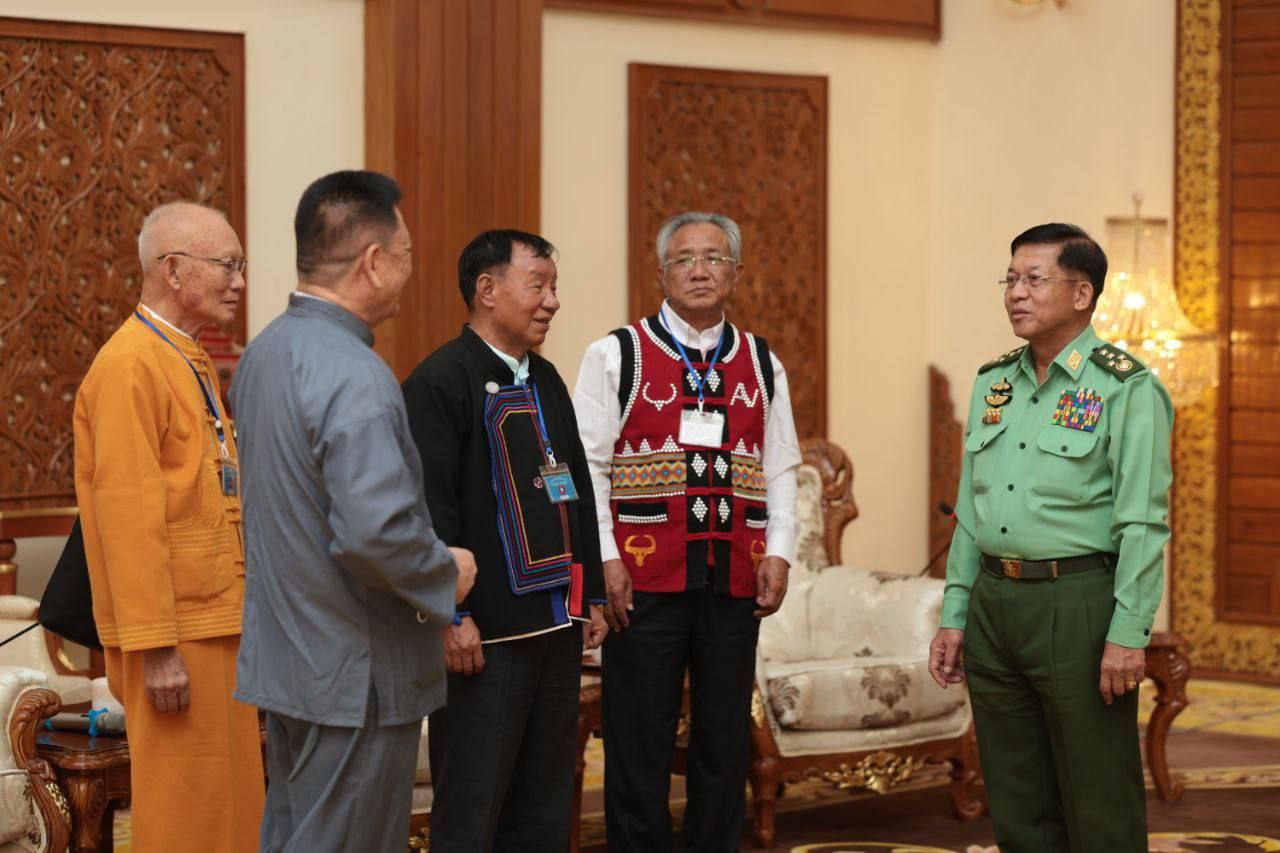
Current President U Min Aung Hlaing seen with ethnic armed groups.
Q: Some say that even if groups cannot attend the peace talks, they can still stop fighting. They analyze "peace" and "ceasefire" as two different things. What is your view? Should a ceasefire be prioritized if full peace cannot yet be achieved?
A: Peace and a ceasefire are not the same. Peace involves a genuine desire to work on regional development. A ceasefire, frankly, often feels like a period where both sides rest to replenish their forces.
That is how it has been in the past. Stopping the fight as soon as possible is best. If we achieve a ceasefire first, the people will begin to feel at peace; it’s the first step. To reach actual peace, we are in a situation where issues must be resolved through a mediator or witness that both sides can accept. One side stopping the fire is not enough to reach the peace stage.
Therefore, the peace stage will only be reached with strong support or problem-solving capabilities from a mediating organization. However, stopping the fire is the most urgent priority. That is why we welcome ceasefires. I believe all armed organizations will start implementing a ceasefire first.
Q: If a ceasefire starts to be implemented, some groups have already begun. However, in 2022, there was a ceasefire with the AA (Arakan Army), but fighting resumed in 2023. What should both sides do to prevent battles from recurring despite ceasefire agreements?
A: The main thing is for a "Third Party" mediator to be involved with strong influence—for example, organizations like the UN, ASEAN, or other international bodies. When such entities intervene, both sides tend to exercise more restraint to maintain their dignity and respect the power of the mediating body. The mediating group should also include national experts and active individuals who desire peace.
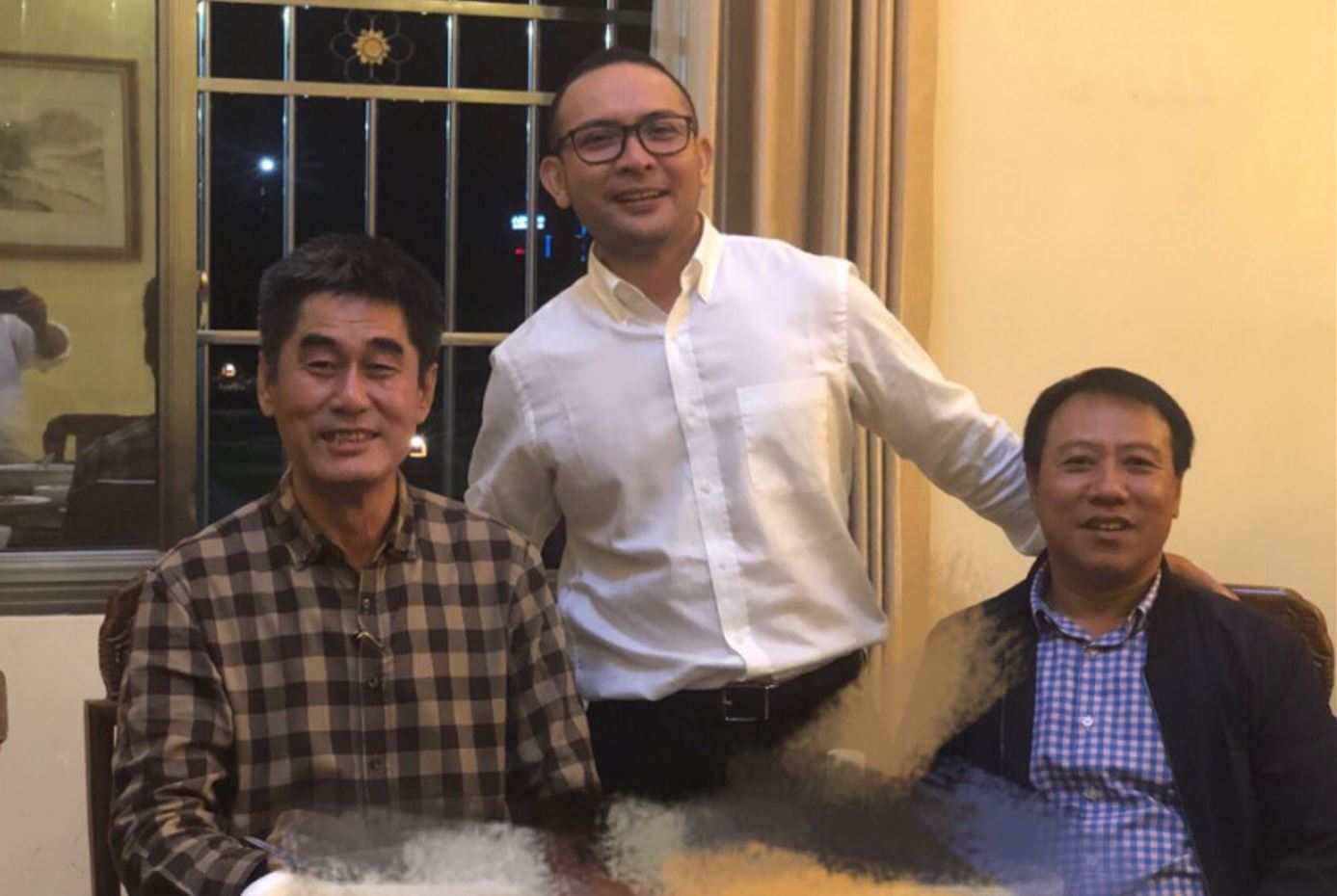
Leaders of the MNDAA, AA, and TNLA seen together.
Q: Currently, some ethnic armed groups are demanding things that exceed a "Confederation." Since there is no constitutional basis for such demands, what other ways can territory or status be granted?
A: There are no specific provisions in our Constitution for granting such territories. Truthfully, "Confederation" as a concept isn't widely practiced in the world anymore—though the European Union functions as a confederate-like entity.
However, they operate as separate, individual countries. In our case, parts of Myanmar cannot be severed and given away. We cannot grant "Confederate" status. We must work on "Federalism" through the NCA route by incorporating the common agreements agreed upon by all ethnic groups into the current Constitution.
If it doesn't align with the Constitution, the Constitution must be amended. If the Constitution cannot be amended yet, we can amend the peace agreement first. The Union Accord has over 40 points. If these 40 points are brought under the Constitution, we can say Myanmar’s Constitution has taken a massive step toward a Federal structure.
Q: When discussing peace and ceasefires, many demand that troops remain exactly where they are ("Point-to-Point"). From another perspective, the Myanmar military has lost significant territory. Is a "stay where you are" scenario realistic?
A: It is not easy. The Constitution already has designated borders for Ethnic Self-Administered Zones. If those borders are overstepped, it becomes a constitutional violation by the very groups meant to protect it.
To be honest, those who currently hold the upper hand on the ground use the phrase "stay where you are" because they do not want to lose the economic opportunities they have gained. Legally speaking, this is a situation that the Constitution simply cannot permit.
Q: Myanmar has faced crises for the past five years. The economy and living standards have declined. Now that a new government and parliament have appeared, what should be prioritized?
A: The issues in Myanmar are such that we don't even have the luxury to choose what to prioritize. Everything is equally important and urgent. First, however, we must prioritize stability and peace. After that, we must boost production in agriculture and livestock—Myanmar's main economy. When more people are in the workforce and the economy is circulating, the country will begin to breathe again. We cannot rely solely on natural resource extraction anymore.
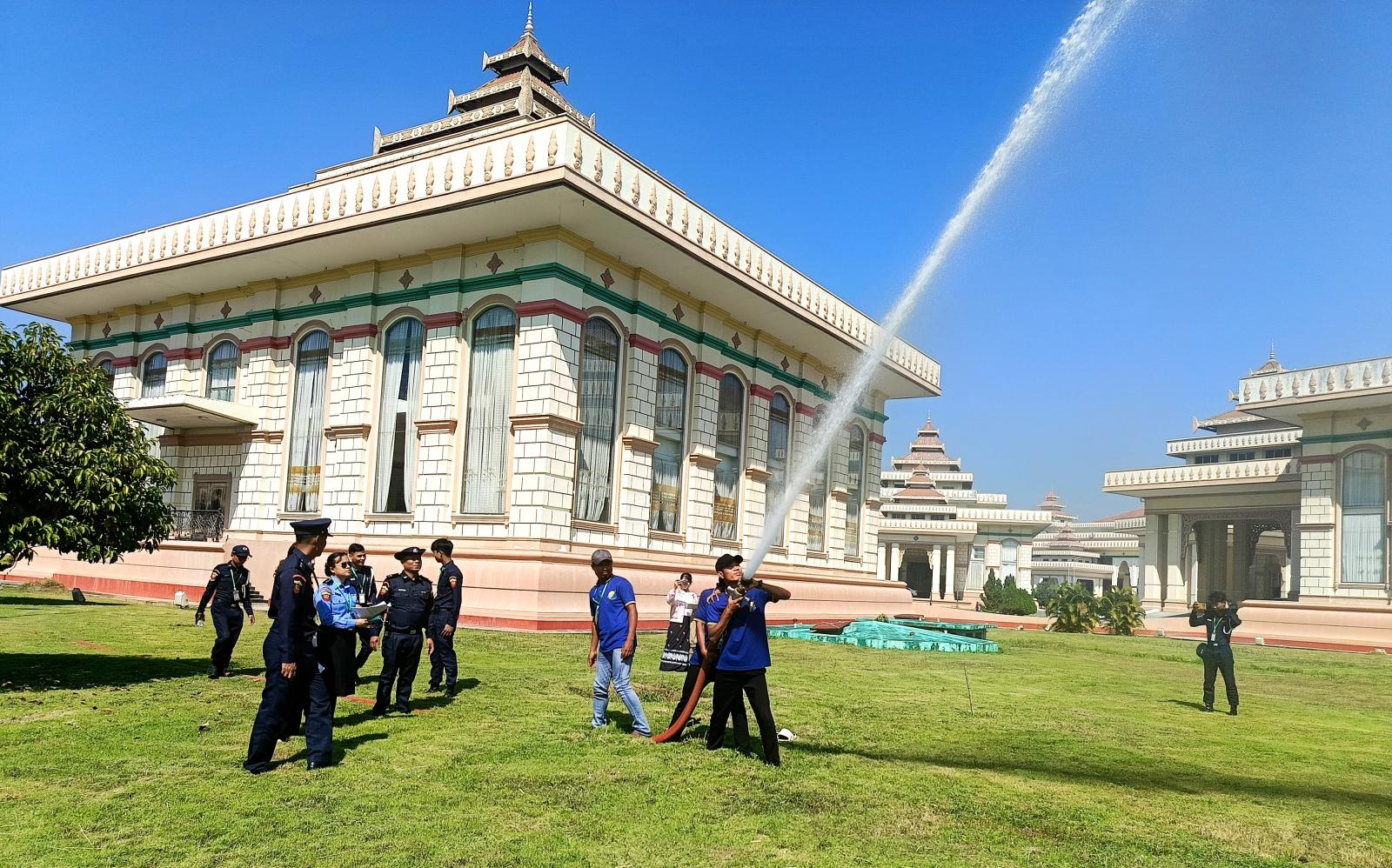
The Parliament (Hluttaw) is seen.
Q: What is the role of Parliament in this setting?
A: The role of Parliament is to introduce the points already agreed upon in the Union Accord as motions and integrate them into the Constitution. If the majority in Parliament agrees, these changes can be implemented.
Q: The "Wa" (UWSA), the strongest ethnic armed group, always states they will not secede from Myanmar. How does this firm stance affect other groups?
A: Not all ethnic armed groups in Myanmar are fighting to secede. They took up arms because they felt they weren't receiving full rights for their people and believed they had to demand them through force. We see that later on, due to the personal agendas of leaders, they haven't been able to achieve the original goals for their ethnicities.
Thus, the voices of these groups don't always represent the entire ethnic population. What we want is for no ethnicity to secede from the current map of Myanmar. That is how the Union will endure. Secondly, the central or Union government must provide rights so that they do not want to secede. I want this to move toward a systematic method of demanding rights. Leaving the armed path to demand rights through political channels is better for the long term.
In modern warfare, there is no such thing as a "total victory." The government will not be able to completely defeat any armed group either. In this situation, both sides must negotiate. Regarding Federalism, what percentage of their demands can we meet? If you ask for 100, we might start by giving 10. You accept that 10, then demand 20, then work to get 30, and eventually reach 50 or 100. If we set a "Time Duration Frame" for this, Myanmar will find peace quickly.
Q: Any final thoughts on the current situation?
A: I want all ethnic armed groups to empathize with the crises being faced by ethnic people on the ground. I want them to join in building a nation with the stable social and economic life that the ethnic people truly desire.
Revolutionary fighting over small details is no longer sufficient or feasible given today's political technology. Therefore, I don't want any ethnicity to consider secession. We will work to create a mechanism where they can negotiate and demand what they truly need from the central government. From the Parliament side, we will stand by the people and the ethnic groups to the best of our ability.