
CNI News
April 25, 2026
Military and political analysts are examining the potential implications of the exclusion of Parliament(Hluttaw) from the newly reconstituted peace process bodies—the NSPCC, NSPWC, and NSPNC—under the transition government led by President Min Aung Hlaing.
On April 11, 2026, the government announced the reorganization of the National Solidarity and Peacemaking Central Committee (NSPCC), the National Solidarity and Peacemaking Working Committee (NSPWC), and the National Solidarity and Peacemaking Negotiation Committee (NSPNC).
Because Parliament was omitted from this structure, analysts are questioning whether this implies that the legislative body is no longer considered relevant to peace-related affairs.
Dr. M Kawn La told CNI that the decision to exclude Parliament suggests a strategy to prioritize negotiations between armed groups first.
The Strategy: He believes the focus is currently on inviting Ethnic Armed Organizations (EAOs) and the PDF to discuss military matters and ceasefires rather than making immediate political commitments.
The Process: "I think the political process—and the role of Parliament—will come only after they negotiate and establish what those commitments will be. It seems the goal is to have armed groups work things out among themselves first."
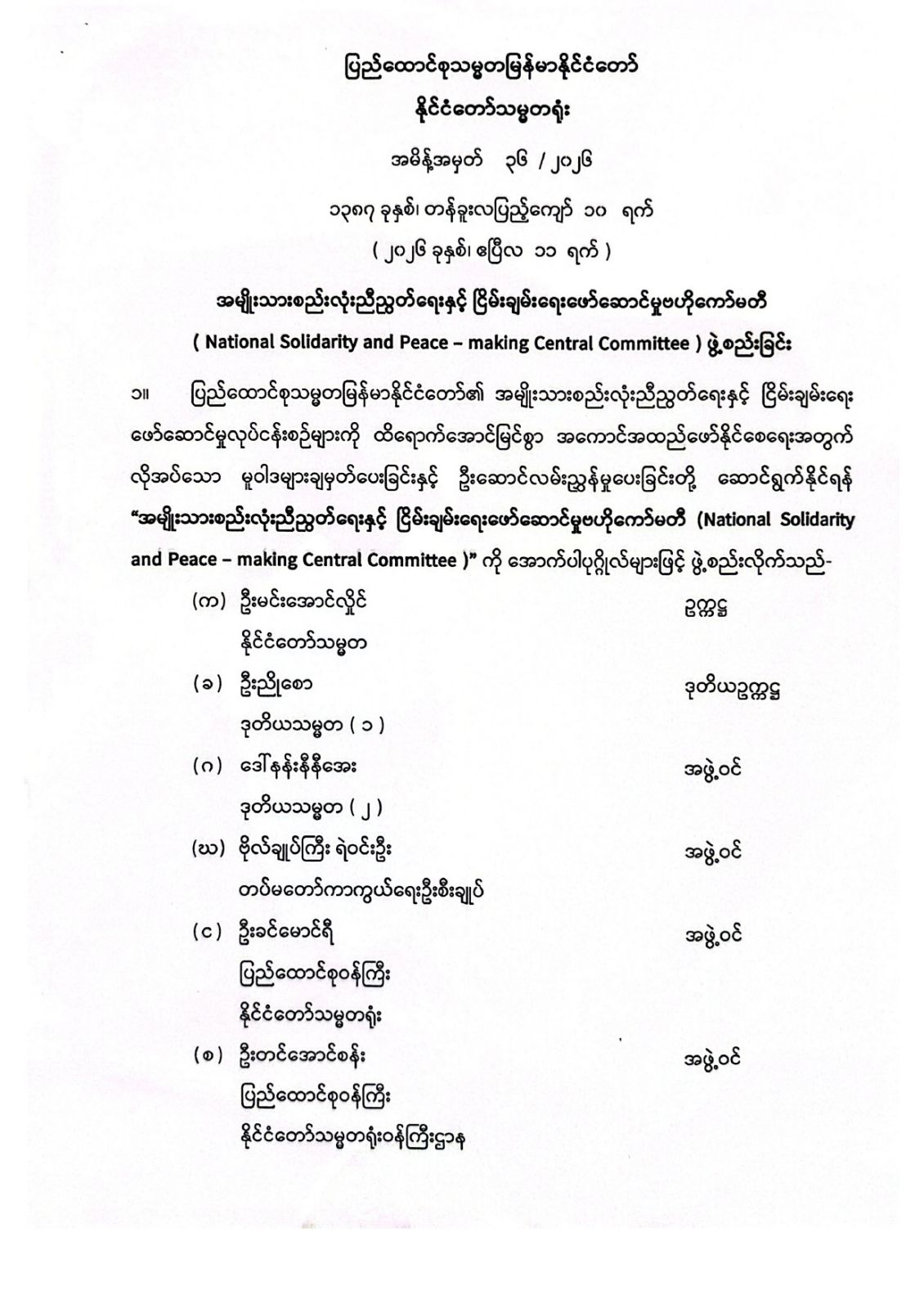
The official announcement regarding the formation of the NSPCC.
Pros & Cons: * Advantage: Decisions and policy changes can be made and moved quickly.
Disadvantage: There is a lack of public representation. Without Parliament, the "mandate" and "backup" of the people are missing, making the political dialogue less representative.
Sai Htay Aung (Chairman, Tai-Leng (Shanni) Nationalities Development Party):
Sai Htay Aung noted that the current formation deviates from the structure of the Union Peace Dialogue Joint Committee (UPDJC) defined in the NCA.
A New Model: The committee is comprised only of the Government and the Military. However, it includes a wide range of government ministries.
Advantage: With many ministries involved, decisions can be made rapidly, and proposals can be implemented almost immediately.
Disadvantage: Because Parliament is not directly involved, any matters requiring parliamentary approval will have to go through a multi-step process rather than being handled directly, which could become a weakness.
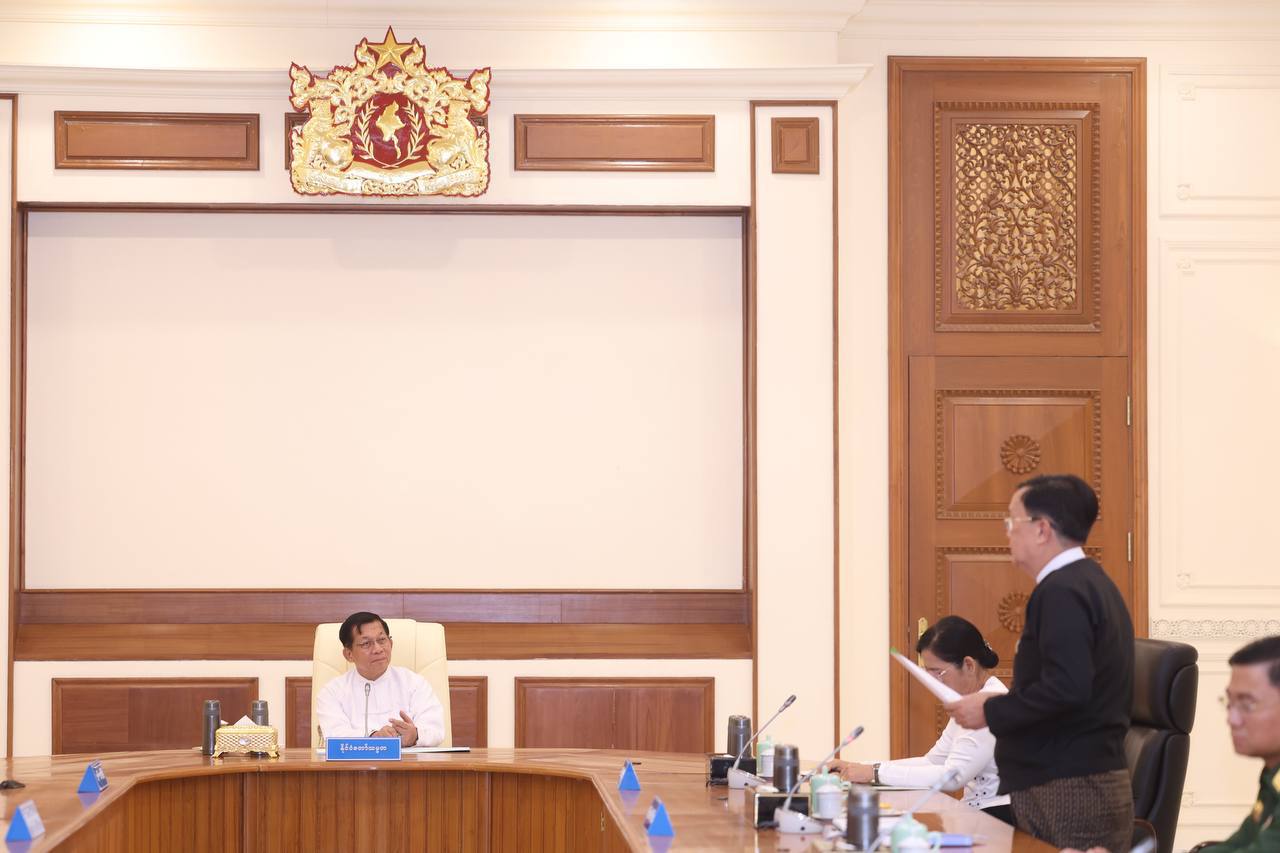
Amyotha Hluttaw Speaker U Aung Lin Dwe speaking during a National Defense and Security Council (NDSC) meeting.
The current structure marks a significant shift from previous administrations:
Thein Sein & NLD Eras: Both the UPCC (under President U Thein Sein) and the NRPC (under the NLD government) included parliamentary roles.
2021–2025: During the military's period of governance, Parliament was non-existent, so it was naturally excluded from the NSPCC.
2026 (Present): Despite the 2025 General Election having taken place and a Parliament now being in session, the April 11 reorganization still opted to exclude legislative representatives.
Military and political observers point out that:
Constitutional Challenges: The absence of Parliament may create significant hurdles when it comes to discussing constitutional amendments.
Military Dominance: The current landscape suggests that the military’s influence and direct involvement remain the dominant force in the peace process.