
CNI News
April 21, 2026
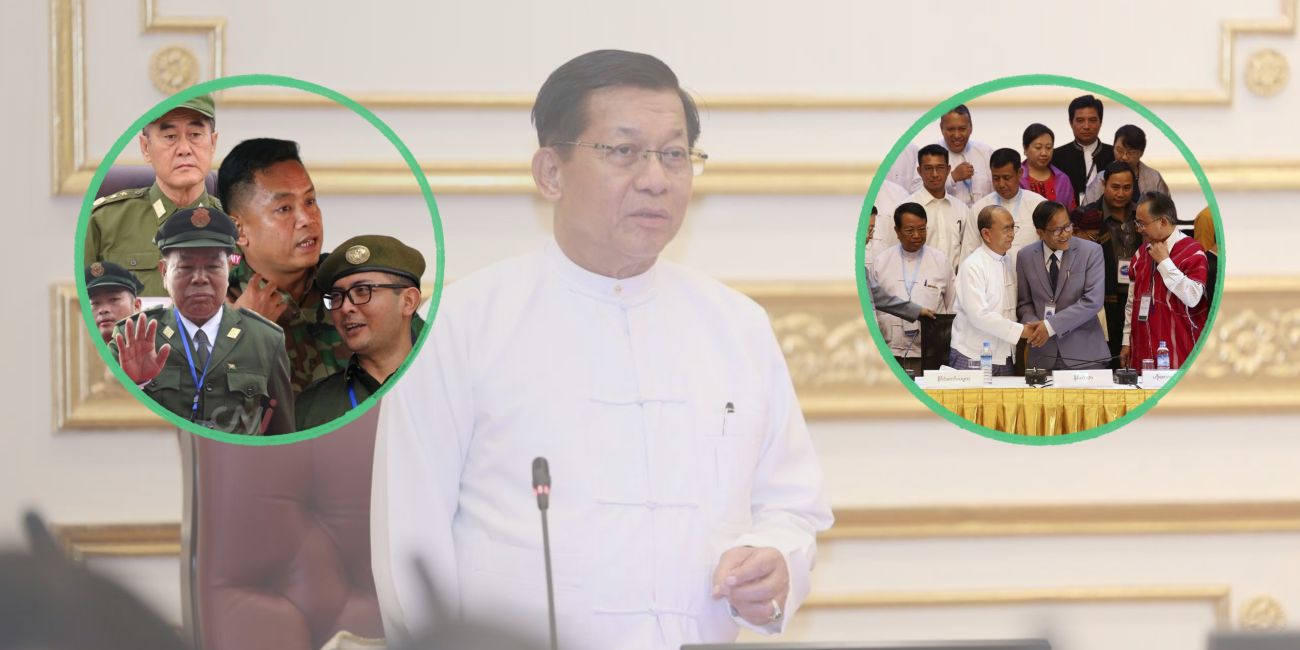
Military and political observers are analyzing the potential attitudes of Ethnic Armed Organizations (EAOs) and revolutionary groups toward the peace invitation issued by the government led by President U Min Aung Hlaing, which spans from April 20 to July 31, 2026.
During a Union Government meeting on April 20, 2026, President U Min Aung Hlaing delivered a speech outlining tasks to be undertaken within a "100-day plan." Within this 100-day window (April 20 to July 31), he invited People’s Defense Forces (PDFs), EAOs that have signed the Nationwide Ceasefire Agreement (NCA), and non-signatory groups to meet for peace talks.
U Khun Sai, an active participant in the peace process, told CNI News that during the initial implementation of the NCA under President U Thein Sein’s administration, negotiations were extremely difficult. He suggested that peace talks are more likely to succeed if negotiators travel to the locations where the armed groups are based.
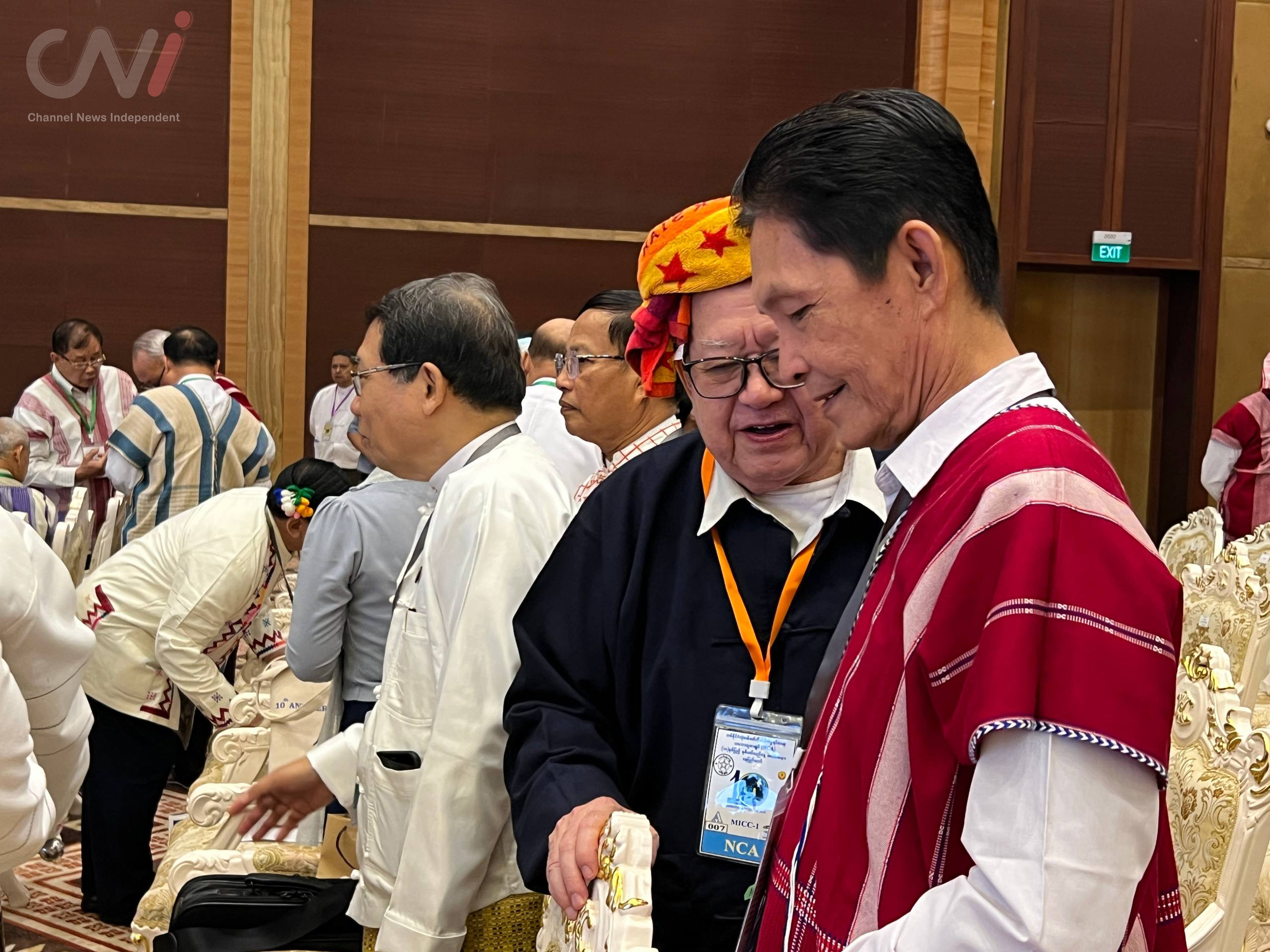
Leaders of armed organizations seen together.
"President U Thein Sein issued a declaration about four months after taking office. On August 18, 2011, he invited Myanmar citizens abroad to return and help develop the country, and called on all revolutionary organizations to discuss peace. But no one came. Those they did meet with were groups that already had existing ceasefire agreements, like the 'Wa', Kokang, Mongla, and DKBA. However, not a single group actively engaged in armed revolution showed up; they simply didn't trust the offer. Consequently, in October, U Aung Min and U Soe Thein were tasked with traveling to the Thai border to negotiate. Even then, they were unsuccessful until U Harn Yawnghwe assisted through the National Reconciliation Program, as he had connections with all EAOs. Only then, in November, did five EAOs agree to talk. If it was that difficult under U Thein Sein, I think it will be even harder in the current situation. Because of these difficulties, it is unlikely EAOs will come if they are told 'come to where I am.' It is much more likely to happen if the government goes to where they are, though it will require even more effort than U Aung Min and U Soe Thein exerted," U Khun Sai said.
President U Min Aung Hlaing stated that he is inviting groups that have not yet engaged in dialogue to do so by the July 31 deadline. He emphasized that the government desires peace, noting that national development is impossible without stability and tranquility.
Dr. Hla Kyaw Zaw, an observer of China-Myanmar affairs, suggested to CNI News that this 100-day peace invitation might be a strategic move to secure an invitation for Myanmar to attend next month’s ASEAN summit.
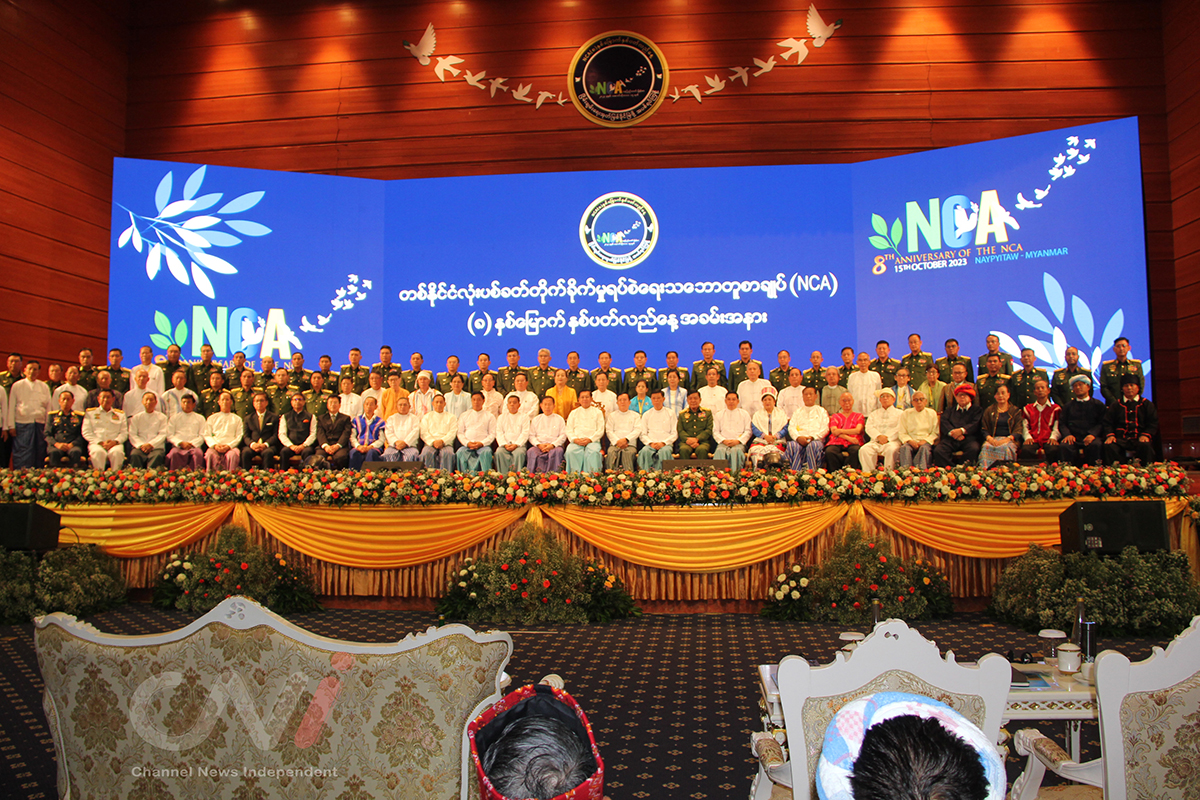
During the ceremony marking the anniversary of the NCA.
"There might be things he was pressured to do from the start, perhaps pressure from China or ASEAN. Currently, it’s possible this is being done to get invited to the ASEAN meeting next month. It’s like setting off fireworks to be noticed and invited. But how can this succeed? Consider whether it’s possible to end a 70-year-old civil war in just 100 days. If no one else could achieve it in a lifetime, could he?" she remarked.
The NCA was originally signed on October 15, 2015, by the Karen National Union (KNU), Restoration Council of Shan State (RCSS), KNU/KNLA-PC, Democratic Karen Benevolent Army (DKBA), Arakan Liberation Party (ALP), All Burma Students' Democratic Front (ABSDF), Chin National Front (CNF), and Pa-O National Liberation Organization (PNLO). On February 13, 2018, the New Mon State Party (NMSP) and Lahu Democratic Union (LDU) also signed.
Currently, the KNU, CNF, and ABSDF have effectively withdrawn from the NCA and are in active combat with the Myanmar military. Furthermore, groups like the ALP, PNLO, LDU, and NMSP have split into internal factions.
Questions remain regarding which peace track will be used for the KIA, SSPP, UWSA, KNPP, NDAA, AA, TNLA, MNDAA, SNA, NSCN, and the new armed groups that emerged after February 1, 2021.