
CNI News
22 April 2026
The peace invitation extended within the first 100 days of the new government should prioritize ethnic armed organizations (EAOs) that have signed the Nationwide Ceasefire Agreement (NCA), Colonel Khun Okkar, Chairman of the Pa-O National Liberation Organization (PNLO-NCA/S), told CNI News.
On April 20, 2026, President U Min Aung Hlaing issued an invitation for both NCA-signatory and non-signatory EAOs to engage in peace talks by a deadline of July 31. He specifically mentioned inviting groups like the KNU, CNF, and ABSDF, who have signed the NCA but have not met for talks in over five years.
Regarding the negotiation process, Colonel Khun Okkar suggested that the government must decide whether to prioritize those who withdrew from the NCA or those who have consistently remained on the NCA path.
"As far as I know, formal invitations haven't been sent yet. The 100-day plan has only been presented in principle. There are no specific directives for practical implementation yet, so we can't say they’ve been officially invited. We have to wait and see how the invitation process is carried out," Colonel Khun Okkar said.
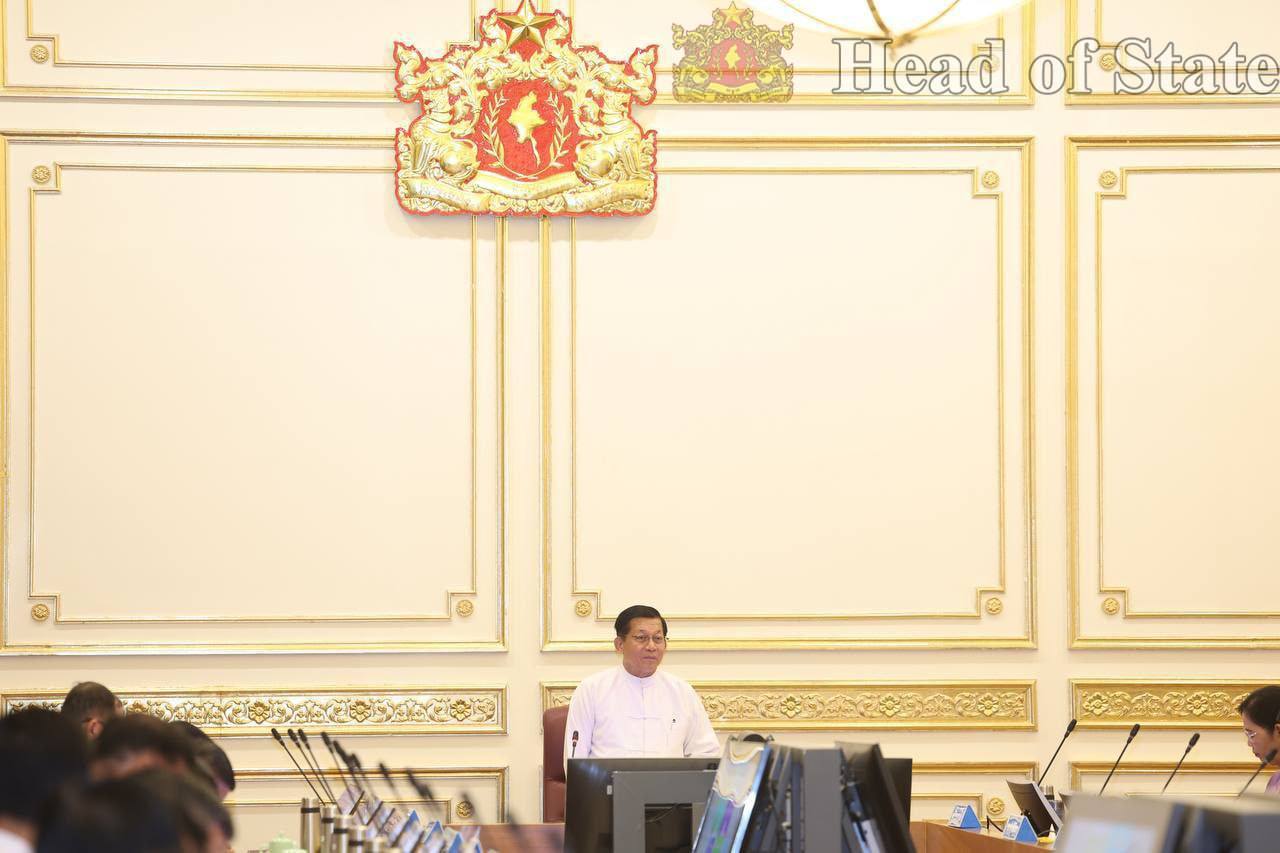
President U Min Aung Hlaing
He continued, "Will they first invite the three groups that left the NCA—the CNF, KNU, and ABSDF? They were part of the NCA but later withdrew. However, priority should definitely be given to the groups currently following the NCA path. Based on the experience of the last three or four years, NCA-signatory groups haven't received significant support, recognition, or access to international aid. Now that the government led by the President is officially in place, they need to support and encourage NCA signatories more to strengthen the NCA path. This is my suggestion to elevate the government's stance on the NCA."
Meanwhile, the Kachin Independence Army (KIA), Karen National Union (KNU), Chin National Front (CNF), and Karenni National Progressive Party (KNPP)—all currently in active conflict with the Myanmar military—have joined forces with the National Unity Government (NUG). On March 30, they formed the Steering Council for the Emergence of a Federal Democratic Union (SCEF).
The political objectives of the SCEF include: Eliminating the military dictatorship.
Ending military involvement in politics. Placing all armed forces under civilian government control. Abolishing the 2008 Constitution.
Drafting a new constitution based on federalism and democracy. Building a new Union in accordance with the new constitution. Establishing justice processes for victims of conflict.
President U Min Aung Hlaing stated that it would be a mistake if organizations only focus on their own survival by demanding impossible terms during peace negotiations.
Political analyst U Htet Aung Kyaw told CNI that it might be better to focus on matters that can achieve rapid success rather than long-term peace goals within a 100-day framework.
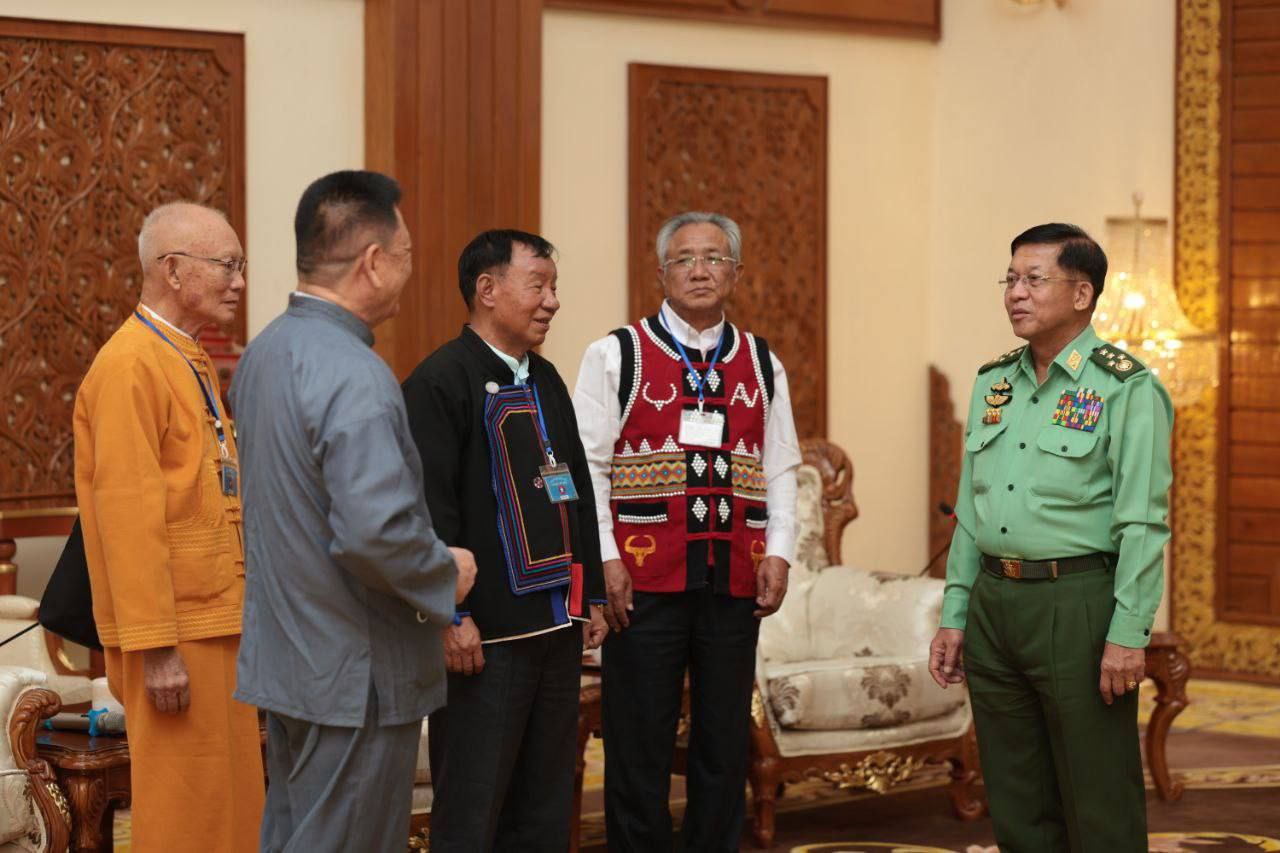
Senior General Min Aung Hlaing meeting with some leaders of non-signatory armed groups
"If armed groups don't come to the peace talks within these 100 days, the government will have to keep inviting and negotiating. They are our own citizens. No matter which government is in power, if groups don't come, you have to find a way to bring them in. The government needs to consider how to build high enough trust—without restrictions—to make them want to talk. They need to find a middle ground where the desires of both sides meet," U Htet Aung Kyaw said.
He added, "Placing a long-term issue like total peace into a 100-day plan makes it unlikely to succeed. Thinking that Myanmar will be peaceful within 100 days is unrealistic. Including such massive goals in a 100-day window is a bit unusual. It would be better to focus on the most achievable successes first."
The NCA was originally signed on October 15, 2015, by the KNU, RCSS, KNU/KNLA-PC, DKBA, ALP, ABSDF, CNF, and PNLO. On February 13, 2018, the New Mon State Party (NMSP) and Lahu Democratic Union (LDU) also joined.
Currently: The KNU, CNF, and ABSDF have effectively withdrawn from the NCA and are fighting the military.
Groups like the ALP, PNLO, LDU, and NMSP have split into factions.
Questions remain regarding the peace process path for other major groups (KIA, SSPP, UWSA, KNPP, NDAA, AA, TNLA, MNDAA, SNA, NSCN) and the new armed groups that emerged after February 1, 2021.