
CNI News
April 21, 2026
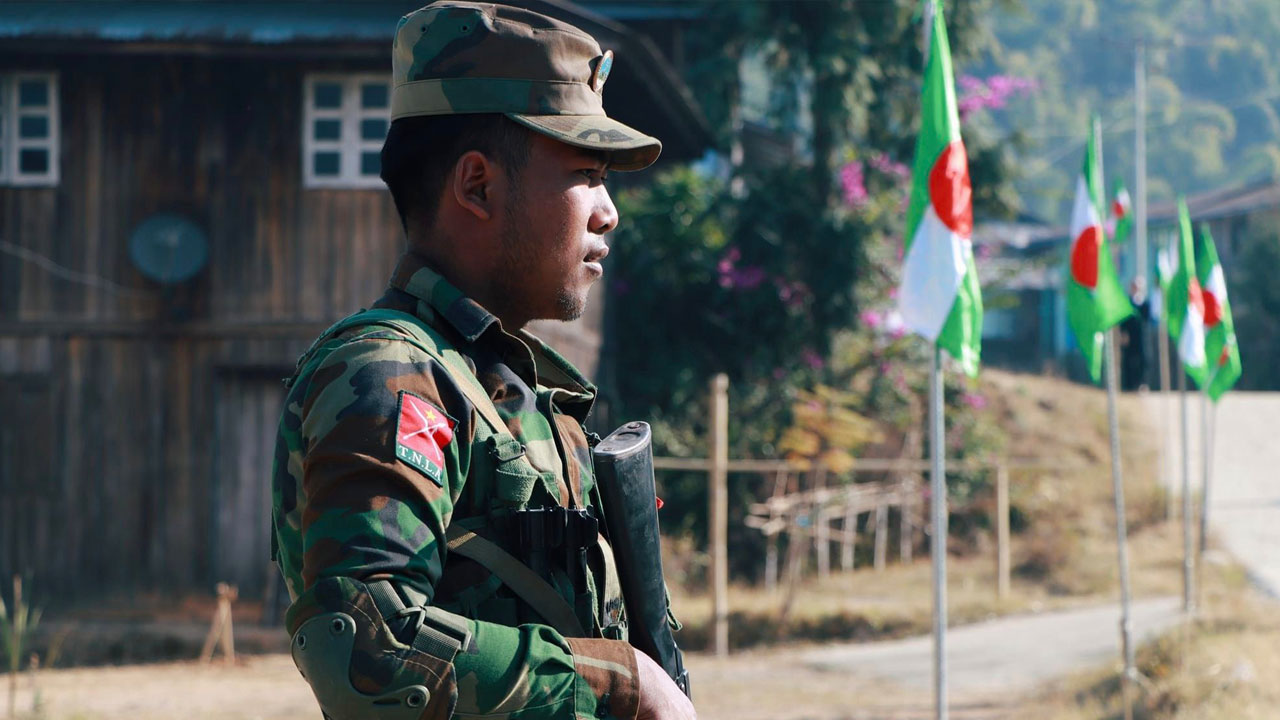
Military and political analysts are pointing out that the TNLA (Ta'ang National Liberation Army) appears to be in a "tight spot" (between a rock and a hard place) in northern Shan State. This follows military friction with other armed groups and the sending of a congratulatory message to the government of President U Min Aung Hlaing.
The TNLA launched Operation 1027 on October 27, 2023, attacking the Myanmar military and seizing control of 12 towns across northern Shan State.
However, by 2025, the group lost Naungcho, Kyaukme, Mogok, and Momeik back to the Myanmar military. Furthermore, its ally, the MNDAA (Kokant Army), launched an offensive against Kutkai and Namkham, forcing the TNLA to cede Kutkai and enter into a ceasefire agreement with the MNDAA.
Amidst these developments, the TNLA sent a congratulatory message on April 15, 2026, welcoming the appointment of U Min Aung Hlaing as President and the formation of a new civilian government.
Sai Htay Aung, Chairman of the Tai-Leng (Shanni) Nationalities Development Party (TNDP), told CNI News that this move was unexpected and likely stems from the pressures the TNLA is facing. He also suggested a potential connection to the KIA (Kachin Independence Army).
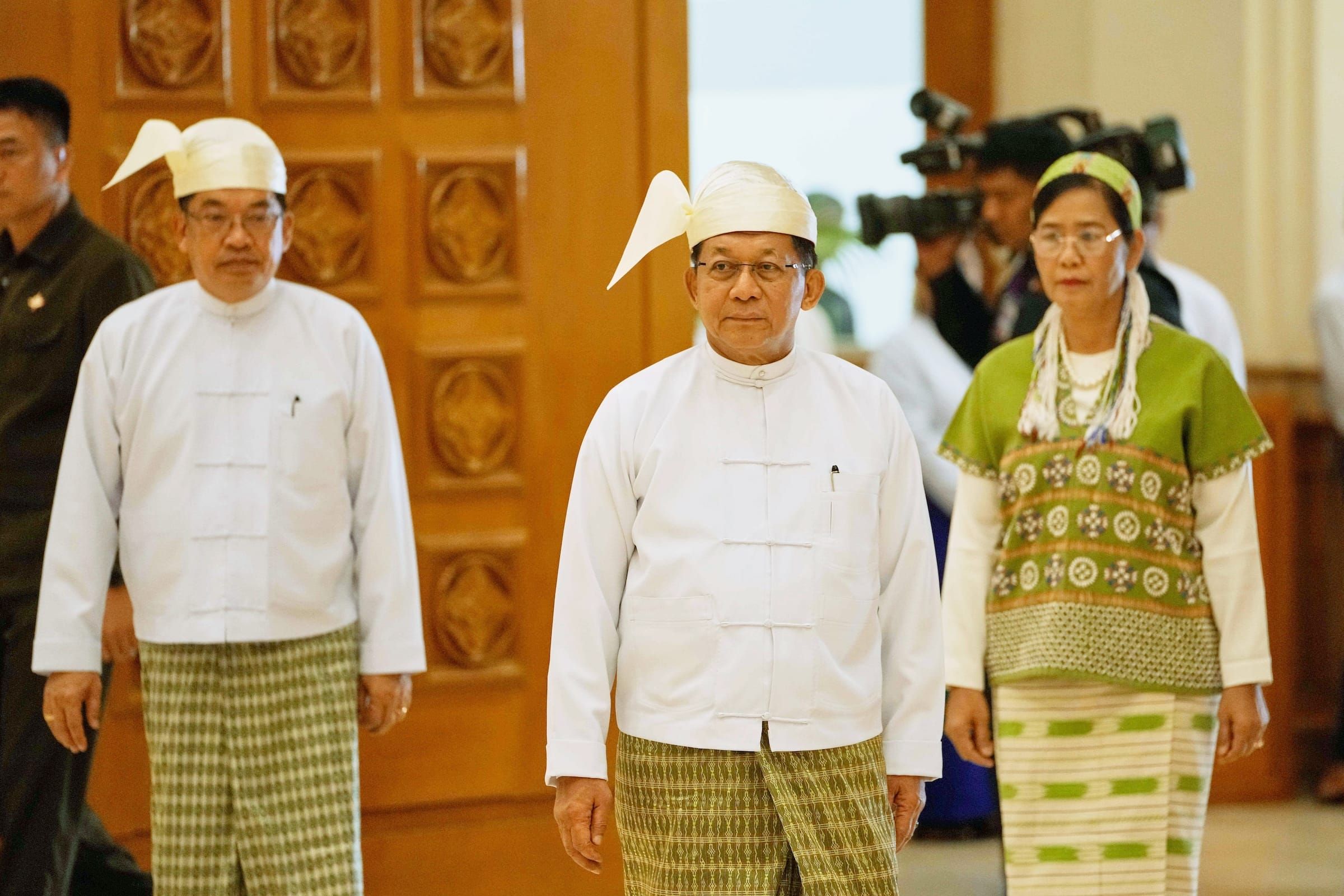
Three top officials led by President U Min Aung Hlaing seen
"Legally, they are only entitled to Mantong and Namhsan. I have said before that no matter how much they seize, they will eventually have to withdraw. The TNLA had big ambitions, so it captured many towns. But this statement had to be issued. I don't think the timing of General Gun Maw’s (KIA) trip to northern Shan State and this statement are a coincidence.
Just like the situation with Bo Nagar, the TNLA seems to be in a tight spot. They are essentially reaching out to the government because of these crises. When you look at their past joint statements with the other two allies, we never expected them to welcome the new government. It seems they are facing a shortage of manpower due to heavy casualties in the war, alongside other external pressures," Sai Htay Aung said.
While the TNLA initially collaborated with the MNDAA, AA, KNDF, BNRA, BPLA, MDY-PDF, DPLA, and PLA during Operation 1027, relations have since soured. The TNLA reportedly expelled other armed groups—including the KIA, SSPP, MNDAA, and PDF—from the territories it captured, leading to a breakdown in military and political ties. Disputes also arose with the MNDAA specifically over the administration of the Kutkai region.
Following the TNLA’s message welcoming the new government, Ta'ang civil society organizations have issued protests, and questions have been raised regarding whether the group has abandoned its revolutionary stance.
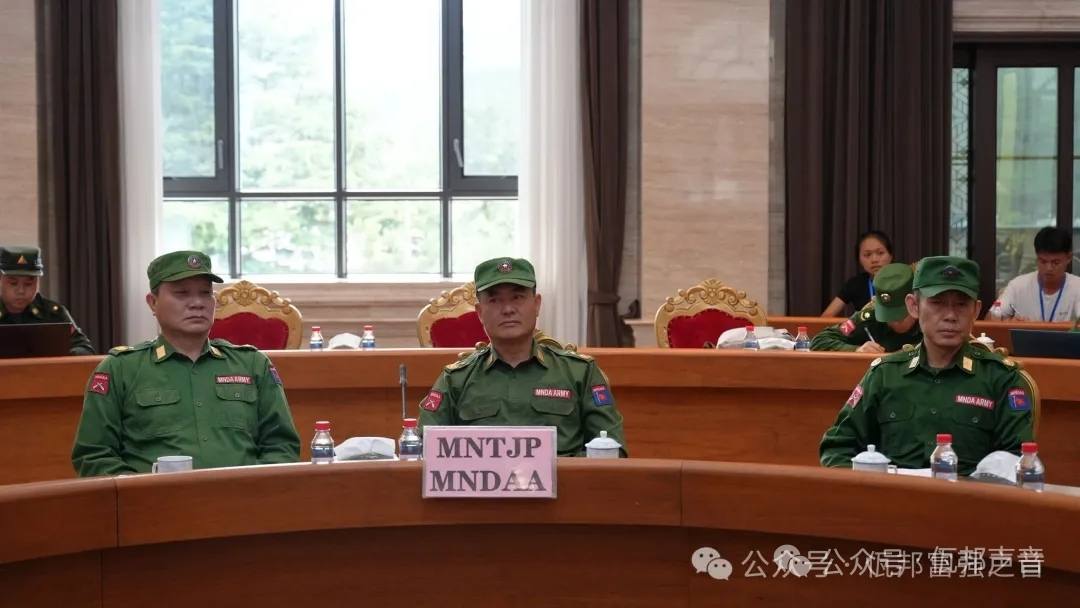
TNLA Leaders seen
A local resident from Kyaukme told CNI News that the TNLA's shift might be due to a severe depletion of combat-ready soldiers and various other pressures.
"The TNLA's strength relied on recruiting only from the Palaung (Ta'ang) ethnicity. They don't recruit Shan, Chinese, or Bamar. Consequently, their recruitment pool in northern Shan State is almost exhausted. They have very few soldiers left capable of fighting. They have even recruited women, and they now have to consider the survival of their people. Additionally, pressure from the 'Big Black Hand' (China) is a major factor. I believe they chose this path after weighing all these circumstances," the resident said.
The TNLA had captured Mogok and Momeik in July 2024 but returned them to the Myanmar military on November 29, 2025, following mediation by the Chinese government.
Under the current 2008 Constitution, only Namhsan and Mantong are designated as the Palaung Self-Administered Zone. However, the TNLA aspires to establish a "Palaung State" comprising 12 townships: Namhsan, Mantong, Namtu, Mong Ngaw, Kyaukme, Naungcho, Mogok, Momeik, Kutkai, Namkham, Hsipaw,
Monglon