

CNI News
April 10, 2026
Members of parliament should not engage in politics to please those in power, but rather to serve the will of the people, political analyst U Htet Aung Kyaw told CNI News.
He said that while working for the public interest, lawmakers should also contribute to their political parties. Otherwise, in a one-party authoritarian system, gaining power would depend on pleasing superiors.
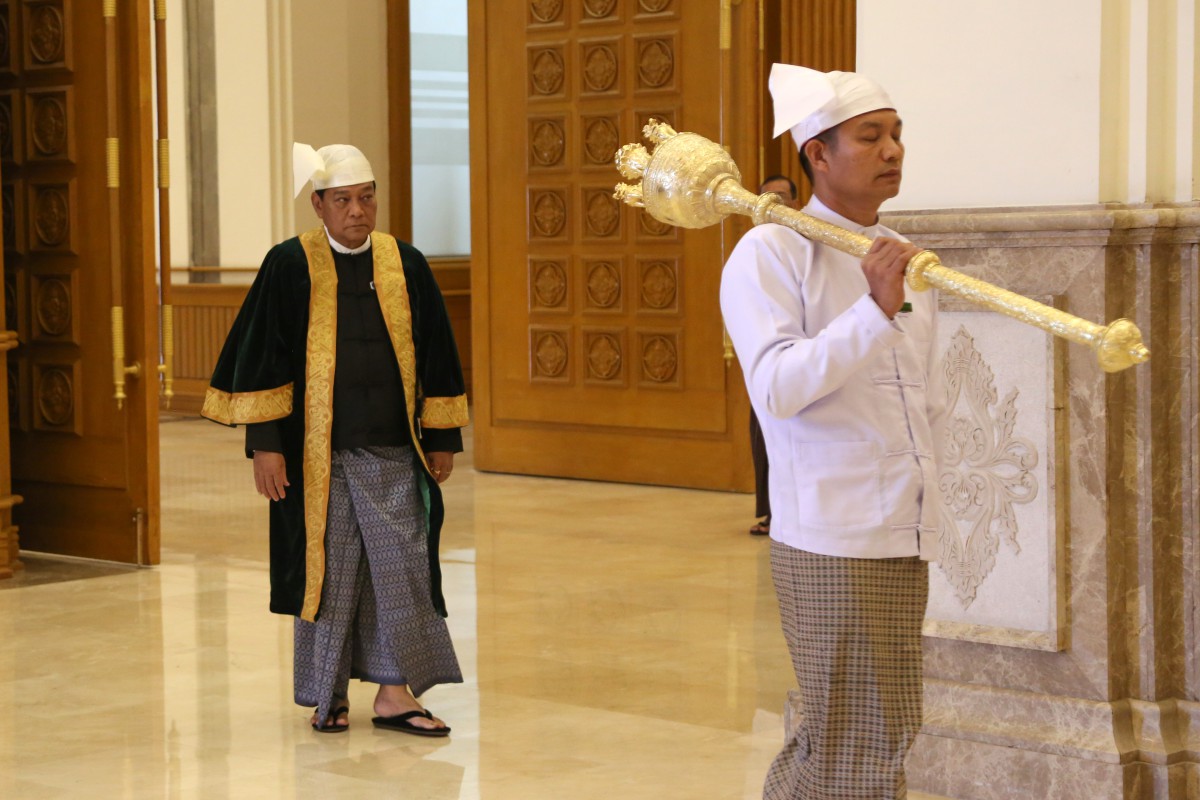
Speaker of the Pyithu Hluttaw U Khin Yi
U Htet Aung Kyaw said: “Such behavior—trying to please superiors—can be seen as a result of people not clearly understanding politics. Politics is not about pleasing those in power; it is about serving the people. In a one-party authoritarian system, one has to please superiors to gain a position, and only after securing that position can one do what they want. But in a democracy, where elections exist, the focus must be on winning public support and advancing public interests. If a politician works for the people, the public will respect both the individual and their party. In reality, the interests of the people and the party are aligned. By serving the public, one simultaneously benefits the party.If someone prioritizes pleasing superiors over party or public interest, it can be concluded that they do not properly understand politics.”
Political analysts also pointed out that due to traditions and authoritarian cultural norms, there has long been a tendency for political actions to be driven by fear and the need to satisfy those in power.
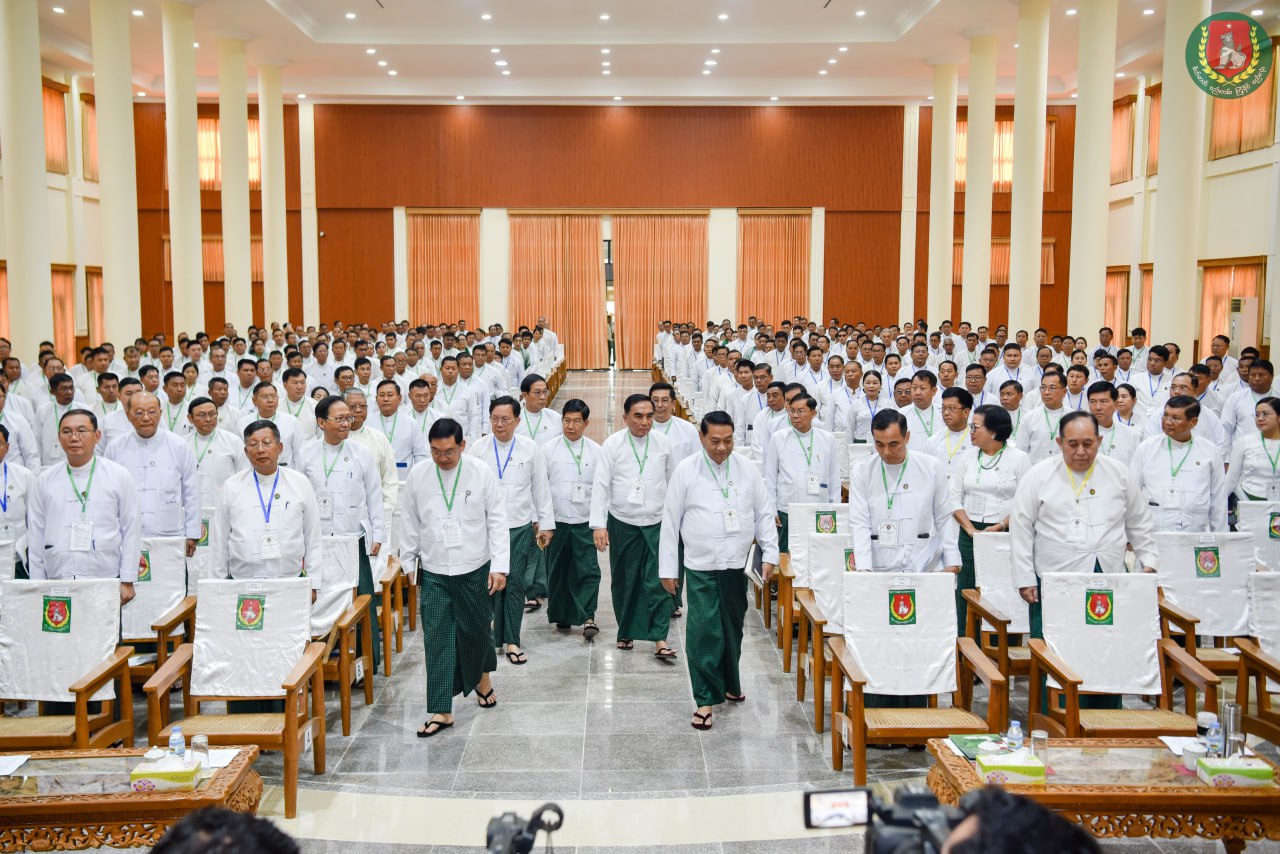
Members of the USDP
They emphasized that politics is not about pleasing authorities but about courageously standing up for public interest, national development, and human rights.
Politicians, they added, must remain loyal to the people and be cautious not to become tools for wrongdoing.
Meanwhile, U Thein Tun Oo, Executive Director of the Thayninga Institute for Strategic Studies, told CNI News that it is crucial for lawmakers to maintain a balance between government policies and public demands.
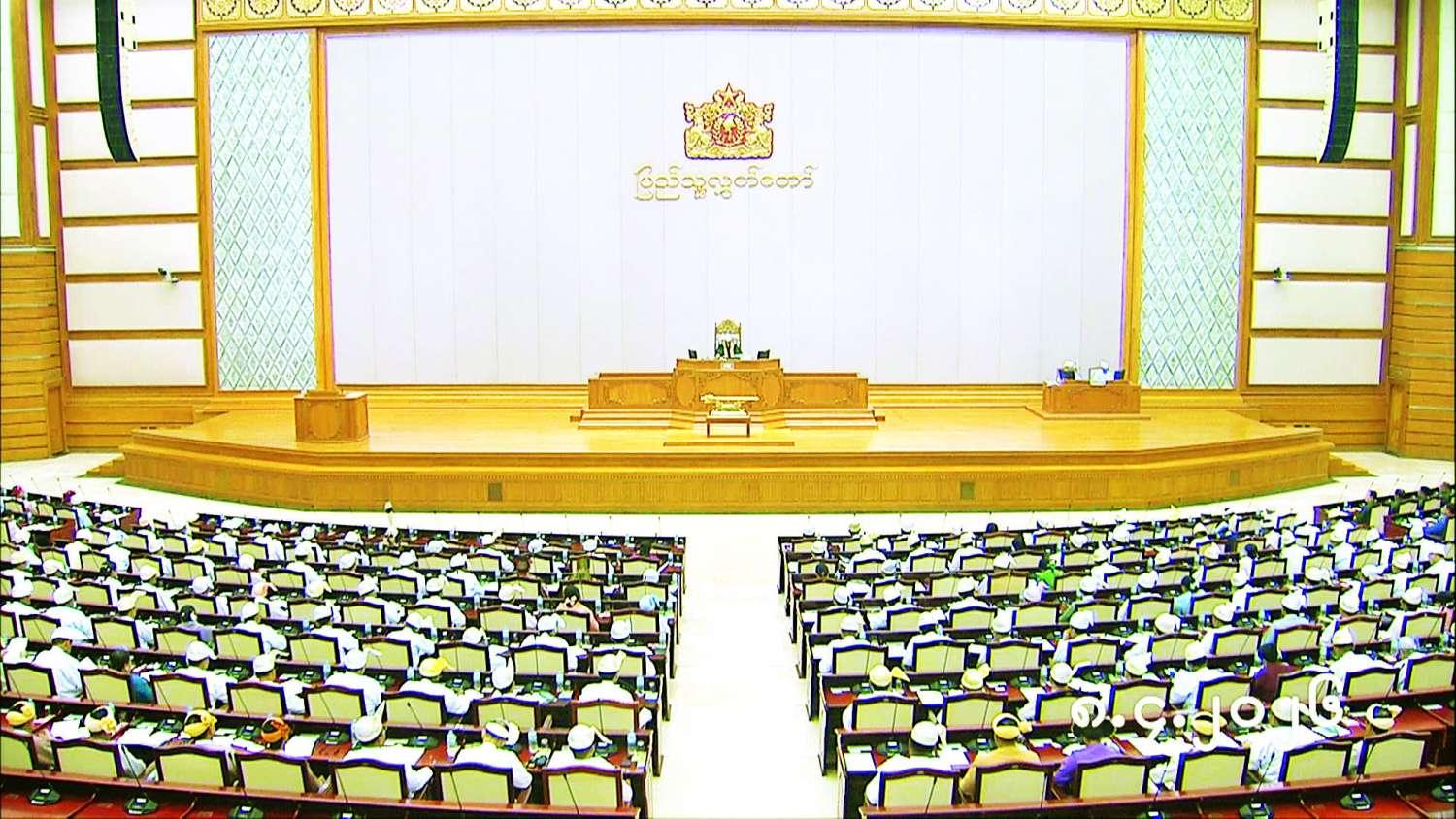
Members of the Hluttaw
He said: “For a government on the path of democracy, the key is public administration. Its core principle is balancing what the government wants with what the people need. All members of parliament must be able to maintain that balance between government policies and public expectations. This is also how successful democracies operate in practice. Public demands have no limits. The role of lawmakers, therefore, is to assess what people truly need—not just what they want—and determine how much of that can realistically be fulfilled. It is not possible to meet every demand made by the public. That is the reality.”
Political parties and analysts further noted that lawmakers must coordinate and maintain balance between government policies and public will.
As representatives of the people, they are responsible for acting as the eyes and ears of the public, bringing forward truth and real needs, and ensuring that both parliament and government genuinely represent the people.