
CNI News
April 9, 2026
Former lawmaker Daw Sandar Min told CNI News that due to corruption within the Ministry of Immigration and Population, a situation is emerging where those who should not be citizens are obtaining citizenship, while rightful citizens are being sidelined and rendered "illegal."
She noted that if a person is a genuine Myanmar citizen, there should be no difficulty in obtaining a National Registration Card (NRC) or Citizen Verification Card upon reaching adulthood. However, she pointed out that NRCs are currently difficult to obtain except during election periods.
"If they are citizens, there is no reason for it to be difficult when they reach the age to make an ID card. But there is a lack of education, poor record-keeping, and a fear of going to government offices. About 90% of the rural population finds it extremely difficult to get an ID. They have this mindset that even if they are citizens, they can only get an ID if they have money," Daw Sandar Min said.
She further emphasized that village-level administrators should be doing their jobs effectively and that non-citizens should not receive these cards.
"We have a new government and new ministers now. They should go down to the grassroots level to see what is happening—to research how many people who shouldn't be citizens have obtained citizenship. Outside of election times, it's nearly impossible to get an ID card without being asked for money. Those who shouldn't be citizens can spend more money than our rightful citizens; they can pay large sums to become 'legal,' while our actual citizens cannot. I can see a future where those who shouldn't be citizens eventually become the citizens, and the rightful citizens end up sidelined as 'illegals,'" she added.
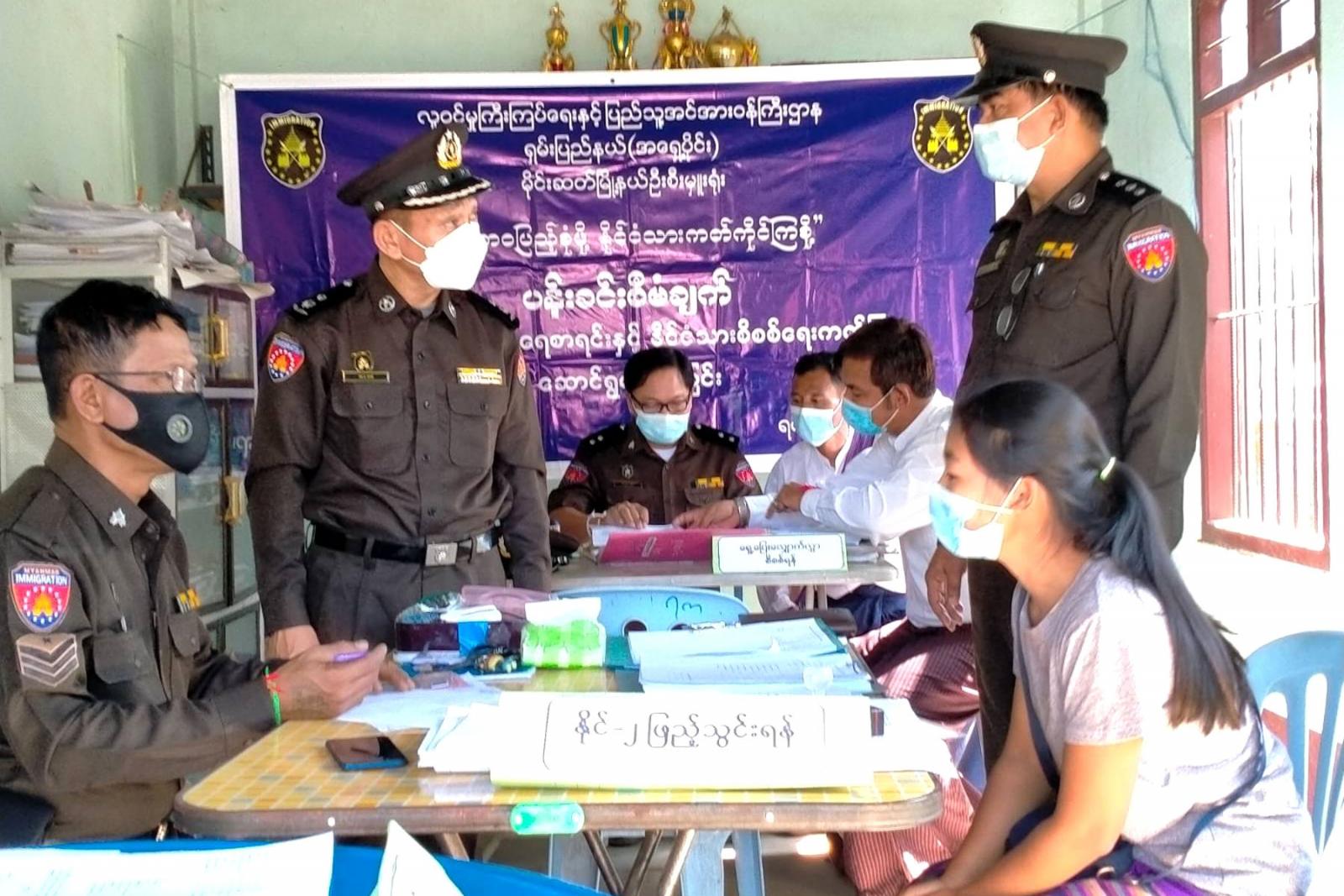
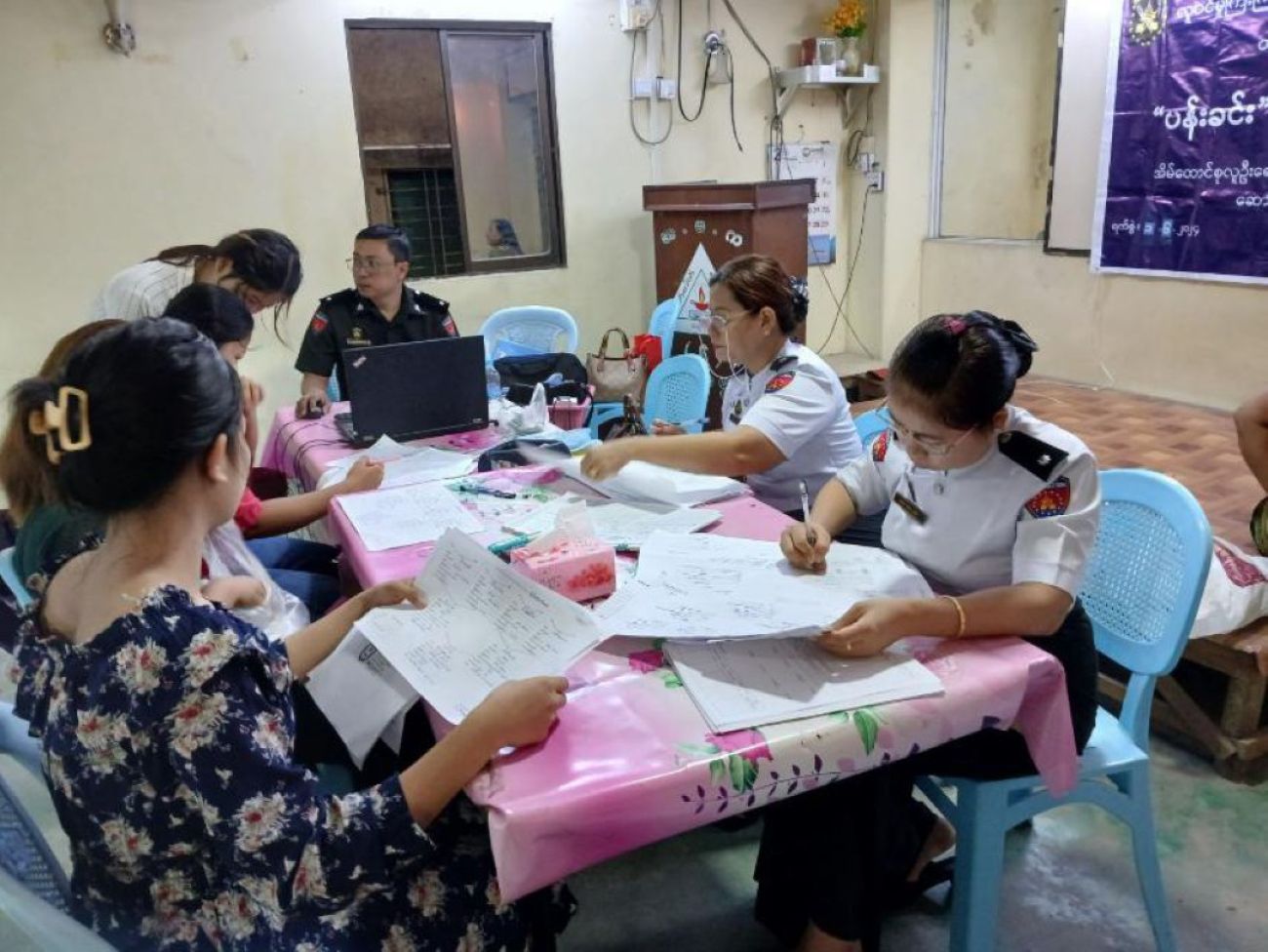
Immigration staff at work.
The Legal Framework and Reality In Myanmar, the National Registration Card (NRC) is issued by the Ministry of Immigration and Population based on the 1982 Myanmar Citizenship Law. Citizens aged 10 and 18 must personally apply at their respective immigration offices with their household list and birth certificate.
Under the 1982 Law and existing legislation, the following penalties apply for forging or illegally holding an NRC, or fraudulently applying for a UID number: Imprisonment: 6 months to a maximum of 5 years. Fines: Financial penalties may also be imposed.
Systemic Corruption and "Outside Income" Political analysts point out that among government departments, the Immigration Department is notorious for generating vast amounts of "outside income" for those who know how to exploit the system.
Political analyst U Htet Aung Kyaw told CNI that the demand for jobs within the Immigration Department is high because people seek this extra income beyond their official salaries.
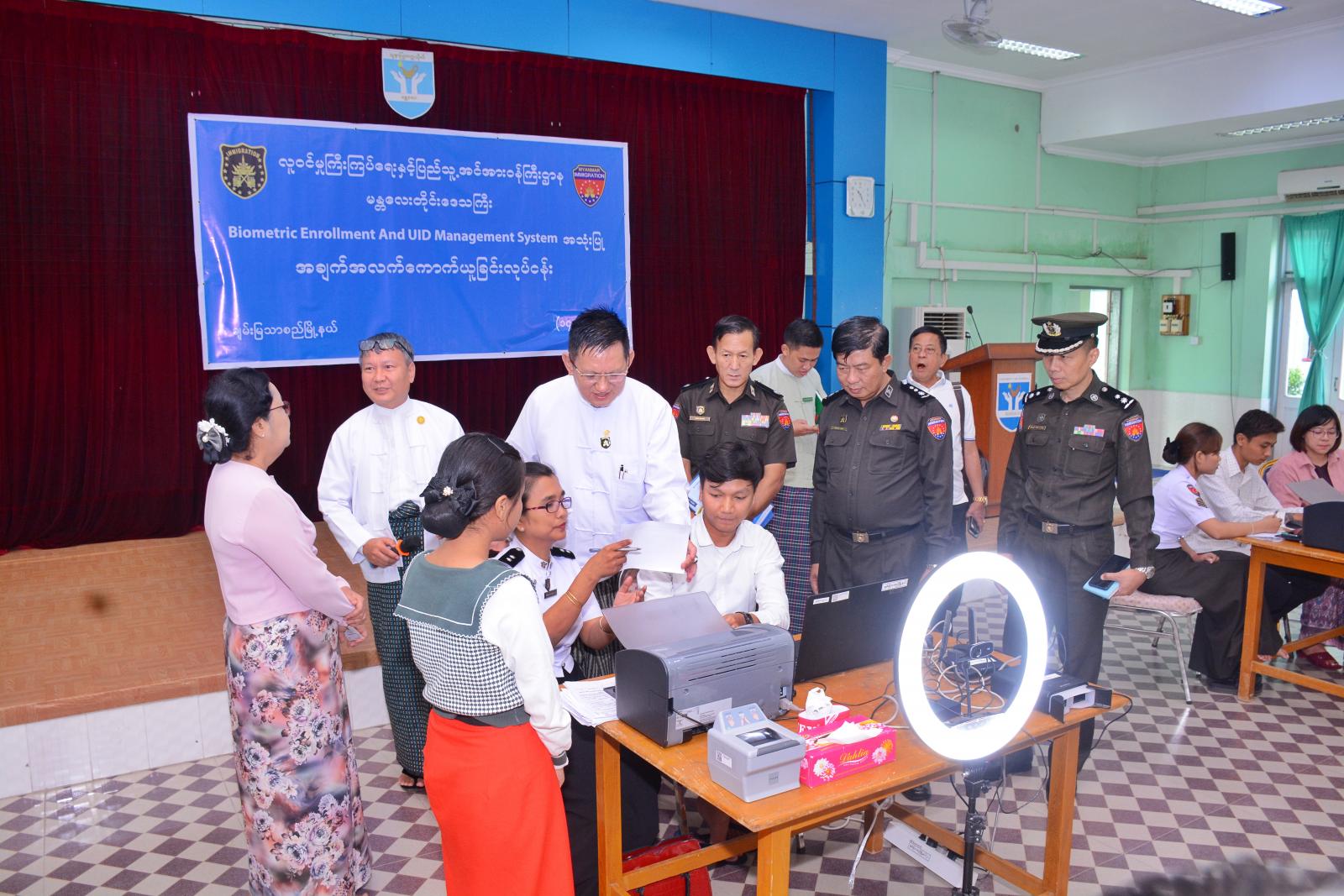
Staff from the Ministry of Immigration and Population
"Once a citizen lacks an ID card, all ethnic groups—including the Bamar—effectively become 'illegal' in their own land. Immigration offices often display the motto: 'A race does not vanish by being swallowed by the earth, but only when swallowed by another race.' However, civil servant salaries are never sufficient. Because there are people willing to pay heaps of money for an ID, many people want to work in Immigration to get 'outside income,'" he said.
He added that due to these illegal practices, the process for a genuine citizen is often stalled with excuses like "the township officer is busy," making it a grueling ordeal. Meanwhile, those who pay bribes receive their cards with ease—a reality well-known to all Myanmar people.
Concerns Over National Security Analysts argue that Immigration staff should not trade the country's future for personal gain by issuing cards to non-citizens or intentionally delaying the process for citizens to extort money.
Additionally, Rakhine politicians have pointed out that some Bengalis crossing the border from Bangladesh, as well as some already residing in northern Rakhine State, have obtained NRCs by bribing Immigration officials.