
CNI News
April 8, 2026
Political analysts warn that immigration (La-Wa-Ka) officials in Myanmar should not trade the country's interests for personal gain by committing bribery, issuing National Registration Cards (NRCs) or Citizen Verification Cards to non-citizens, and intentionally delaying registration processes to extort money from citizens.
Currently, as Myanmar faces political instability and intense armed conflict, the rule of law has weakened significantly.
In this environment, some foreigners from neighboring countries are reportedly bribing immigration staff to obtain NRCs, acquiring multiple IDs, or changing their original registration numbers to those of different regions. Furthermore, travelers are being extorted or delayed under the pretext of not having "updated" NRCs, and fees are being demanded for the mandatory renewal of full-age identity cards.
Dr. Nyo Nyo Thin, founder of Yangon Watch, told CNI News that the country is suffering a "bitter legacy" due to generations of corrupt immigration officers prioritizing self-interest.
"Immigration issues have existed for generations. It has reached a point where you see many people holding Myanmar NRCs who cannot speak a word of Burmese—whether on planes, buses, or trains. This is a serious issue that we must address. The country is suffering from this bitter legacy because of corrupt officials across various regions who put their own interests first."
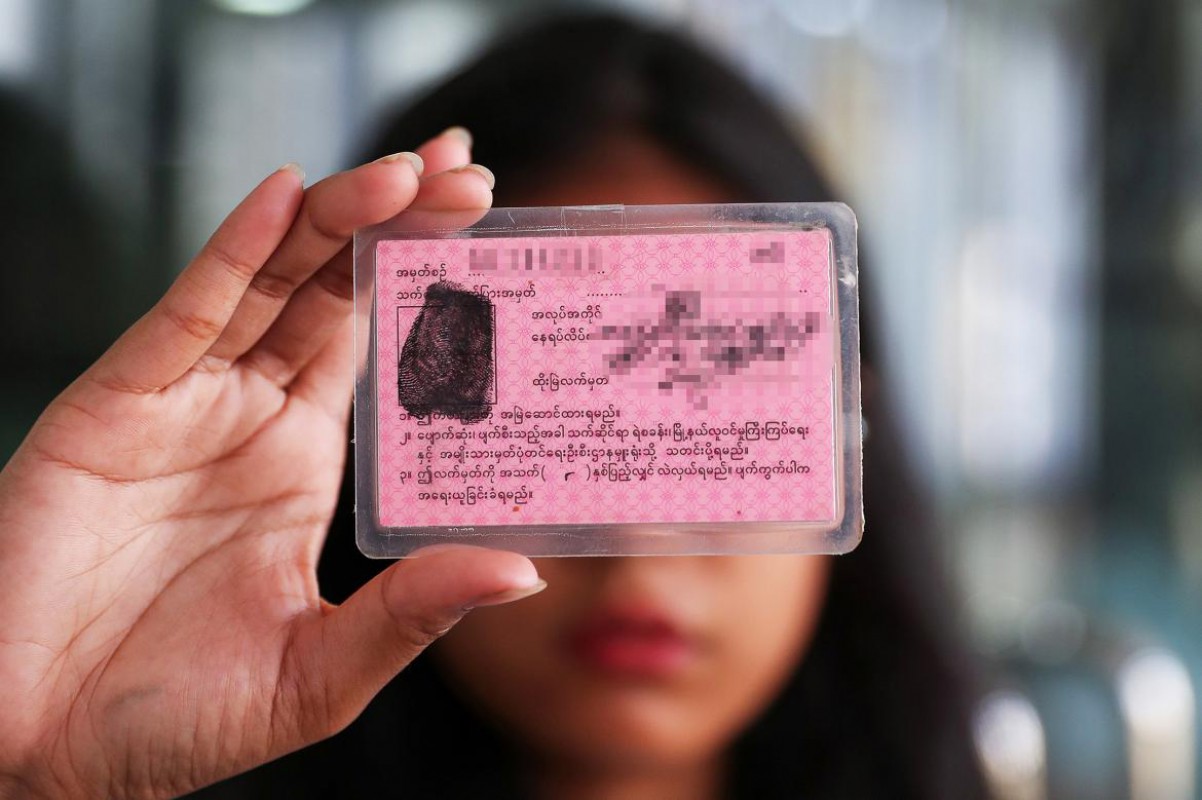
A Citizen Verification Card.
Examples of Systemic Failure Analysts pointed to the case of the Kokang leadership family recently handed over to the Chinese government regarding "Jia-Pian" (online scam) operations. These individuals reportedly held both Chinese and Myanmar identity cards and even served as officials within the Myanmar government apparatus in the past.
Similarly, Arakanese politicians highlighted that some Bengalis entering across the border from Bangladesh, as well as some already in northern Rakhine State, have obtained NRCs by bribing immigration staff.
Dr. Nyo Nyo Thin urged immigration officers not to trade the nation’s dignity for a "lifetime of rations" and called on the current government to set an example by scrutinizing and punishing offenders.
"Immigration officers must uphold their ethics and not trade the country for personal profit. It is vital for this government to identify and take action against corrupt officials. They must protect national sovereignty through ethical conduct. The new government must ensure NRCs are issued systematically, correctly, and quickly. We see many people who can't speak Burmese holding NRCs, while many genuine indigenous people who have lived here for generations are unable to get them, losing their basic human and civil rights. I suggest that respective Parliaments(Hluttaws) monitor township and district-level offices to free them from corruption."
The "Broker" System and Legal Inequality Former Member of Parliament Daw Sandar Min told CNI News that the duplication of NRCs is not something ordinary rural civilians can do; it is usually done by those with connections to the authorities.
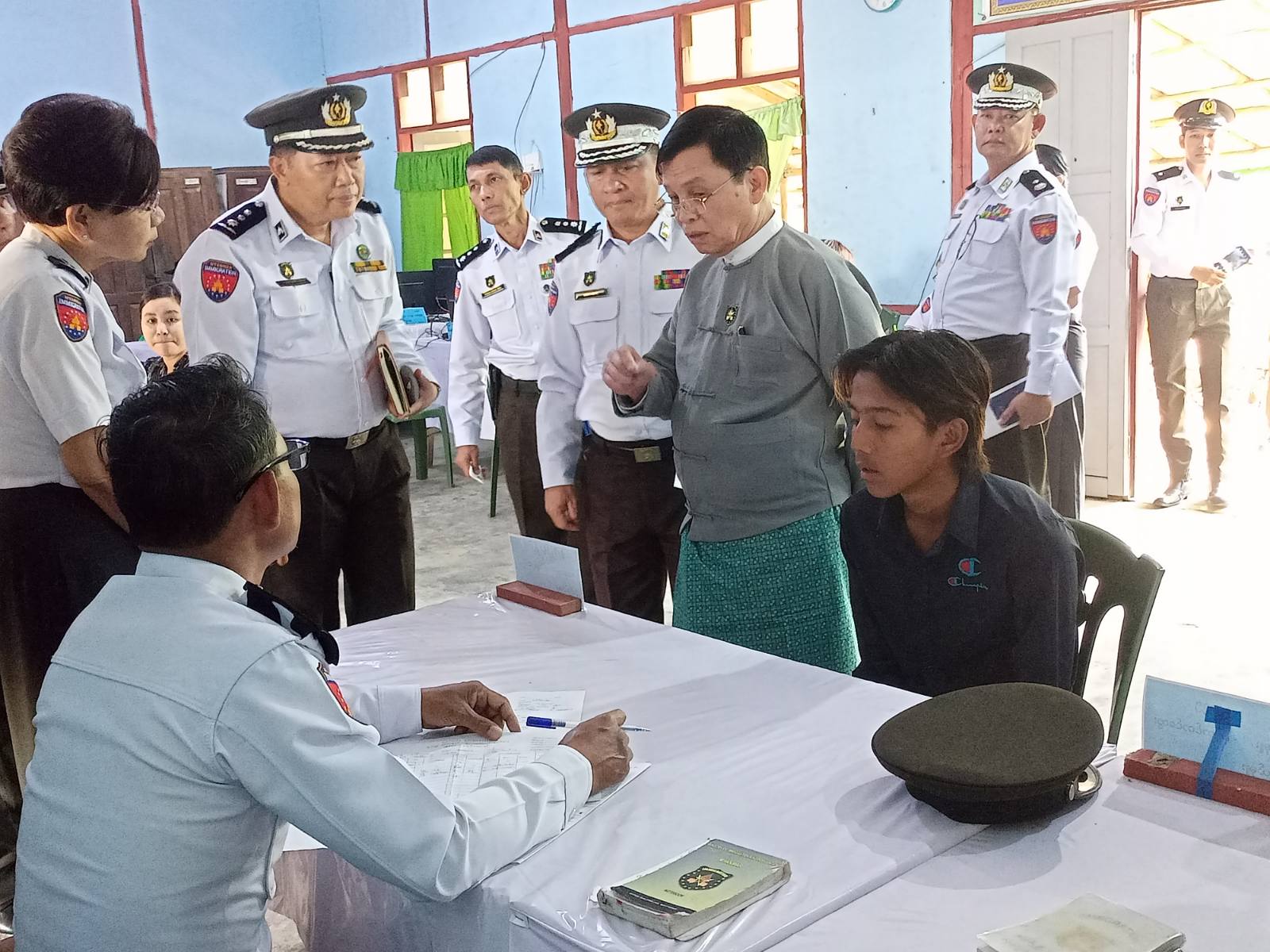
Union Minister for Immigration U Myint Kyaing.
"Duplicating an NRC isn't something a commoner or a villager does. Only those connected to the authorities can pull that off. In other countries, there are effective punishments for this. In our country, the law seems to apply only to the powerless and the voiceless, while the powerful remain untouched. This new government should implement new systems with new people and policies. Wherever there is difficulty in Myanmar, there are brokers. If a process isn't difficult, brokers don't exist. The more difficult you make a process, the more the broker system persists. We need easy, followable rules and regulations for the public to eliminate brokers in every sector. Over the past five years, everything has become incredibly difficult; there isn't a single sector where things run smoothly."
Current Challenges for Citizens Due to the ongoing instability, citizens holding NRCs with codes such as 5/ (Sagaing), 8/ (Magway), or 13/ (Shan) are facing more frequent inspections, travel restrictions, and tighter scrutiny than others. Consequently, some individuals from these regions have paid millions of kyats to immigration staff to obtain new NRCs with different regional codes.
There are also reports of Myanmar citizens discovering that their original NRC numbers have been duplicated and issued to foreign nationals through bribery.
Legal Background In Myanmar, National Registration Cards are issued by the Ministry of Immigration and Population based on the 1982 Myanmar Citizenship Law. Citizens aged 10 and 18 must apply in person at their respective immigration offices with their household list and birth certificate.
According to the 1982 Citizenship Law and existing legislation, the forgery or illegal possession of an NRC, or applying for a UID number through fraudulent means, carries a penalty of 6 months to 5 years in prison, along with potential fines.