
CNI News
April 7, 2026
Military and political analysts are debating whether the Arakanese (Rakhine) people could face potential "disappearance" or displacement from their ancestral lands. This stems from the ongoing military conflict between the Arakkha Army (AA) and the Myanmar military (Tatmadaw), coupled with demands from the Bangladesh government and Muslim refugees.
Since November 2023, intense urban warfare has persisted for over two years. The AA currently controls 14 townships in Rakhine State, while the Myanmar military maintains control over Sittwe, Manaung, and Kyaukphyu.
Externally, there is significant international pressure regarding Muslim refugees who fled to Bangladesh, and the Bangladeshi government is reportedly attempting to establish a humanitarian corridor within Rakhine State.
Political analyst Dr. Aung Myo told CNI News that if the Rakhine region cannot be secured under the current operational methods of the AA, the Arakanese people could gradually vanish from the state.
"If they [the AA] cannot maintain control under their current approach, the Rakhine people will eventually disappear from the state. They will be forced to migrate further south," Dr. Aung Myo said. "In 1826, there were almost no Bengalis in Maungdaw, except for some in Buthidaung and Sittwe. Now, they represent nearly the total population there. If the Rakhine people rebel against the state instead of loving their country, then in another 30 years, Rathedaung will become entirely Bengali. The entire north will fall, and the Arakanese will have to flee. Rebellion only accelerates this process."
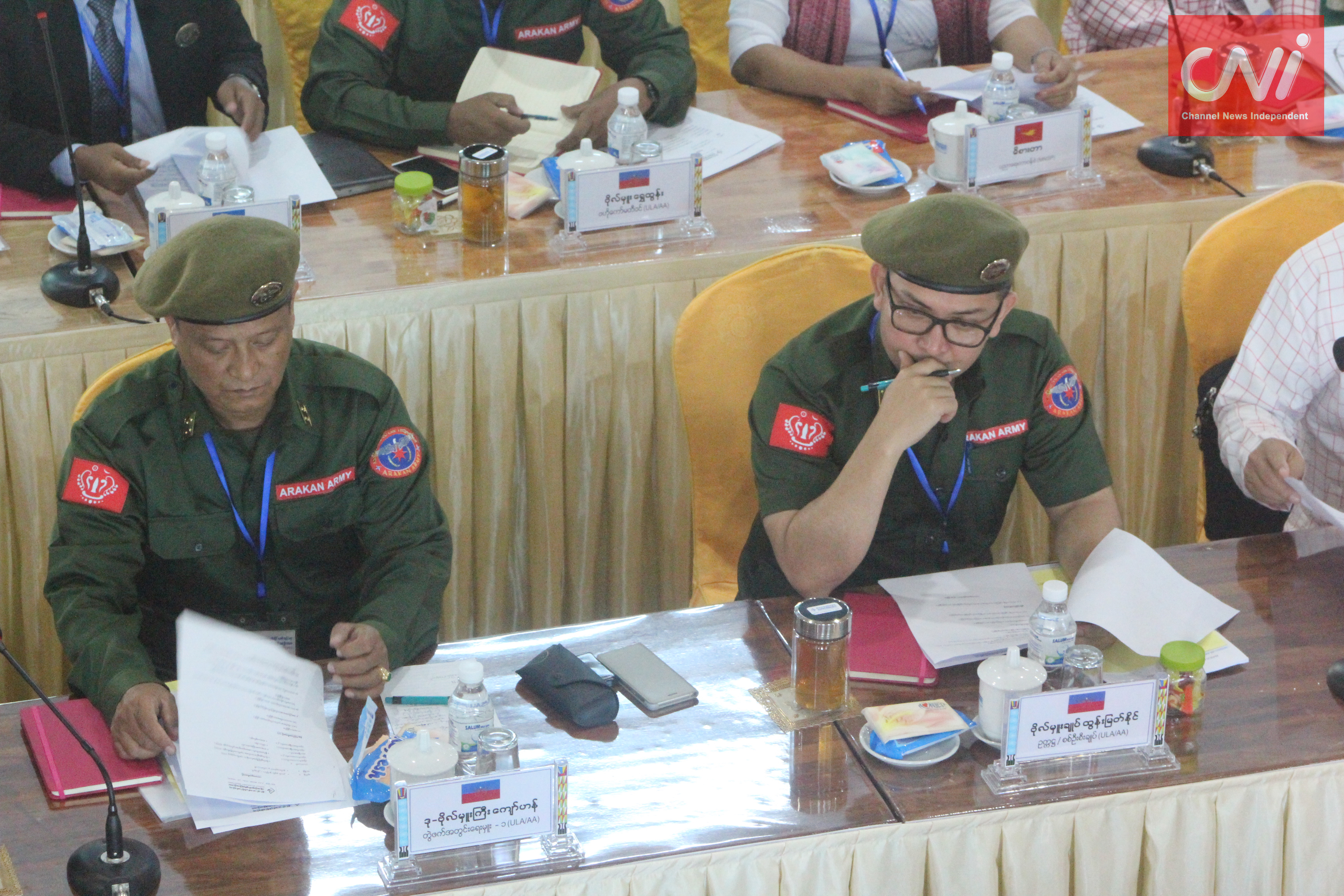
Leaders of the Arakkha Army (AA).
The report also references past comments by former Bangladeshi Prime Minister Sheikh Hasina, who claimed a "white-skinned country" offered to help establish a new Christian state by carving out parts of Myanmar and Bangladesh. Following her refusal, student protests in August 2024 led to her resignation and flight to India.
Dr. Aye Maung, Chairman of the Arakan Front Party (AFP), offered a different view, suggesting that while the concerns are valid, the total disappearance of the ethnicity is unlikely if proper efforts are made.
"There is no reason for them to disappear. Every politician and patriot thinks about the next 50 or 60 years. These fears of 'disappearing' come from looking at the current population explosion in a neighboring country and the lack of border security," Dr. Aye Maung explained. "If the central government cannot secure the borders, if there is no rule of law or border guards, and if non-citizens can enter at will—then yes, the Arakanese could disappear. We must work to ensure this 'scenario' does not happen."
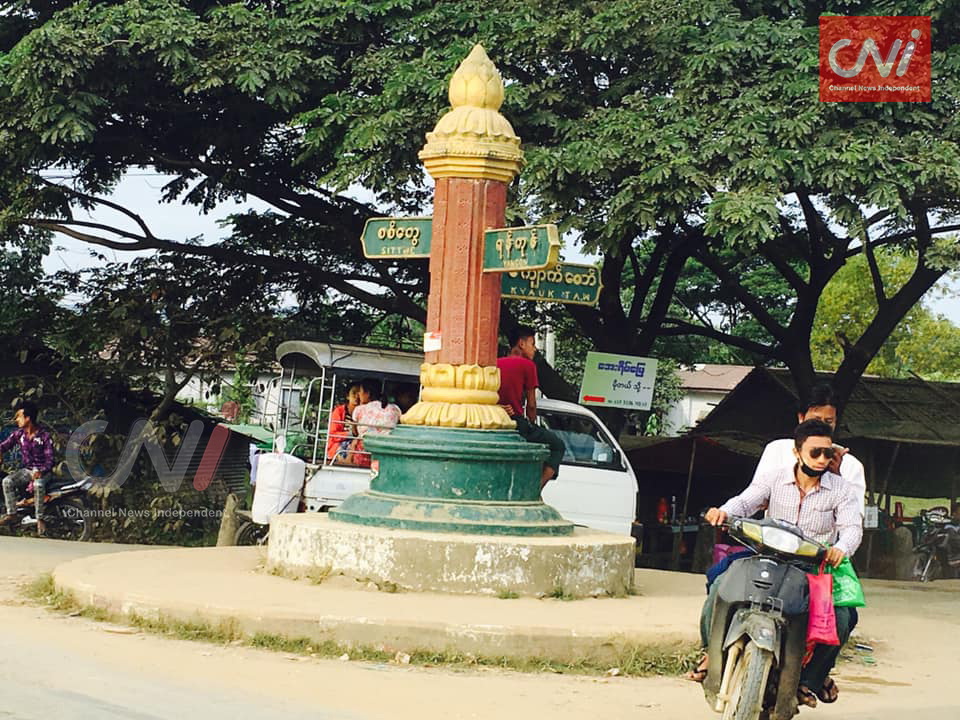
A road junction in Rakhine State.
The report notes that from 1948 to 1961, Mujahideen rebels fought in northern Rakhine (Mayu District) to establish an Islamic state or join Pakistan. Currently, groups such as ARSA, RSO, and ARA are active in the region, seeking to consolidate Rathedaung, Buthidaung, and Maungdaw into an independent Muslim territory.
Dr. Aye Maung emphasized that a nation or a people only "disappears" if the government and the public are incompetent.
"Sovereignty over all borders must remain firmly in the hands of the Union. The government must reclaim the borders and ensure the rule of law to facilitate the repatriation of those who fled. However, a nation does not have to grant every demand made by external groups; it must act according to its own laws and sovereignty," he added.
He concluded by stressing the importance of diplomacy and constructive conflict resolution between the central and regional governments to ensure that all ethnicities and religions can coexist peacefully and rebuild their socio-economic lives.
Notably, on April 27, 2025, the Jamaat-e-Islami party of Bangladesh reportedly met with representatives of the Chinese Communist Party in Dhaka to propose the establishment of an independent state for Bengalis within Rakhine State.