
CNI News
April 7, 2026
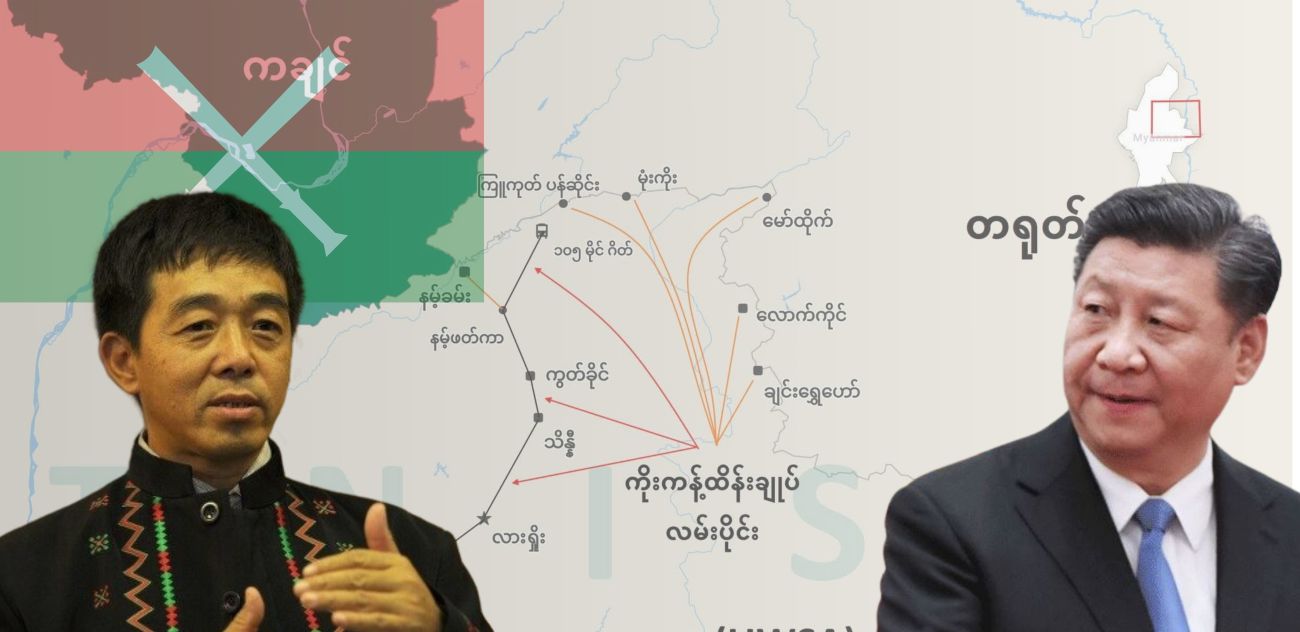
Military and political analysts are weighing in on whether China is concerned about the military and political objectives of the Kachin Independence Army (KIA) regarding Myanmar’s northwestern region—specifically the border areas between Upper Sagaing Region and Kachin State.
Political analyst Dr. An Kaw La told CNI News that Chinese concerns led to the outbreaks of fighting between the TNLA and MNDAA (two members of the Brotherhood Alliance) in northern Shan State back in February.
Furthermore, he noted that the "Win Wa" battle between Dawei and Myeik in the Tanintharyi Region raised Chinese anxieties regarding Western influence over the Strait of Malacca. This, in turn, prompted China to encourage Ethnic Armed Organizations (EAOs) with whom it maintains good relations to establish territorial control in the northeast.
"The main factor in controlling northern Shan State relates to the remarks made by KIO General Gun Maw during the Kachin Revolution Day celebrations on February 5," Dr. An Kaw La explained. "At that time, the KIO mentioned 'Units'—Kachin, Naga, Chin, and Arakan units. This is connected to a plan to dominate a massive territory with access to the sea by closing off the 'Three Ks' entrance to Sagaing (Katha, Kawlin, and Kanbalu), effectively linking the entire Western and Northwestern halves of the country."
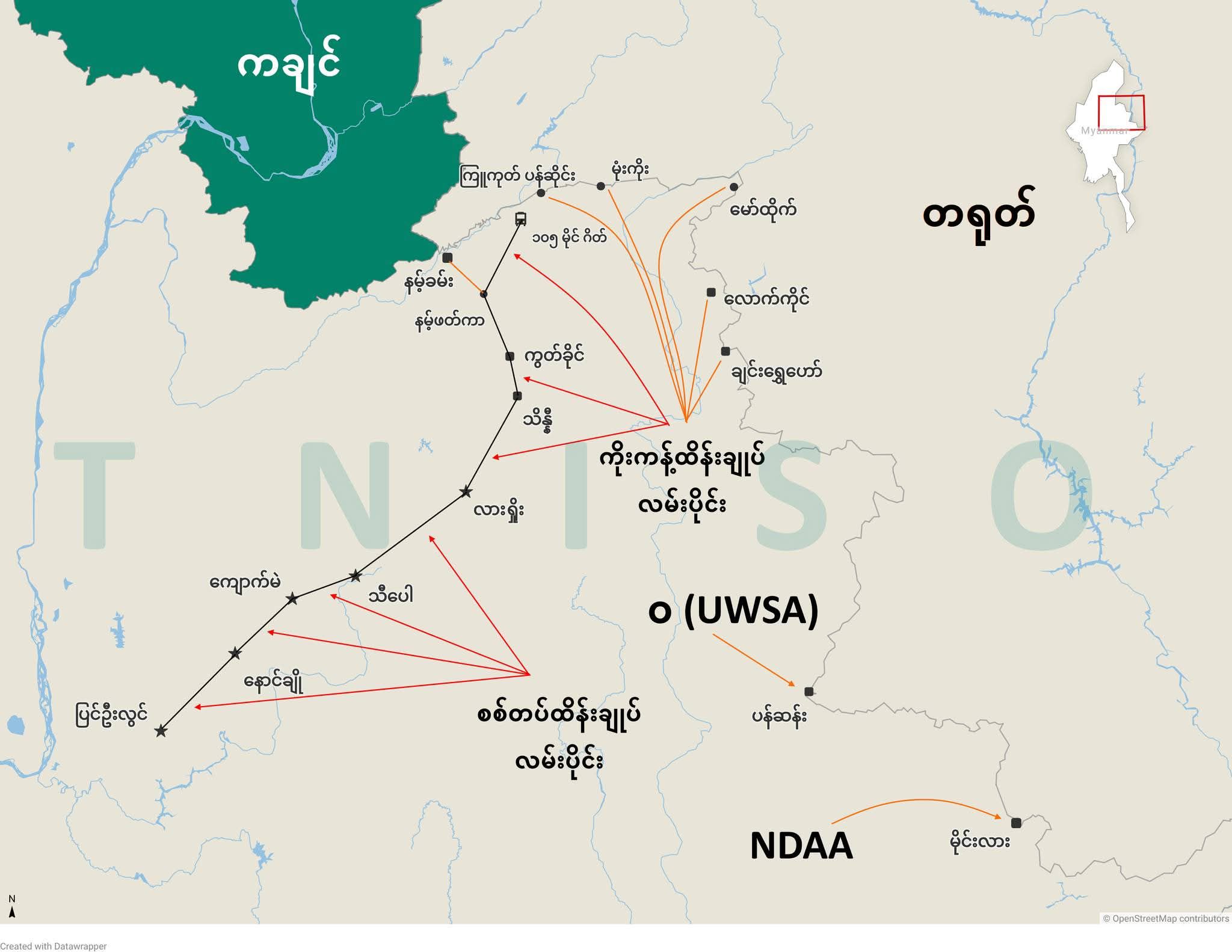
China's strategy for controlling Northern Shan State.
He further suggested that the MNDAA’s seizure of Namkham was a preemptive move by China to prepare for the possibility of the KIO implementing this plan. He noted that shortly after the KIO discussed these Western and Northwestern units, intense fighting broke out at Win Wa in Tanintharyi. During that conflict, KNU and PDF forces launched drone attacks on the Myeik Air Base.
"The purpose of the war in Tanintharyi does not seem geopolitically 'safe' for China. Immediately after those events, the MNDAA moved swiftly to launch battles in northern Shan State," Dr. An Kaw La added.
Upper Sagaing townships such as Banmauk, Indaw, Tigyaing, and Katha are located on a vital corridor connecting the KIA headquarters in Laiza to the Indian border in the west. Controlling these routes secures essential supply lines.
Similarly, if the KIA can control Homalin in Upper Sagaing, they would dominate the entire Chindwin and Naga regions, as well as the Uru River basin along the India-Myanmar border. This area also serves as a "buffer zone" to preemptively block Myanmar military columns moving toward Kachin State.
According to some analysts, China was so concerned by the KIA’s northwestern ambitions that it utilized the MNDAA in March to prepare for the seizure of Kutkai and Namkham in northern Shan State.
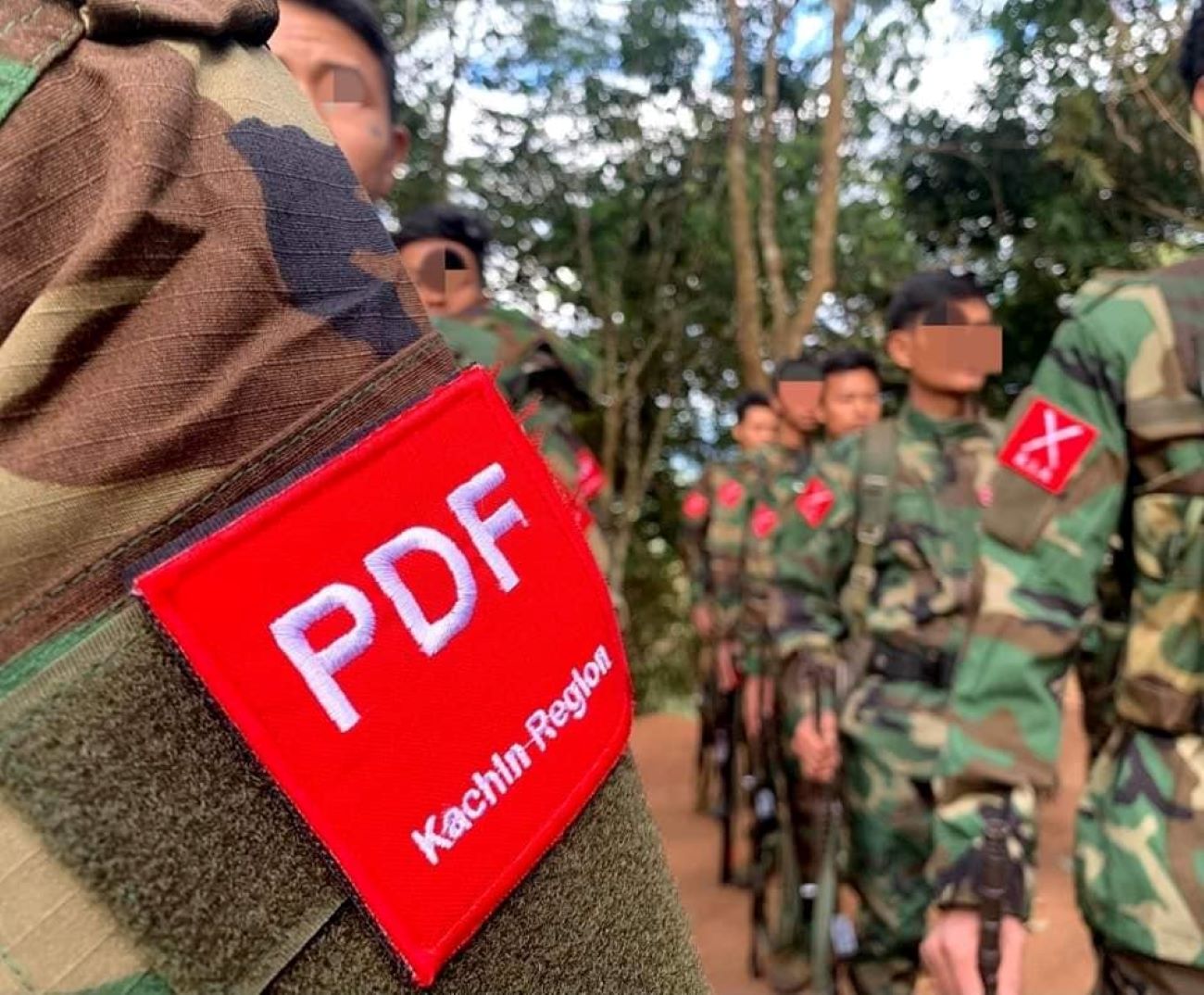
Joint KIA-PDF forces.
While some see a strategic rivalry, Sai Htay Aung, Chairman of the Tai-Leng (Shanni) Nationalities Development Party (TNDP), told CNI News that he does not believe China has major concerns regarding the KIA’s northwestern goals.
"China is a country that does anything for its own national interest. We see Chinese nationals entering Myanmar to work; they don't speak a word of Burmese but hold Myanmar NRC (ID) cards. These 'real' Chinese nationals are mining jade and logging timber in these areas. I believe they enter through deals made with the KIA," Sai Htay Aung said.
He noted that the same applies to banana plantations along the Chinese border. "China acts solely for its own profit. Since the KIA also operates for its own national and group interests, I don't think China is particularly worried. They have been self-interested all along. With the Union Government losing influence, these areas have simply become their 'business zones,'" he added.
The KIA plays a central role in training and arming local People’s Defense Forces (PDFs) in the Northwestern Military Region. By conducting joint operations with the PDFs, the KIA is expanding its military influence across the northwest.
Military and political observers conclude that the KIA is using Sagaing Region—a pillar of the "Spring Revolution"—as a strategic asset. Since Sagaing Region is rich in gold and timber, dominating the region allows the resistance to secure necessary funding and gain the upper hand in resource management.