
CNI News
April 2, 2026
Military and political analysts told CNI News that it remains to be seen how China, India, and Bangladesh—three nations with significant interests in Rakhine State—will engage with the Arakkha Army (AA).
Rakhine State is home to China’s Kyaukpyu Deep Sea Port project, India’s Kaladan Multi-Modal Transit Transport Project, and Bangladesh’s border trade routes, while also serving as a vital gateway to the sea.
U Myo Kyaw, spokesperson for the United Nationalities Alliance (UNA), told CNI News that even if these three countries are reluctant to officially recognize the AA, they will have to engage in discussions because the AA currently holds de facto sovereignty over Rakhine State.
"The scope is vast. India and Bangladesh share borders with Rakhine State. On the other hand, China’s Belt and Road Initiative (BRI) is a global project, and China is one of the world's leading superpowers. Its strategic 'Ocean Dream' is centered in Rakhine State. All these factors are interconnected, making Rakhine geopolitically critical. Furthermore, India has seven landlocked states connected to Myanmar; their trade and access to the sea depend on Rakhine State. Even if these countries don't officially recognize the AA, some Indian states already acknowledge them, and there are likely behind-the-scenes discussions happening. They have to talk. If they don't speak with the AA, who currently holds sovereignty in Rakhine, they stand to lose a lot in terms of investment, logistics, and bilateral trade. Even if they don't want to, they must maintain a relationship." — U Myo Kyaw.
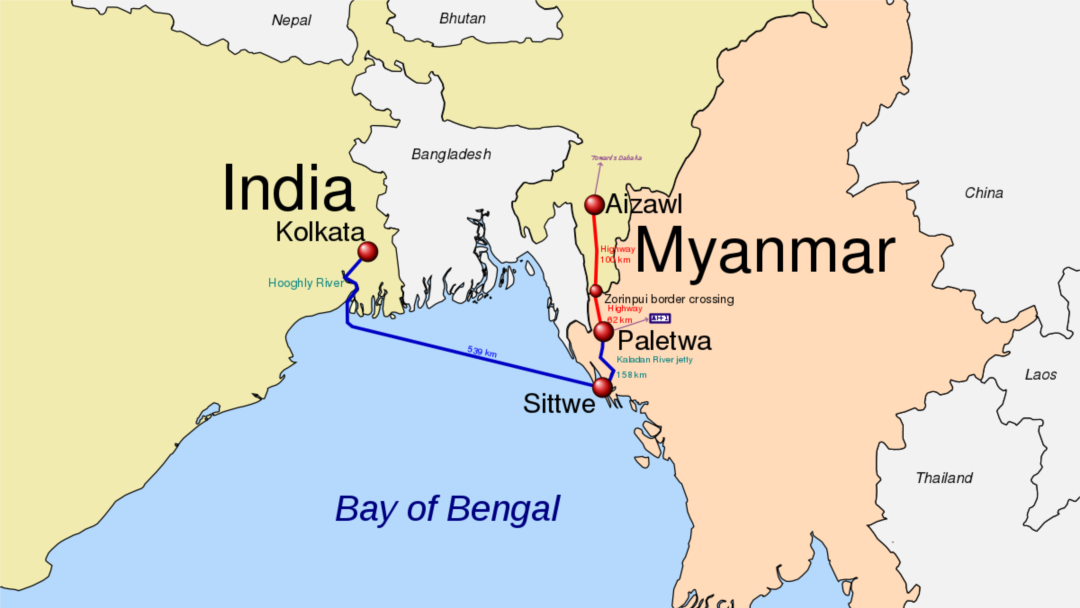
The route of the India-Myanmar Kaladan River Project.
China: China maintains the closest and most influential relationship with the AA. The AA has publicly pledged to protect Chinese projects. Analysts note that the AA receives arms and technology from the UWSA (United Wa State Army), which is close to China. Additionally, China has hosted the "Haigen Talks" between the military and the Three Brotherhood Alliance, which includes the AA.
Bangladesh: Dhaka views the AA as a central player in the repatriation of refugees. The AA has signaled a willingness for peaceful coexistence, recognizing Muslims in Rakhine as "Muslims of Rakhine descent." With official trade routes with the central government cut off, both sides are interested in restarting border trade through AA-controlled territories.
India: India’s primary investment, the Kaladan Project, passes through Paletwa and other parts of Rakhine now controlled by the AA. While India has strategic concerns regarding the AA’s closeness to China, it is forced to interact with the AA to ensure the safety of its projects.
A political analyst told CNI News that while China needs the central government's agreement for its projects, it has reportedly deterred the AA from seizing Kyaukpyu to maintain a functional link with the central authorities.
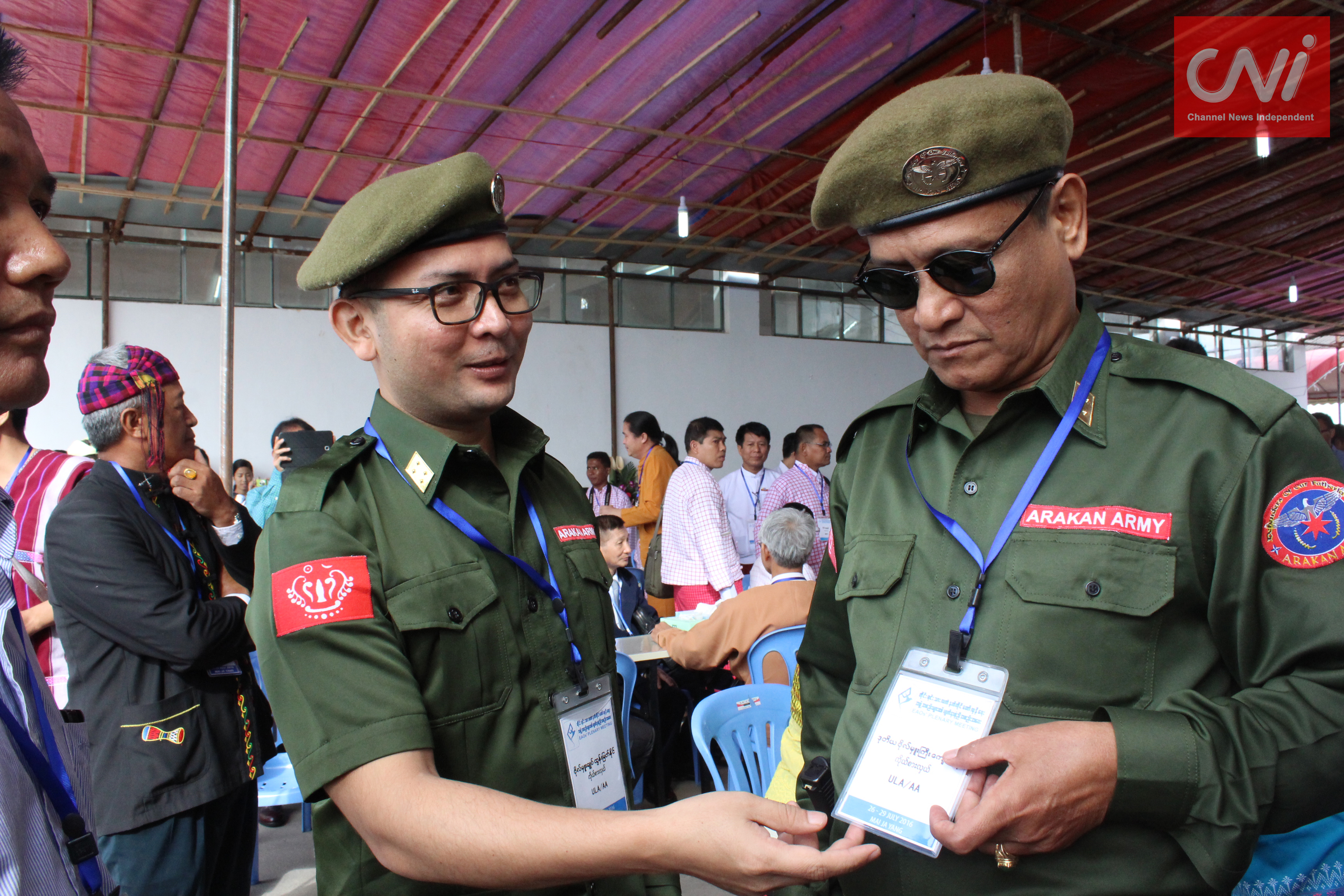
AA Leader, General Tun Myat Naing.
"All three countries are considering how to deal with the AA, which controls most of Rakhine. For example, India is trying to ensure smooth trade through the Kaladan River up to its northeast. Under previous governments, their work was hindered by AA arrests and interference. To work without disruption now, they must have a good relationship with the AA. China has massive strategic goals, like the Kyaukpyu Deep Sea Port. Since they know they need the central government's signature for such large projects, they have reportedly told the AA not to seize Kyaukpyu."
The analyst added that while agreements with the central government exist on paper, these nations must build relationships with the AA to protect their interests on the ground.
"Bangladesh needs border trade routes to remain open. To resolve the issue of 'Bengali' (Rohingya) refugees, they need to get along with the AA, who actually governs the area. Discussions with the Myanmar government only yield results on paper. On the ground, the AA is the dominant force."
Currently, the AA has captured almost all townships in Rakhine State, including Paletwa, with the exceptions of Kyaukpyu, Sittwe, and Manaung.
Beyond Rakhine, the AA is active in northern Shan State as part of the Brotherhood Alliance and conducts joint military operations with Kachin and Chin armed groups, as well as broader "Spring Revolution" forces.