
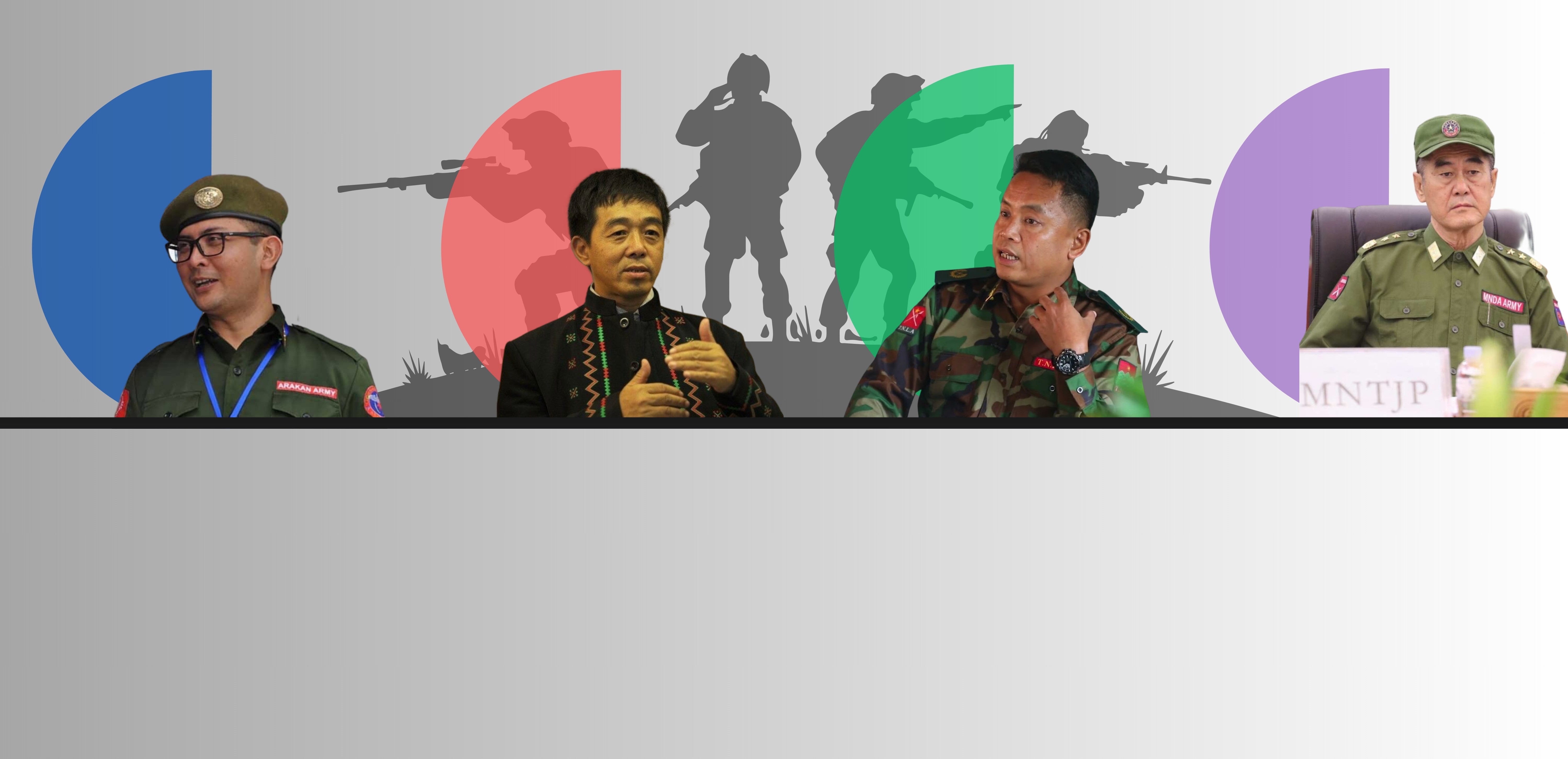
CNI News
March 26, 2026
Granting greater autonomy to states is necessary to end the long-running armed conflicts between ethnic armed organizations and the Myanmar military (Tatmadaw), which have persisted for nearly 80 years, political analyst Dr. Aung Myo told CNI News.
He said:“As much as possible, autonomy should be granted to the states. A confederation model may not be feasible. Some groups speak of federalism, but in reality, it is not truly federalism. However, autonomy should be granted first. Once that level of autonomy is offered, the military will have fulfilled its part. If the other side does not accept it, then only conflict will remain.In fact, there were also opportunities in the past to amend the constitution through parliament(Hluttaw), but governments—whether under U Thein Sein or the NLD—did not fully act on them. Everything remained centralized. That central control should be reduced. That is the key issue.”
Myanmar’s internal conflicts date back to shortly after independence in 1948 and have continued to the present day.
Ethnic armed organizations have long demanded self-determination and autonomy for their respective states. However, some are now seeking arrangements that go beyond federalism.
At present, although the Myanmar military has invited groups to engage in peace talks, discussions have mainly involved signatories to the Nationwide Ceasefire Agreement (NCA) and groups not currently in active conflict with the military.
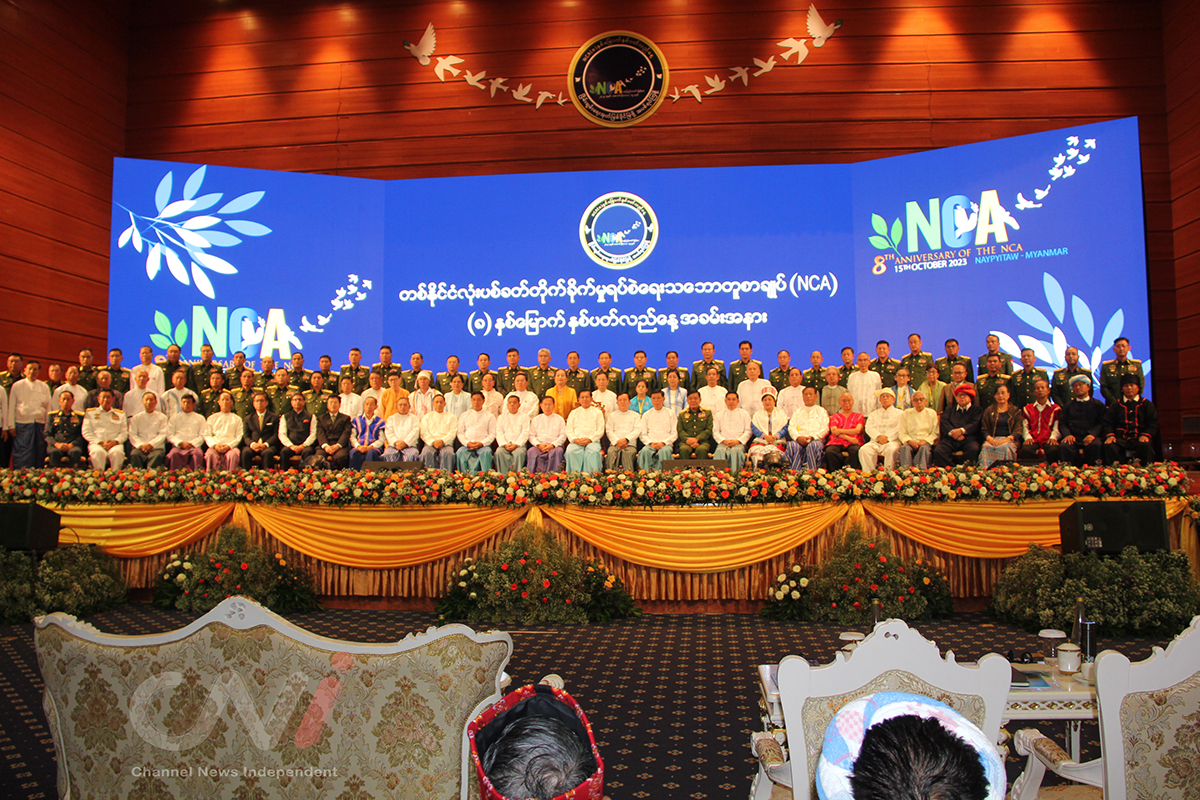
During an anniversary celebration of the NCA
Myanmar is not a country belonging to a single ethnic group but a union composed of multiple nationalities. However, in practice, it continues to operate under a highly centralized system, leaving ethnic groups with limited authority, political analyst Sai Main told CNI News.
He said:“In reality, the country still functions as a centralized state, so ethnic groups lack real authority. No matter how much peace talks are held, if one armed group disappears, another will emerge. Sustainable dialogue will not be possible.If we reassess how the country was formed—particularly since 1947—and implement genuine equality, then progress can be made. Otherwise, even as talks continue, all sides are expanding their forces and arming themselves. Myanmar has become a country with numerous armed groups. In Shan State alone, there are around eight major armed groups, some of which are also fighting among themselves. Under such conditions, peace will never be achieved.”
As armed conflicts intensify across Myanmar, the NCA process has nearly come to a halt.
Clashes between the military and various armed groups over territorial control have become more widespread, further hindering the implementation of peace processes, analysts say.
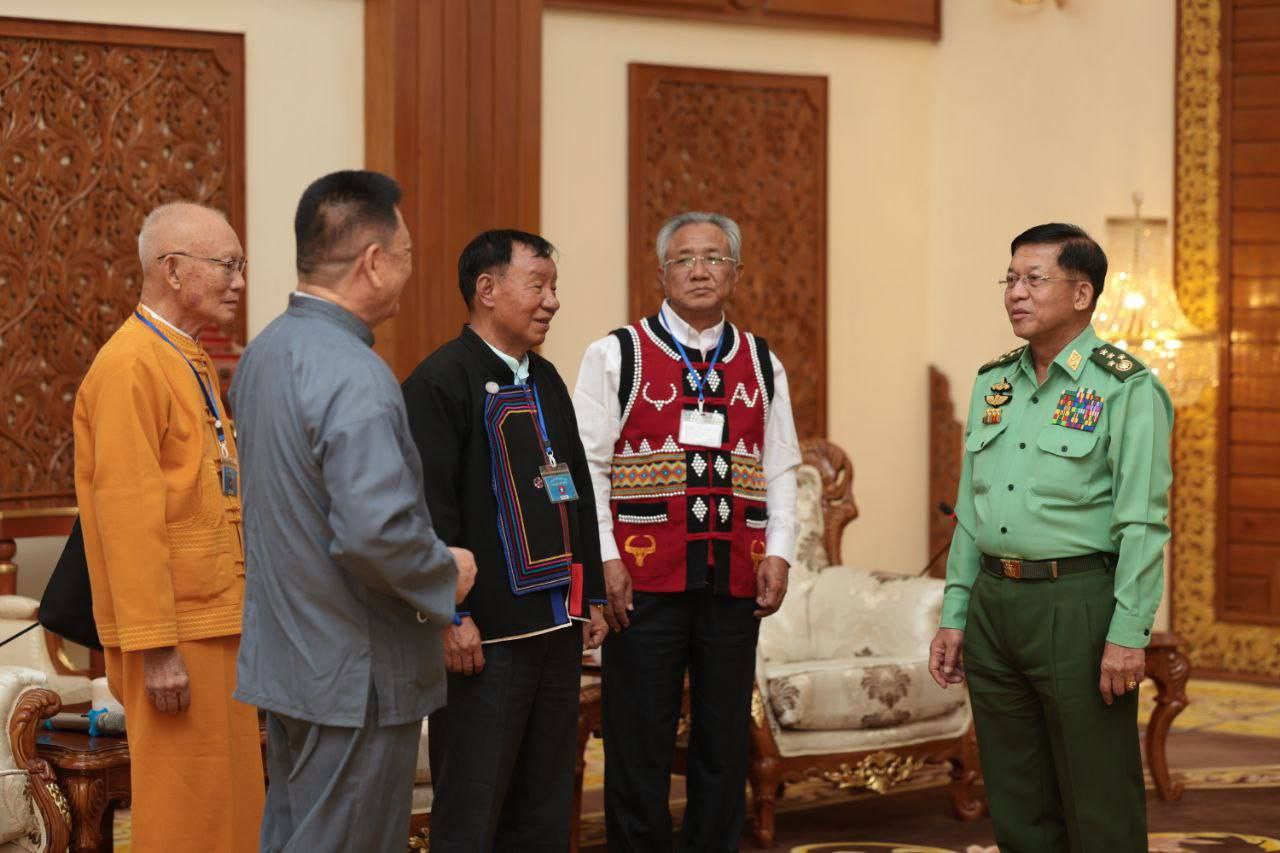
Senior General Min Aung Hlaing and leaders of armed groups
Dr. Nyo Nyo Thin, founder of the Yangon Watch group, said that although some ethnic armed organizations may not currently be prioritizing peace, there is hope they will eventually come to the negotiating table for the benefit of their regions and people.
She said:“At this moment, some groups may not yet be considering peace. However, at a certain point in time, they will have to think about the interests of their local populations. For the sake of their people and regional peace, they may set aside their own ambitions and come to the negotiating table.”
Decades of armed conflict in Myanmar have eroded trust among the government, the military, and ethnic armed organizations, leading to deep suspicion, analysts noted.
Such mistrust and limitations make meaningful dialogue for peace difficult.
Analysts also emphasized that peace talks should include all armed groups on an equal basis, without excluding smaller groups or those not currently engaged in fighting with the military.