
CNI News
March 26, 2026
The directive restricting vehicle usage based on odd and even license plate numbers, introduced to conserve fuel in Myanmar, should be abolished as it has created significant difficulties for the public, said Sai Htay Aung, chairman of the Tai-Leng (Shanni) Nationalities Development Party.
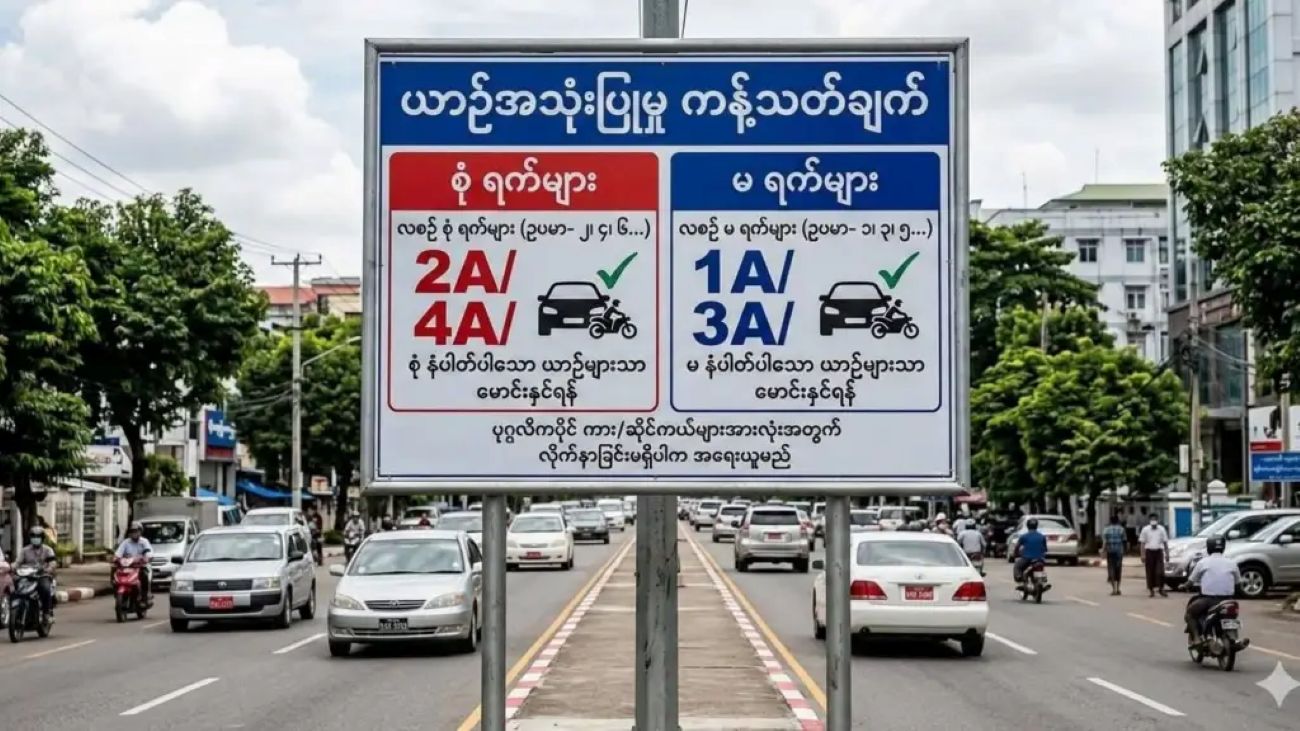
The State Defence and Security Council announced on March 3 that, starting March 7, 2026, cars and motorcycles would be allowed to operate on alternating “odd” and “even” days as part of fuel-saving measures.
Sai Htay Aung told CNI News that the policy, which emerged as a consequence of the fuel shortage crisis, has caused serious hardship for the public. He suggested that instead of enforcing odd-even restrictions, the government should adopt a system of limiting fuel sales.
He said: “Before issuing any directive, the government should carefully assess its pros and cons. Will it create difficulties for the public? Will it solve their problems, or make things worse? These are the questions that should be considered. After this directive was introduced, people’s lives have become more difficult. We are also seeing new measures—such as purchasing fuel with QR codes and allocating fuel based on engine power, once or twice per week. These kinds of measures are more appropriate. People are already suffering from long queues at fuel stations. The odd-even restriction should be removed. If fuel is distributed in a controlled way—based on quotas per vehicle—people will find it more manageable. Given the global situation, including instability in the Middle East, the public understands the fuel challenges and is willing to be considerate. Therefore, the government should abolish the odd-even system and instead implement a weekly quota system based on engine size.”
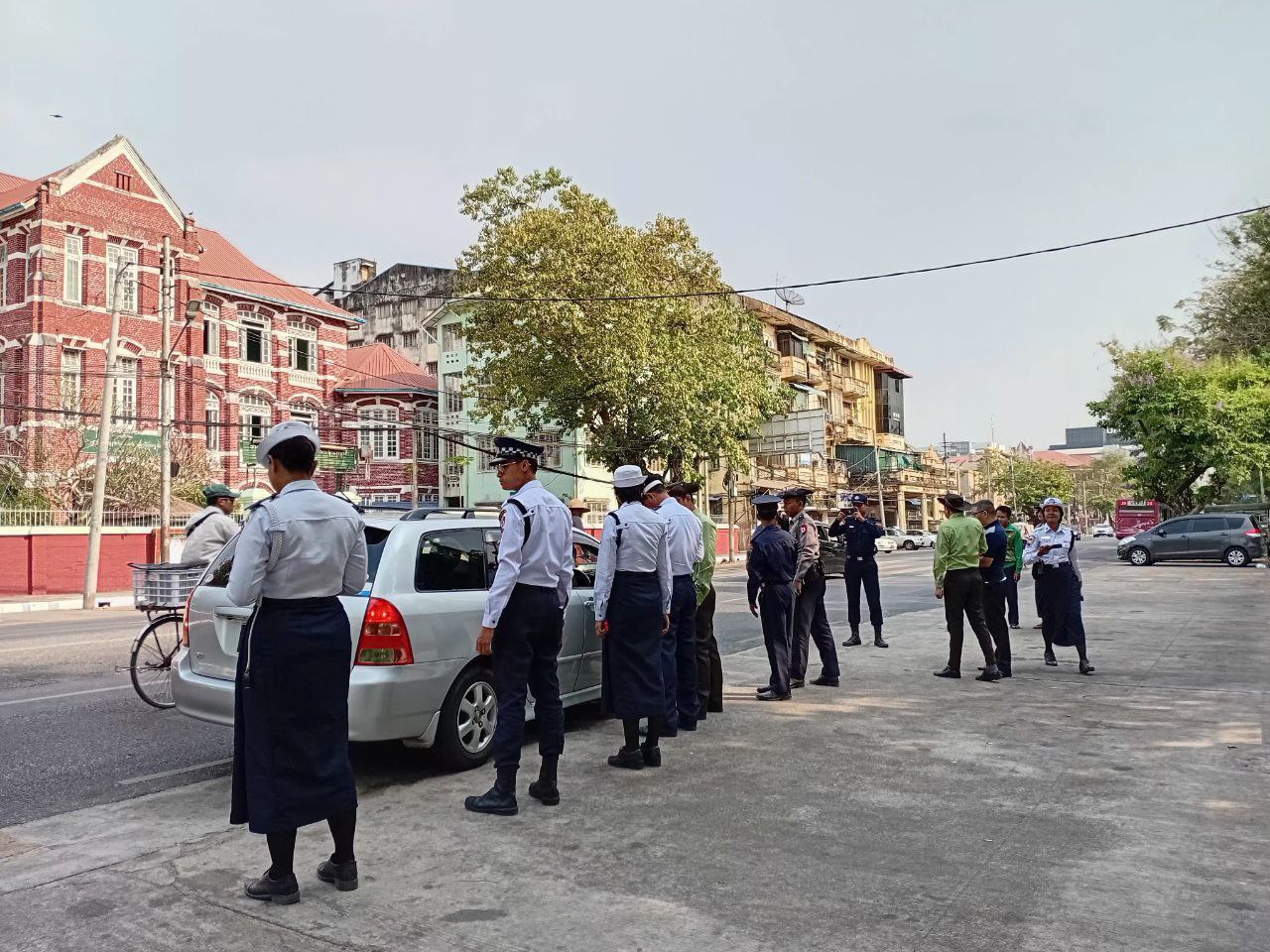
While Even/Odd restriction violators are being arrested
The Ministry of Energy has announced that fuel purchases will be regulated based on engine power, with limits on how much can be bought per week, allowing purchases no more than twice weekly.
According to the reference fuel prices released on March 24, 2026, prices have reached 3,610 kyats per liter for 92 octane, 3,850 kyats for 95 octane, 4,390 kyats for regular diesel, and 4,820 kyats for premium diesel.
Political analyst U Htet Aung Kyaw also told CNI News that abolishing the odd-even driving restriction and instead controlling fuel sales would be a more effective solution.
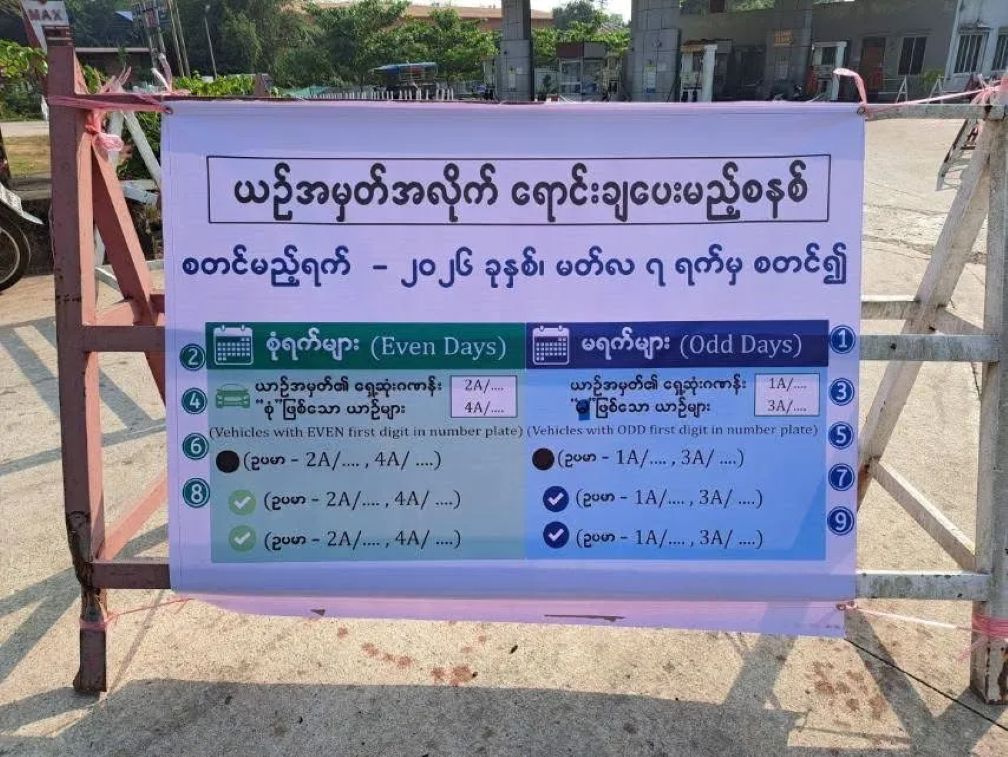
While seeing the plan that sells fuel
He said: “If you ask anyone, they will say the odd-even restriction should be scrapped. The government should calculate how much fuel can be imported and how it can be distributed among all vehicles in the country. Instead of forcing people to queue every other day, it would be better to allocate enough fuel for a week at once—whether 30 or 40 liters per vehicle. This would reduce congestion at fuel stations and save people’s time. Once fuel consumption is controlled at the point of sale, vehicle owners can decide when to travel—whether morning, afternoon, or night—based on necessity. Restricting when people can drive is not appropriate and does not work effectively.”
Business owners say the current odd-even system is affecting not only the hotel and tourism sector but also offices and factories, contributing to economic decline.
Observers also note that the restriction may be pushing people toward breaking rules and encouraging corruption among authorities.
Additionally, amid ongoing fuel shortages, the black market for fuel is reportedly expanding rapidly, further impacting the economy and making transportation more difficult for the public.