
CNI News
March 9, 2026
Military and political analysts are weighing in on whether peace in Myanmar should be built by incentivizing and organizing Ethnic Armed Organizations (EAOs) as National Guard or State Guard forces, rather than the previous models of Border Guard Forces (BGF) or People’s Militia Groups.
During the negotiations for the Nationwide Ceasefire Agreement (NCA), the government maintained a stance of wanting a single unified military, while EAOs stood firm on becoming State Guard forces for their respective states, according to U Khun Sai, a figure involved in the peace process, who spoke to CNI News.
He noted that a step-by-step transition from these independent State Guards toward a single Union Army had been previously agreed upon. Had the political changes of 2021 not occurred, this process would have already reached a significant milestone.
"Now, following the coup and the takeover, the previous talk of having a 'single military' has become even harder to accept. There is a sense that it will take more time and require more regulations and restrictions," U Khun Sai said. "However, these are not insurmountable issues. Currently, let them maintain their own State Guards. Switzerland did the same; for hundreds of years, they operated with state-level forces. When it came to collective matters, they joined forces; otherwise, they managed their own state troops. Eventually, they became a Union Army. We don’t need to wait hundreds of years like Switzerland—it could take a decade—but we need serious discussion. To truly establish security, we must realize we cannot do it as a single state or a single ethnic group alone. If everyone accepts that we must work together, this is entirely possible."
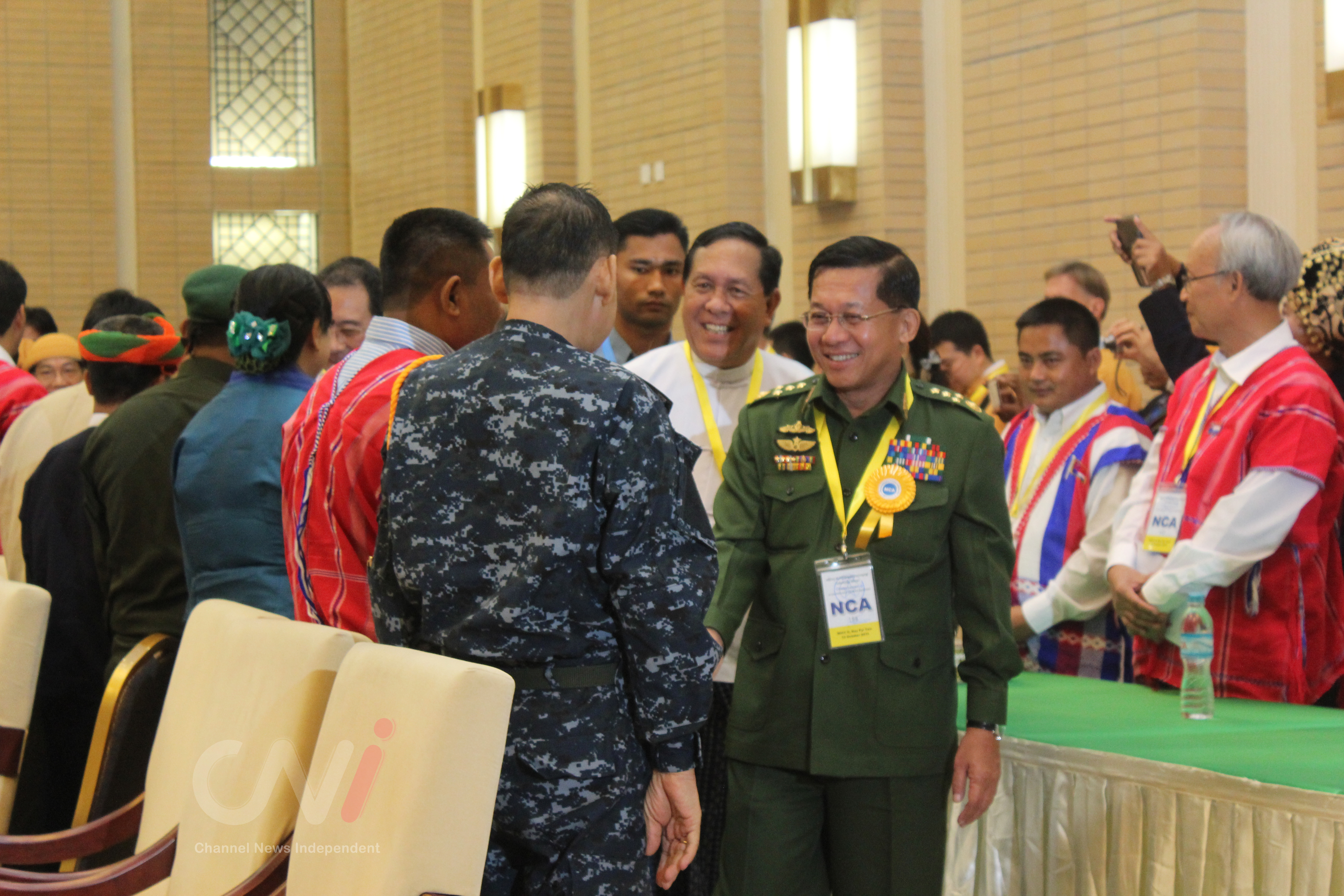
Ethnic armed leaders and Senior General Min Aung Hlaing.
Section 338 of Myanmar’s 2008 Constitution stipulates that all armed forces in the country must be under the command of the Defense Services (Tatmadaw).
During a government meeting in Naypyidaw on August 22, 2022, Senior General Min Aung Hlaing previously stated that after signing the NCA, ethnic armed groups wishing to remain armed would be allowed to serve in Border Guard Forces (BGF) alongside the Tatmadaw. He also mentioned that ethnic and regional rights should be debated in the political arena (Parliament), and EAOs wishing to engage in business would be permitted to do so in accordance with the law.
Recently, however, Senior General Min Aung Hlaing has been inviting armed groups to resolve political problems through political means, specifically by entering the path of party politics or elections.
A political analyst told CNI News that since EAOs already refer to themselves as "State Forces," it is questionable whether they would satisfy or accept the "BGF" label. He suggested that, under current circumstances, the BGF model is no longer ideal.
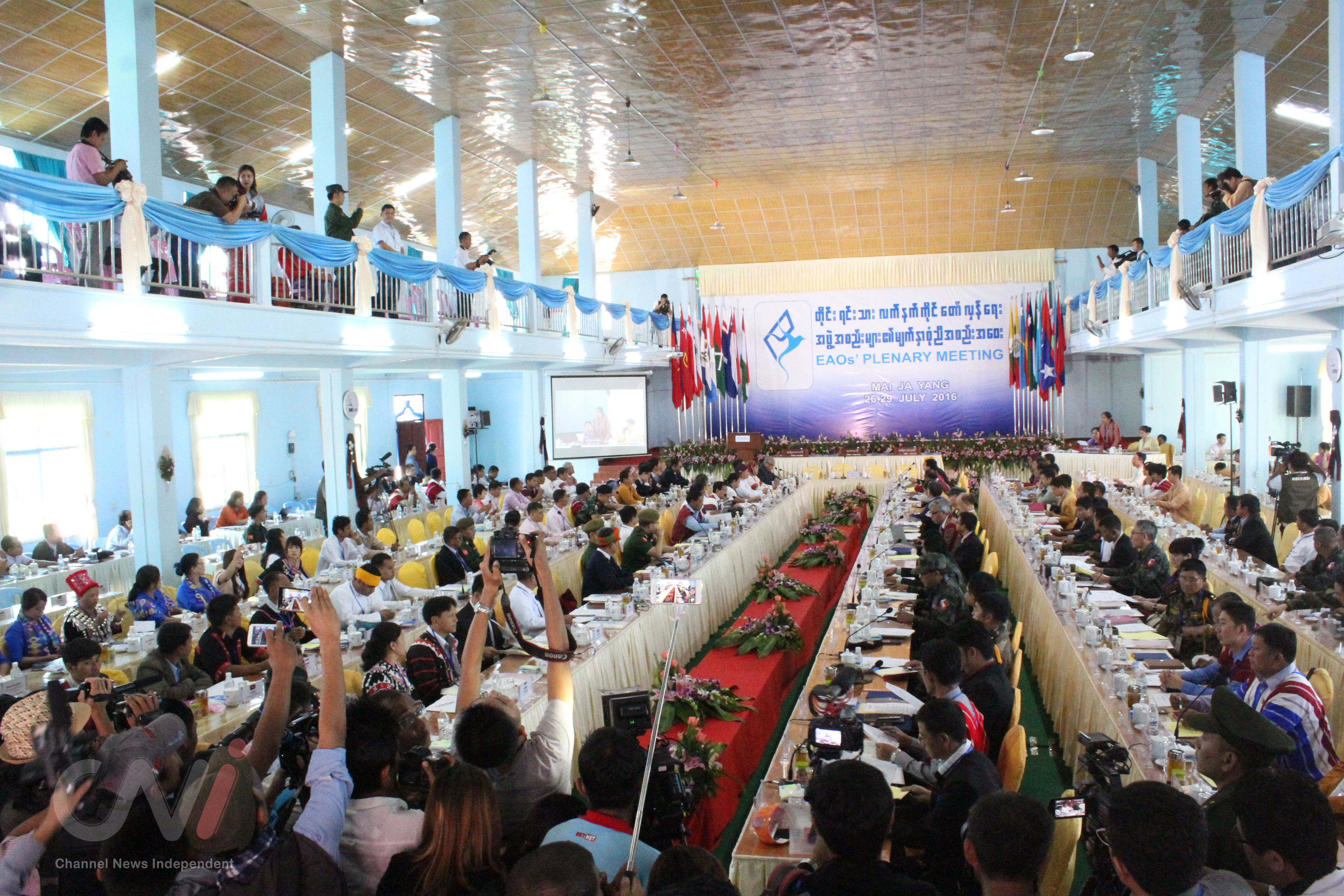
A conference of Ethnic Armed Organizations in progress.
"A major problem now, compared to pre-2021, is that groups like the Kokang (MNDAA) and TNLA have seized territories beyond their designated Self-Administered Zones," the analyst said. "These seized areas sit on the China-Myanmar trade routes, which is the primary issue to solve. If we insist they withdraw based strictly on the Constitution, we don't currently have the leverage to enforce that since we haven't reclaimed those areas. They argue their people live there. We should decide through a democratic and free referendum. In the interim, with China acting as a mediator to prevent forced relocations, a fair democratic decision should be made. Other groups like the SSA and SSPP would likely accept a decision based on a public referendum."
The National Guard system is used in the United States, where forces serve both the state and the federal government, unlike a traditional regular army. At the state level, they are commanded by the respective state governors. At the federal level, the President can call them into federal service for national needs or even international conflicts.