
CNI News
March 9, 2026
U Ko Ko Gyi, Chairman of the People’s Party (PP), told CNI News that resolving Myanmar's ongoing armed conflicts and peace process requires a departure from old methods in favor of new conceptual approaches.
Myanmar has been embroiled in civil war since March 1948, shortly after gaining independence on January 4 of that year. Despite peace efforts under successive administrations—including those of U Ne Win, U Than Shwe, U Thein Sein, Daw Aung San Su Kyi, and the current government led by Senior General Min Aung Hlaing—a lasting solution remains elusive. U Ko Ko Gyi emphasized that the incoming government must adopt fresh perspectives to tackle these long-standing issues.
"In some matters, precise actions are required, while others demand flexibility," U Ko Ko Gyi said. "Peace negotiations, for instance, need flexible dialogue. Decisions must be based on the specific context and situation rather than a rigid 'all-or-nothing' approach. We need a total reassessment. The civil war is nearly 80 years old; the problem isn't new, but it is certain that old thinking cannot solve it. We must create new ways of thinking and approaching the issue."
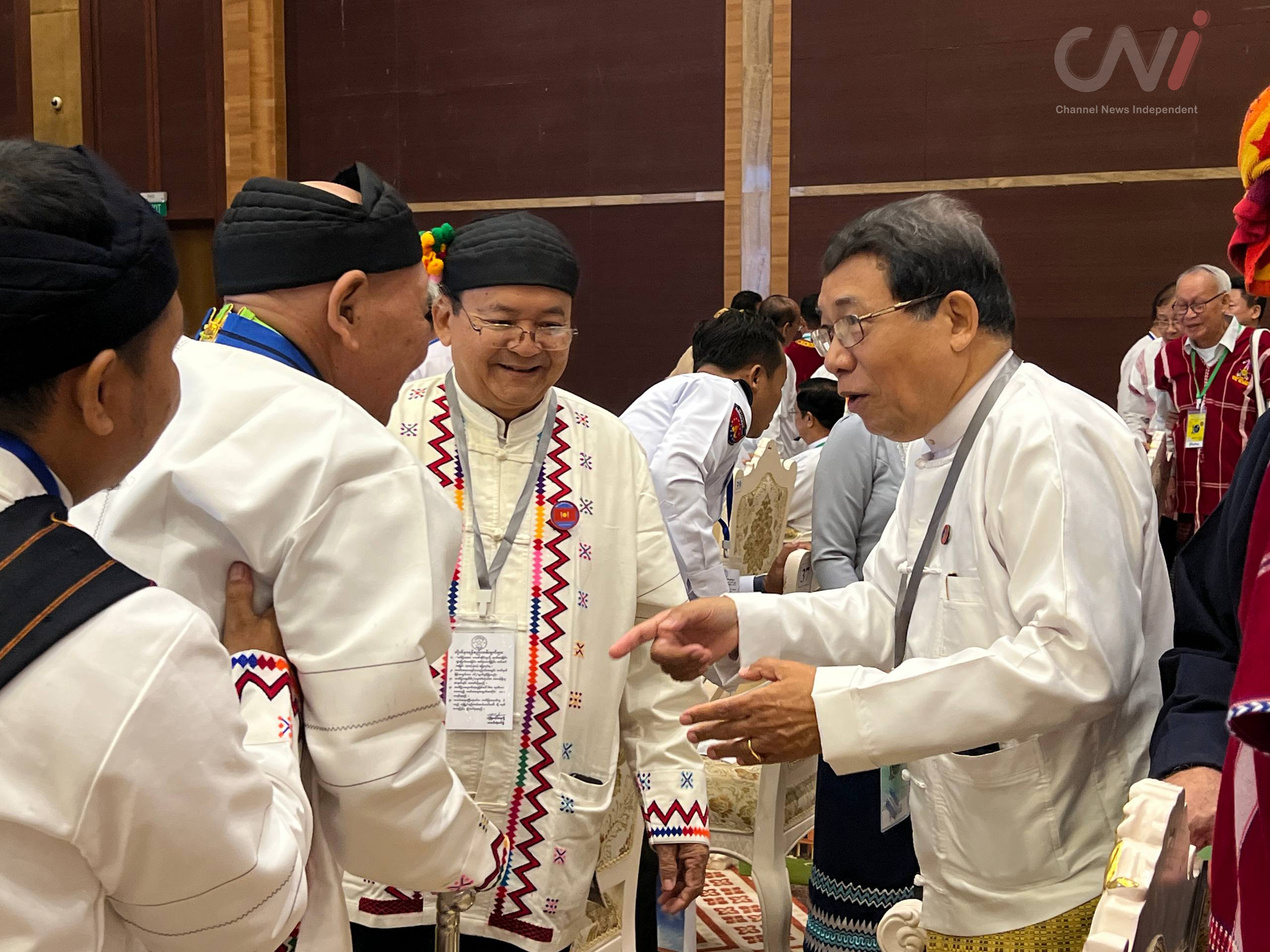
Dr Aye Maung, Chairman of the Arakan Front Party
Myanmar recently conducted its 2025 General Election in three phases, spanning from December 28, 2025, to January 25, 2026. The third sessions of the Pyithu Hluttaw and Amyotha Hluttaw are scheduled for March 16 and 18, 2026, with a new government expected to form in April.
U Ko Ko Gyi noted that the new government is expected to issue peace invitations. He stressed the need for practical discussions on power-sharing and resource management.
Federalism was once viewed as a crime or a precursor to the disintegration of the Union, even serving as a justification for military intervention.
While federalism is now accepted in principle, the technical details remain unresolved.
Practical negotiations on the specific structures of federalism and how power and resources will be managed.
Military and political analysts suggest that the new civilian government must prioritize national reconciliation and unity by changing the format of negotiations. Dr. Aye Maung, Chairman of the Arakan Front Party (AFP), told CNI that the new government should learn from historical lessons and move forward with a spirit of compromise.
"The government's steps will be crucial," Dr. Aye Maung said. "The incoming government will likely be experienced and has already navigated peace processes. We must learn from the history of Myanmar politics. To achieve national reconciliation, we need flexibility, a sense of timing (short, medium, and long-term goals), and a balance of firmness and gentleness. To achieve a win-win situation, we must build a political and peaceful solution through mutual give-and-take."
Since February 1, 2021, the scale of armed conflict in Myanmar has expanded significantly, with an increase in the number of armed groups.
The Myanmar military and government have faced territorial losses.
Ethnic armed organizations (EAOs) are focused on consolidating territorial control.
Some groups are now looking beyond federalism, aiming for confederation or total independence.