
CNI News
March 6, 2026
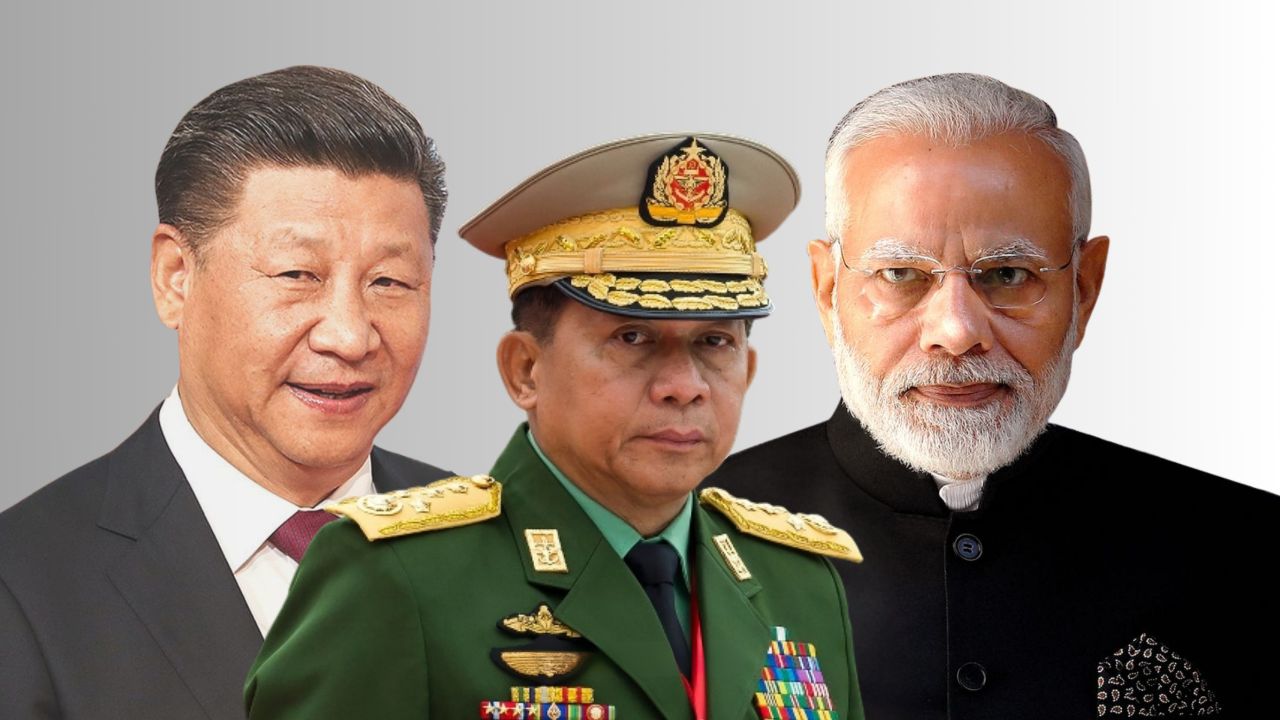
U Khun Sai, a participant in the peace process, told CNI News that the incoming new government should follow a non-aligned policy between its powerful neighbors, China and India.
He warned that if the country leans entirely toward one side, Myanmar will remain a nation in name only.
"If we do that, two things could happen," U Khun Sai said. "One is that our country remains only in name. Practically, it would belong to others. On the positive side, one might hope that after nearly 80 years of failing to achieve peace through self-rule, falling under another country's influence might bring peace similar to theirs. That’s one perspective.
The other is that if we align strictly with either India or China, and those two remain at odds, we will suffer the fallout. If we can maintain friendship with both, we have nothing to worry about. We must proceed with a non-aligned policy. Currently, while most people reject many sections of the 2008 Constitution, the principles that the country is a non-aligned state and that no foreign troops shall be stationed on our soil are points everyone can agree on. These should continue."
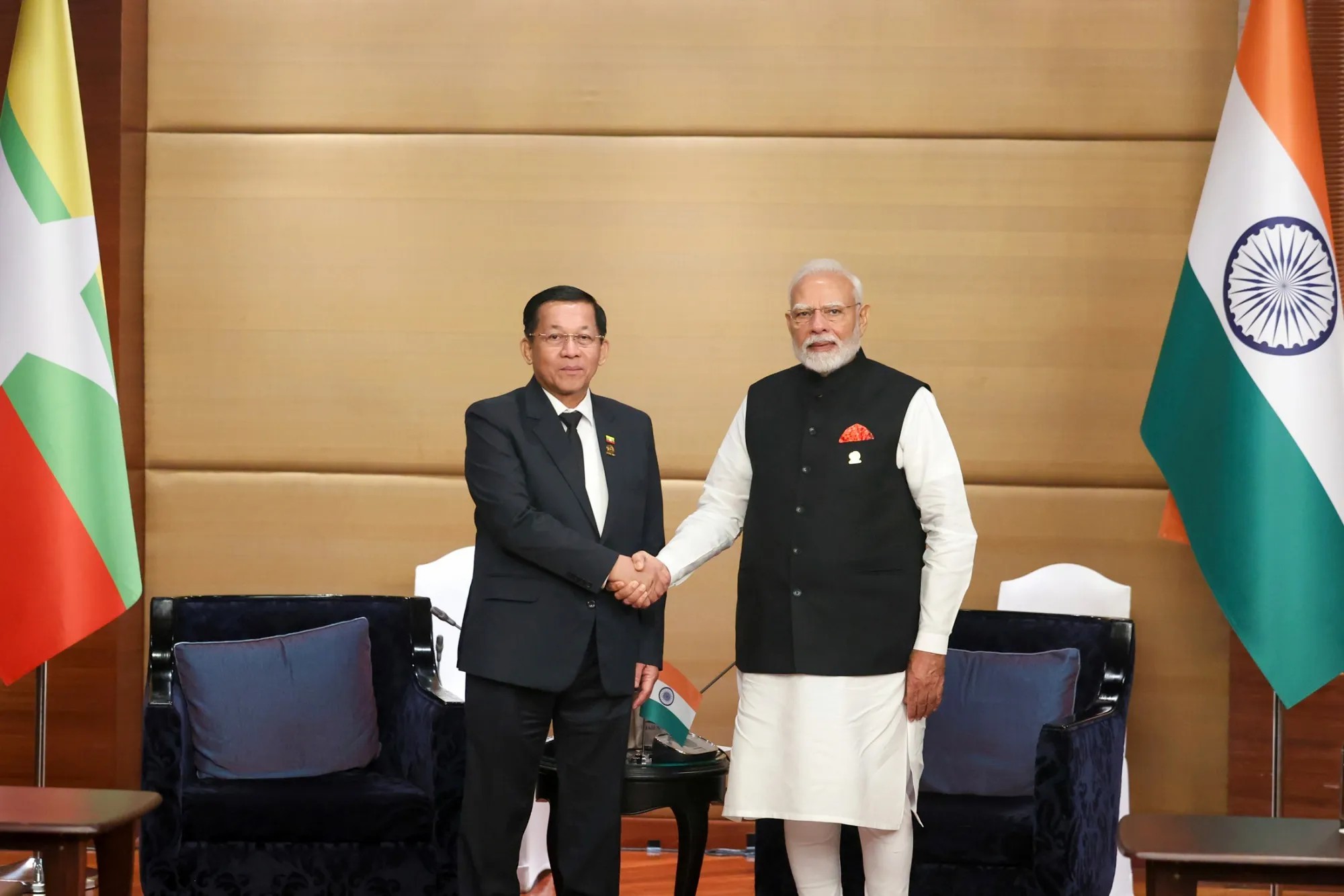
Indian Prime Minister Modi and Myanmar's Acting President Senior General Min Aung Hlaing.
Military and political analysts point out that while both nations have played crucial roles in Myanmar’s affairs since the 2021 political shift, their approaches differ significantly.
China holds the greatest influence over Myanmar's affairs. Its key interests include:
The China-Myanmar Economic Corridor (CMEC). The Kyaukphyu Deep Sea Port and oil/gas pipelines. Significant influence over the Northern Alliance ethnic armed groups.
In current border conflicts, China acts as a mediator to protect its interests. On the international stage, such as at the UN, China acts as a staunch partner, using its veto power to shield the Myanmar government from pressure.
India strives to maintain ties with Myanmar to ensure the stability of its northeastern states. India's primary concerns are: Countering Chinese influence.
Preventing Indian separatist groups from taking refuge along the Myanmar border.
Consequently, India keeps communication lines open with the Myanmar military. Projects like the Kaladan Multi-Modal Transit Transport Project and the India-Myanmar-Thailand Trilateral Highway are vital to India’s "Act East" policy. While India, as the world's largest democracy, often voices support for Myanmar’s democratic transition, it does not intervene as publicly in internal affairs as China does.
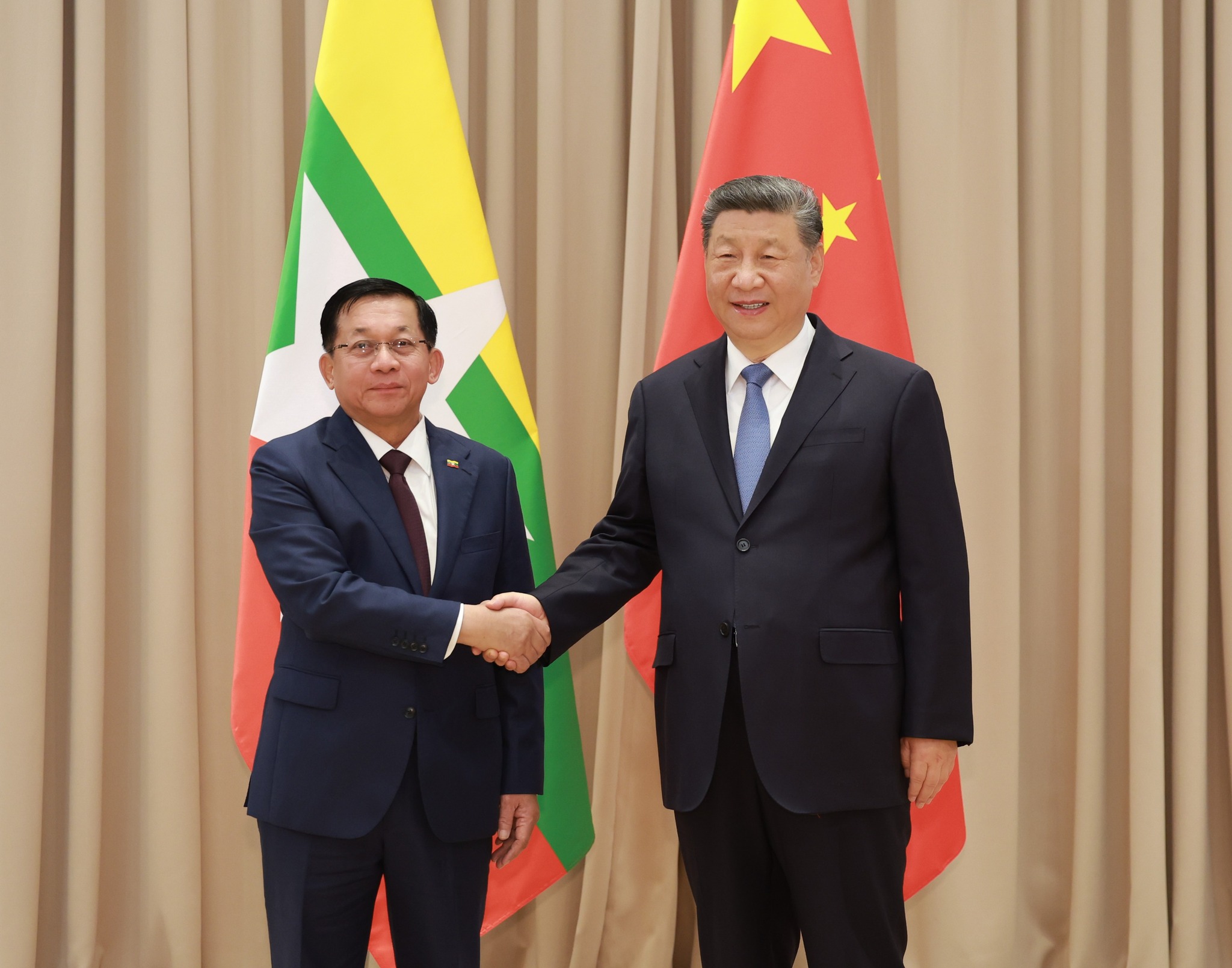
Chinese President Xi Jinping and Myanmar's Acting President Senior General Min Aung Hlaing.
A political analyst told CNI News that while the new government’s policy might be to treat both nations fairly, the neighbors' policies toward Myanmar could shift. He warned that choosing a single path could lead to greater trouble.
"If the government chooses just one side, it will face more difficulties," the analyst said. "For example, if it aligns too closely with India on competitive issues—like natural gas sales—it could cause problems with China. China might tolerate a road project through Rakhine and Chin states to Assam and Manipur because that primarily concerns India. But if Myanmar gives India something that directly competes with Chinese interests, China won't be happy. They won't say it directly, but they will express their dissatisfaction in whatever way they can.
I don't think the policy of the next government will differ much from the current military government’s approach. They will likely try to balance both sides. However, the challenge is that the policies of these two giants toward us may change."
Analysts highlight that Myanmar’s current challenge is a "tug-of-war" of perceptions: India fears Myanmar leaning too far toward China, while China is displeased if Myanmar gets too close to India.
This is most evident in Rakhine State, which hosts both China's Kyaukphyu project and the Sittwe Port—the most critical component of India's Kaladan project. However, under current ground conditions, China appears to have a greater capacity for practical intervention.