
CNI News
February 28, 2026
In Myanmar, political parties and political analysts are discussing what kinds of political and military developments may emerge under the new government that will take office following the election.
Myanmar’s 2025 General Election was held in three phases from December 28, 2025, to January 25, 2026.
The third sessions of the Pyithu Hluttaw and Amyotha Hluttaw will be convened on March 16 and 18, 2026, respectively, and the new government will be formed in April.
Political analyst U Kyaw Htet told CNI News that once a civilian government emerges, it will need to change its approach to negotiations.
Only then can positive progress be expected.
He added that the new government should amend Section 261 and include widely accepted ethnic leaders in the cabinet.
By doing so, it may be able to influence the positions of Ethnic Armed Organizations (EAOs).
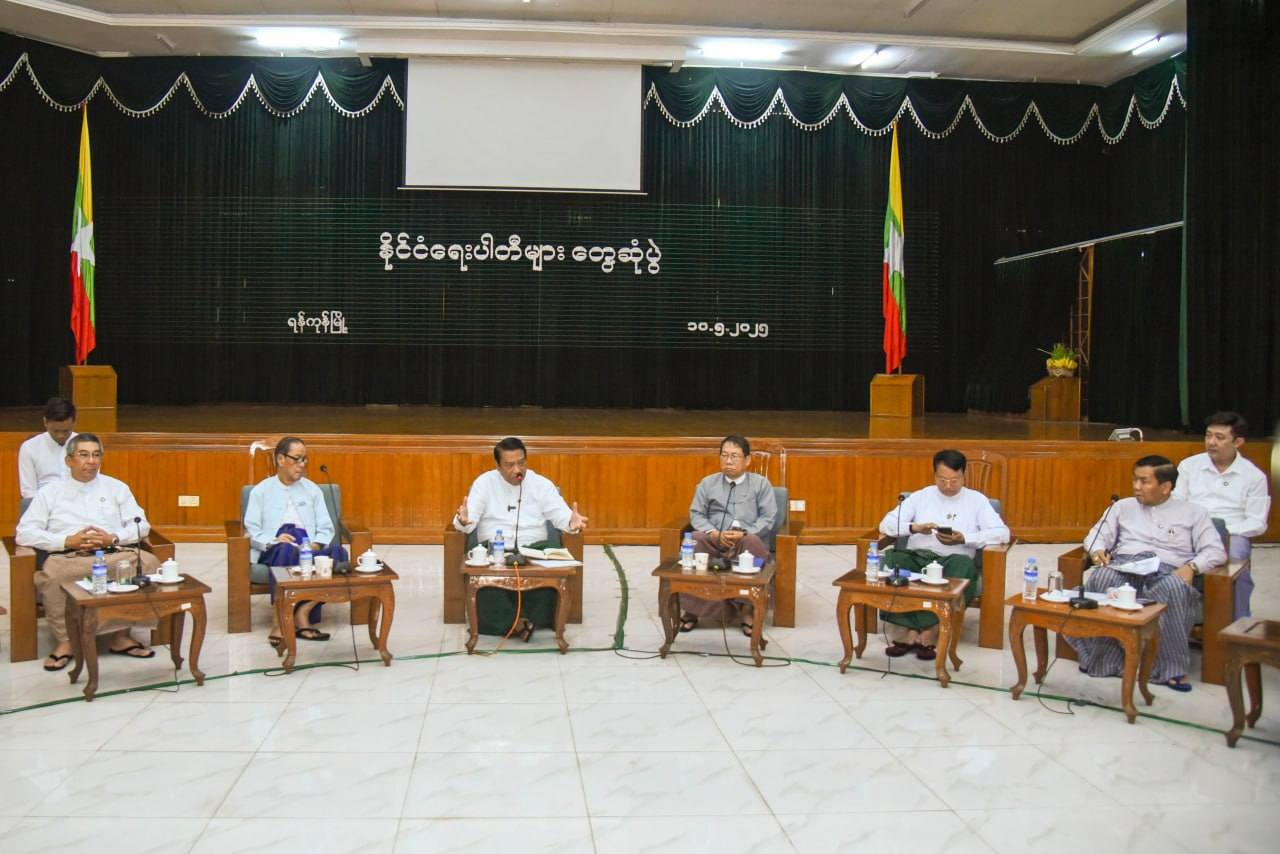
Political parties meeting among themselves
He said:
“When a civilian government comes to power, we need to shift toward a negotiation-based approach. For example, political commitments such as amending Section 261 and revising the Constitution should be prioritized. The third Hluttaw should amend laws to better align with federal principles demanded by ethnic groups. If the government includes widely accepted ethnic leaders in its cabinet and works toward national unity, the attitudes of EAOs may change. The international community’s perception would also improve. In that case, we can hope for positive developments.
However, if Section 261 and other laws are not amended, if negotiations demanded by all ethnic groups are not implemented in parliament, and if ethnic leaders who should be included in the government are excluded, the conflict will likely continue as it is now. If all sides can move toward federalism and establish clearer frameworks for dialogue and participation, armed conflict may gradually decrease. Otherwise, the conflicts will persist. The new government will also have to bear the consequences of the 2021 conflicts, which may hinder and delay nation-building and state-building efforts.”
Military and political observers also pointed out that the new government should negotiate amendments to key constitutional provisions and invite non-NCA signatory groups for dialogue.
According to analysts, the first major challenge for the new government will be addressing armed conflict and the suffering of the people.
Sai Htay Aung, Chairman of the Tai-Leng (Shanni) Nationalities Development Party (TNDP), told CNI News that he hopes for a strong yet flexible government.
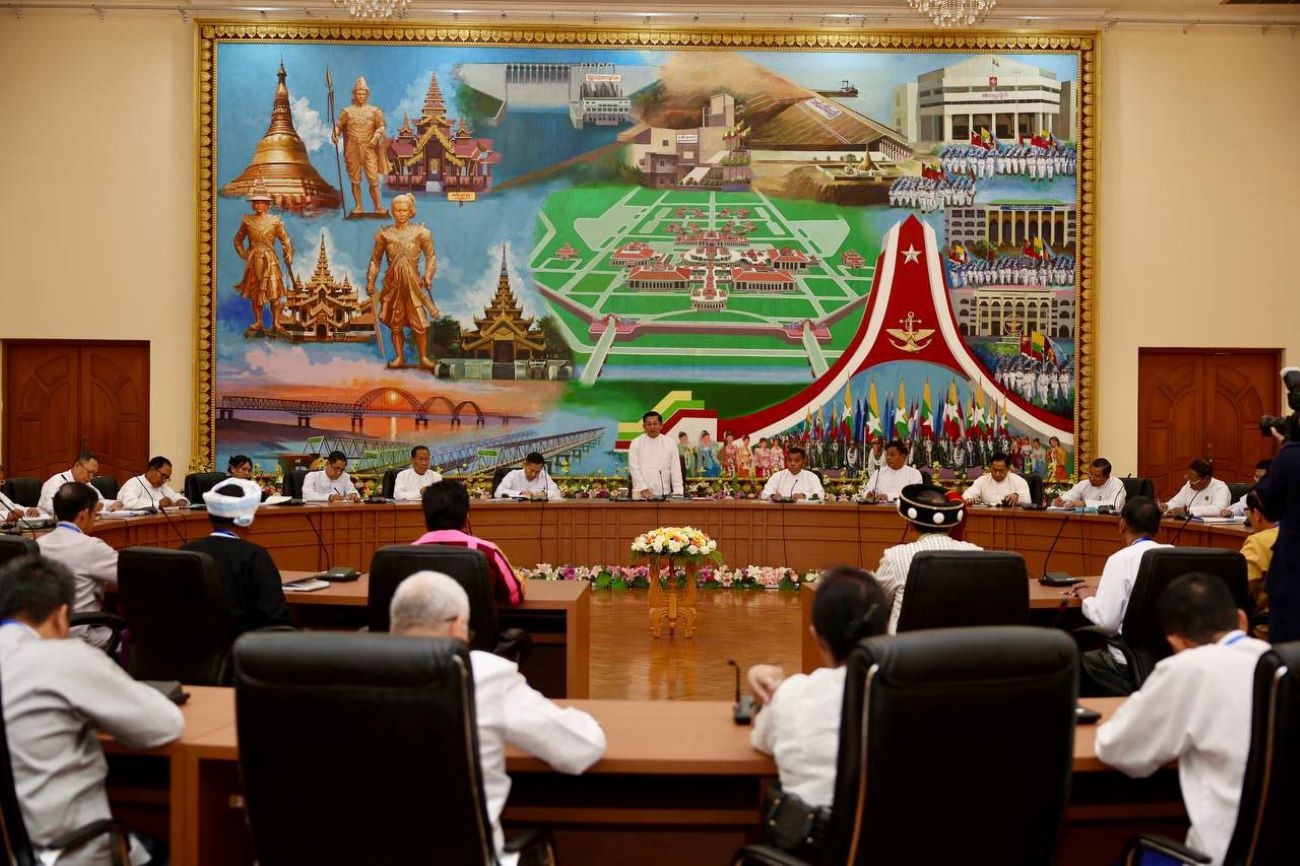
Senior General Min Aung Hlaing meeting with political parties
He said:
“The idea of collective leadership is a good one. If we move forward with collective leadership, trust will increase. A government based on collective leadership could become a strong government. In the past, when the NLD won by a landslide, they formed the government themselves. Under President Thein Sein, when forming the government, state-level winners and representatives from winning parties were included in the cabinet. We don’t yet know whether the new government will follow that model or include party leaders instead. If leading figures from various parties are included, collective leadership will be stronger.
A government must be strong. If it firmly upholds its policies but applies flexible and gentle strategies, it can become more effective for the country. The first challenge for the new government will be how to resolve armed conflict and address the suffering of the people. We hope for a strong government that can also act with flexibility and gentleness.”
Observers believe that new political and military dynamics may emerge under the new government taking office in April.
Territorial battles involving ethnic armed groups may expand. The government may launch offensives to regain lost territories, while also making peace overtures.
Additionally, analysts suggest that the new government may work to revive the declining economy, control rising commodity prices, reopen border trade routes, and stabilize the hotel and tourism sectors.