

CNI News
February 27, 2026
Following the news that Bo Nagar, leader of the Burma National Revolutionary Army (BNRA), along with his deputy and three others, surrendered to the Tatmadaw, military and political analysts are weighing in on the potential impact on the revolution.
Dr. Hla Kyaw Zaw, an observer of China-Myanmar affairs, told CNI News that the surrender of a single individual like Bo Nagar is unlikely to cause the revolution to collapse.
"Our revolution will keep moving forward. Any revolution has its strengths, weaknesses, ups, and downs. For example, if our unity suddenly fractures, we must investigate why it happened, examine it, and then correct our course. It is impossible for the entire revolution to falter just because Bo Nagar surrendered. This is because a revolution does not depend on a single person or a single organization. As long as the public remains resolute against this military—determined to uproot the fascist army—the revolution will maintain its momentum. There will be ebbs and flows, of course," she said.
Nay Pyi Taw previously released a statement claiming that on February 18, Naing Lin (aka Nagar), the leader of the BNRA, and his family members—followed by the deputy leader and five others on February 20—entered the "legal fold" along with weapons and ammunition.
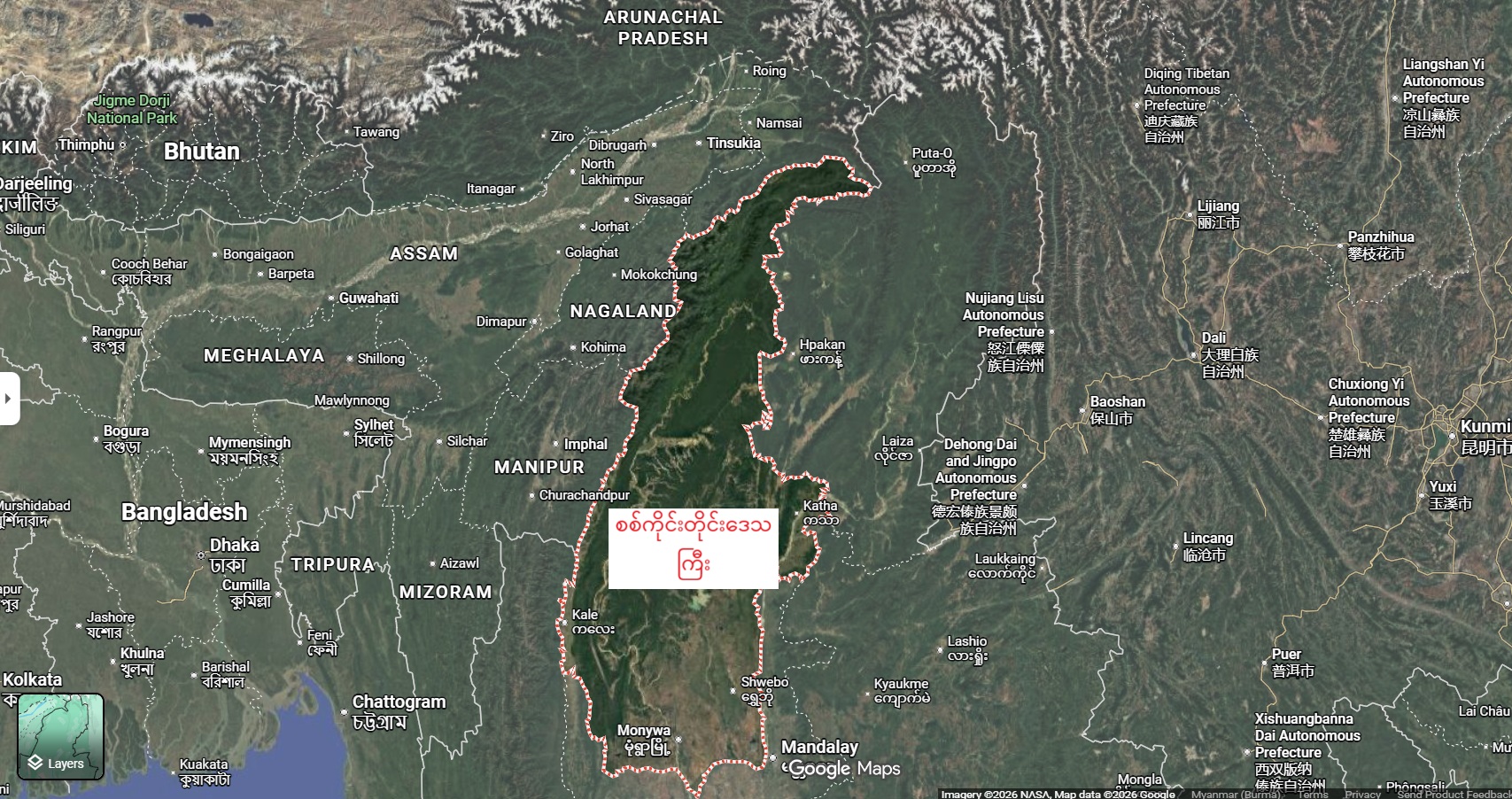
Map/Area of Sagaing Region.
Bo Nagar was a prominent figure who fought for five years following the 2021 political shift. He led the formation of the Pale Township People's Defense Force, which was later reorganized as the Myanmar Royal Dragon Army (MRDA) in 2022.
In 2023, he formed the Burma National Revolutionary Army (BNRA) from the MRDA. Operating in Yinmabin District and Pale Township, the group stood as an independent revolutionary force not under the direct command of the National Unity Government (NUG).
Sagaing Region, the largest of the seven regions, is surrounded by Magway, Mandalay, Shan State, Chin State, Kachin State, and the Indian border. In the current revolutionary landscape, the Myanmar military and various armed groups, including Ethnic Armed Organizations (EAOs), are competing for control over this strategic region.
U Thein Tun Oo, Executive Director of the Thayninga Institute for Strategic Studies, told CNI News that many armed groups that emerged at the start of the Spring Revolution lacked a clear and firm political roadmap as they moved forward. He suggested that if the NUG-PDFs continue on their current path, they may eventually vanish.
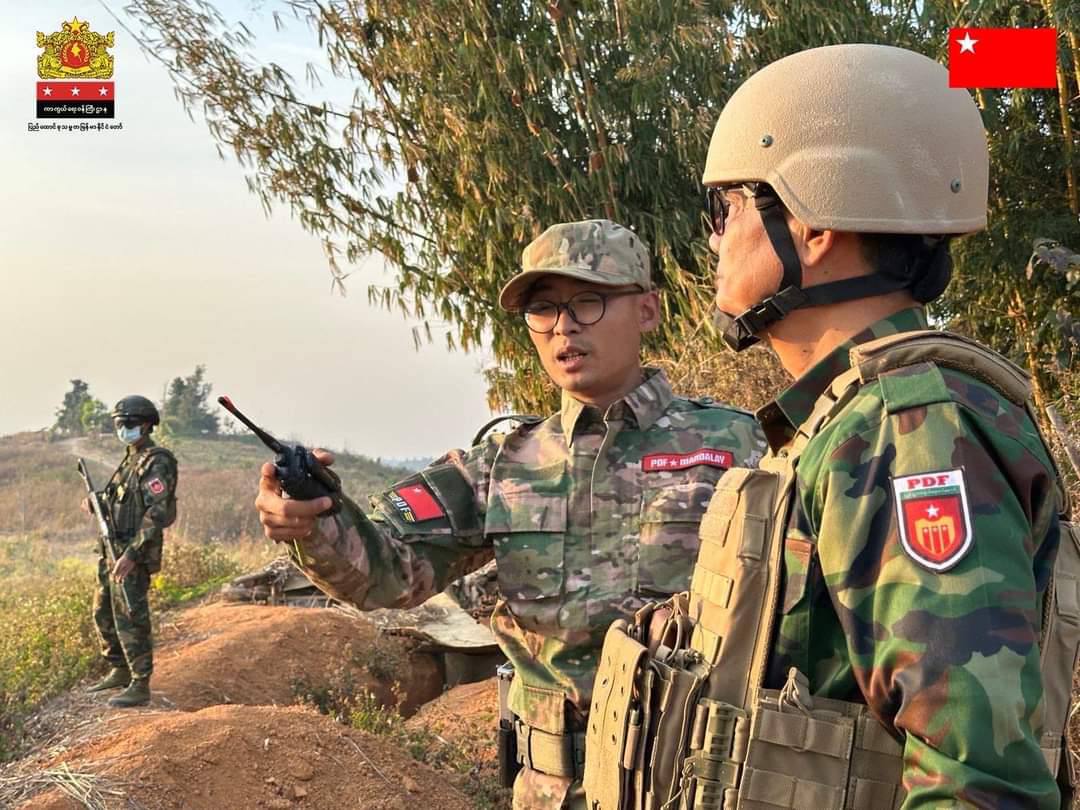
NUG Minister of Defense, U Yee Mon.
"We have said this from the beginning. If the NUG-PDF continues on a path that was fundamentally flawed from its inception, there is no reason for it to succeed. We predicted they would disappear eventually," U Thein Tun Oo said. "When individuals who joined the revolution based on personal feelings and ideologies re-evaluate whether their path is right or wrong, they may choose to surrender. To put it simply, those following an incorrect ideology and a broken roadmap will eventually have to choose the right side. If the NUG-PDF continues to hold onto a mistaken path, they too will eventually disappear."
Following the political changes on February 1, 2021, numerous new armed groups emerged across Myanmar alongside existing Ethnic Armed Organizations.
Regarding the surrender of Bo Nagar and his comrades, Phoe Shoke, the commander of Yinmabin District Battalion 19 under the NUG, wrote on social media: "There is still a group on the ground that acts exactly like Nagar; the PLA (Communist) will prove this situation."