
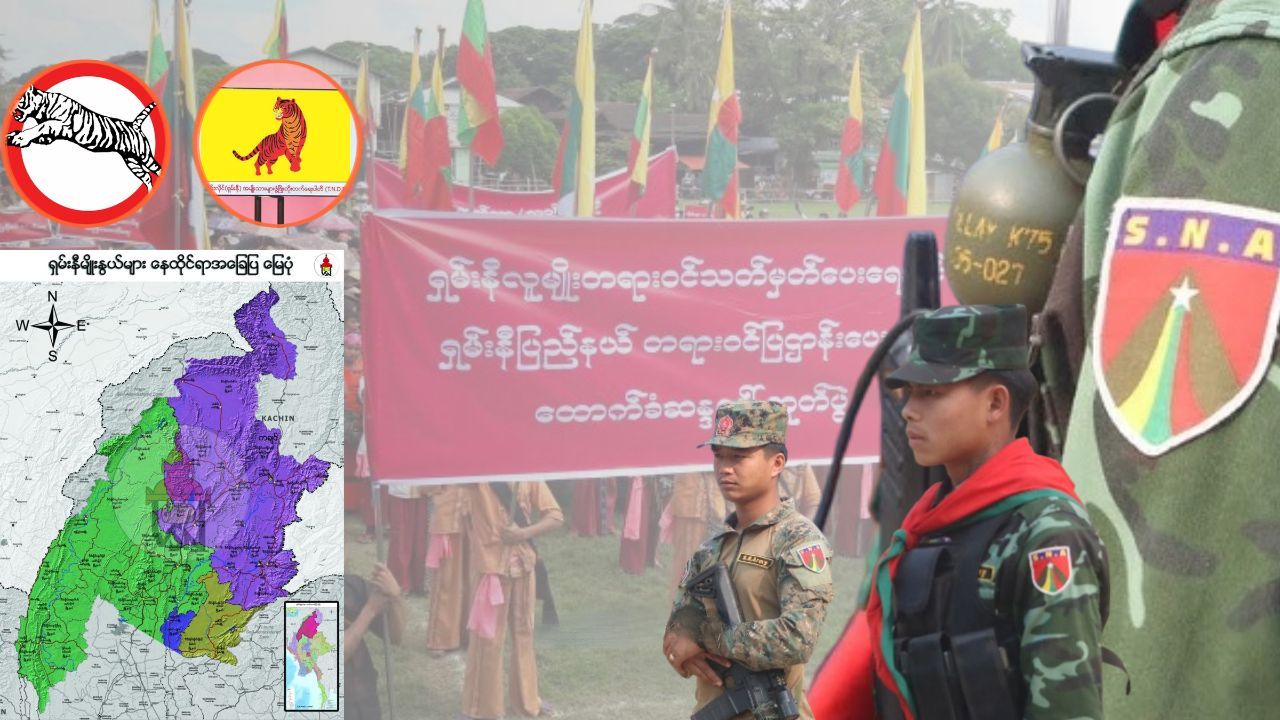
CNI News
February 26, 2026
In light of the political landscape that may emerge under Myanmar’s upcoming new government, the Shanni people should prepare through political and military consultation, said Sai Htay Aung, Chairman of the Tai-Leng (Shanni) Nationalities Development Party (TNDP), in an interview with CNI News.
He said: “I believe political and military matters should be discussed and prepared in order to reach a solution. We cannot achieve our ultimate goal simply by fighting, given our strength. Therefore, we will have to resolve matters politically. To gain political advantage, there must be repeated meetings and discussions — understanding what their objectives are and what ours are. Previously, things were only spoken about on paper and verbally. But now, when it comes to actual implementation, we must examine the political situation and prepare what we are going to say at the right time. As a party, we have prepared to implement four work plans.”
In the 2025 general election, the TNDP (also known locally as the Red Tiger Party) contested in Kachin State and won one Shan ethnic parliamentary seat, along with one seat in the Amyotha Hluttaw (Upper House) and two seats in the State Parliament through the proportional representation (PR) system — totaling four seats.
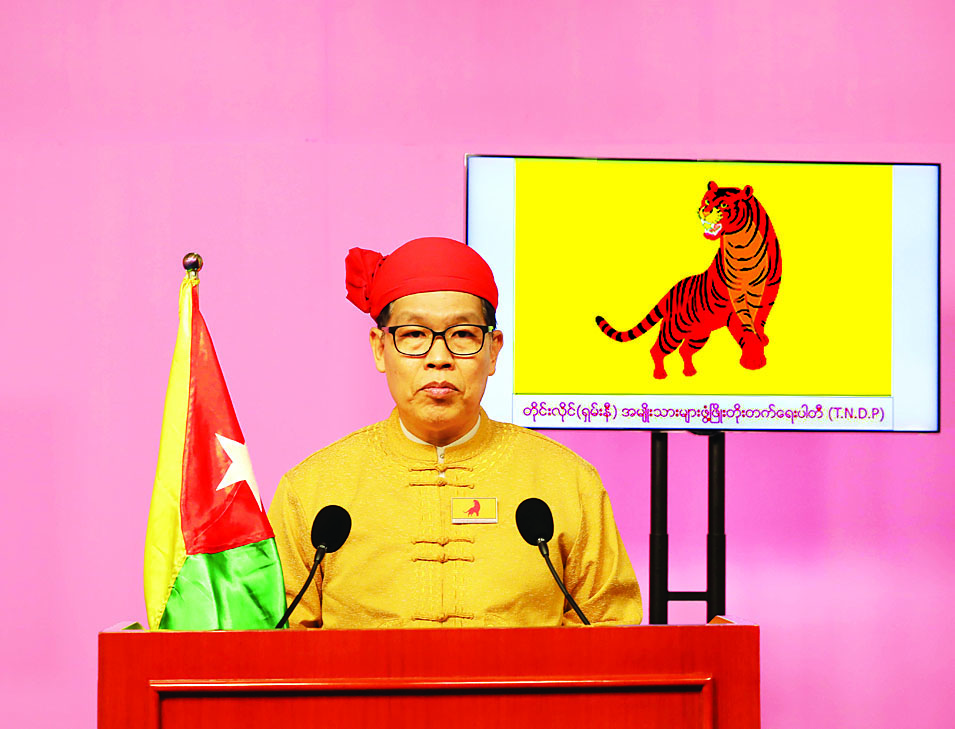
Sai Htay Aung, Chairman of the TNDP (also known locally as the Red Tiger Party)
Similarly, the SSP Party (locally called the Tiger King Party) contested in Sagaing Region and won one Shan ethnic seat along with seats in the Pyithu Hluttaw (Lower House), Amyotha Hluttaw (Upper House), and the Regional Parliament — totaling four seats.
The main political objective of the Shanni people is either to obtain a separate Shanni State or to gain a Shanni Self-Administered Division.
They seek to combine areas formerly ruled by Shanni Sawbwas, including Hkamti, Homalin, Kale, and Tamu in upper Sagaing Region, as well as Mohnyin, Mogaung, Bhamo, and Myitkyina in Kachin State, into a single self-administered state.
According to Section 6 of the 1947 Constitution, districts such as Myitkyina, Mohnyin, and Bhamo — considered Shanni areas — were incorporated into Kachin State without the consent of the Shanni people, despite their opposition.
Similarly, other Shanni areas — including Kale, Hkamti, Mawlaik, Kathar, and Tamu districts — were incorporated into Sagaing Region following the drafting of the 1974 Constitution.
Currently, since their territories are divided between Kachin State and Sagaing Region, political and military observers believe the Shanni people are in a politically marginalized position.
To implement their political and military objectives, the Shanni Nationalities Army (SNA) was formed in 1989. It has frequently clashed with the Kachin Independence Army (KIA) over territorial control and ethnic affairs.
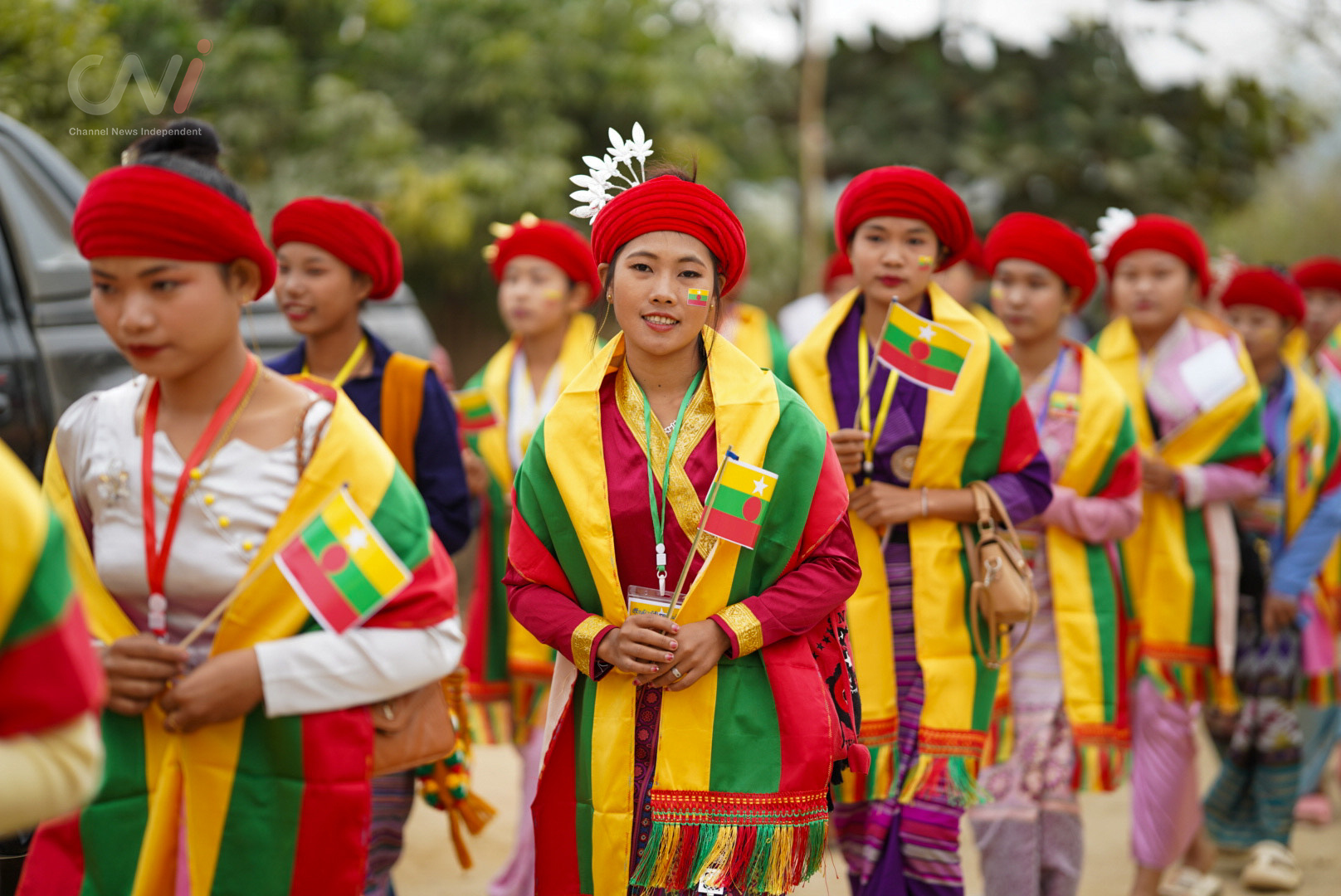
Shanni nationalities seen
After the political changes in Myanmar since 2021, the role of the SNA has expanded, and it has increased its territorial control.
Sai Htay Aung stated that the Shanni political issue cannot be resolved through military decision alone and that political strength must be prepared in advance.
He added: “If we speak about political objectives, implementation is necessary. Militarily, no matter what method is used, even forces stronger than the SNA cannot achieve final military victory. Therefore, political resolution is the only way forward. Armed struggle exists to support political decisions. Once a genuine political resolution is achieved, there would be no need to hold weapons. The same applies to the KIA. Even if they are strong and fight, it doesn’t mean they will get all the territories they fight for. When political decisions are made, especially if the government relies on the 2008 Constitution, it may only result in loss of lives without achieving their goals. For the SNA, it is time to firmly prepare to stand strong on the political platform. Now that our two Shanni parties have reached both the Pyithu Hluttaw and Amyotha Hluttaw, what will we do? From our side, we will strive to fulfill the promises we made to the public during the campaign.”
Political and military observers note that Shanni politics is a crucial component of peace in northern Myanmar.
The Shanni population is estimated at around one million people living across Kachin State and Sagaing Region. They have formally demanded statehood during the 21st Century Panglong Conference (Union Peace Conference).
The SNA is also working to regain Shanni State by consolidating districts in Sagaing Region — Mawlaik, Kale, Hkamti, Kathar, and Tamu — along with Bhamo, Myitkyina, Mohnyin districts and Mogaung area in Kachin State.