
CNI News
February 25, 2026
Military and political analysts told CNI News that if leadership positions within Myanmar’s government are composed solely of ethnic Bamar individuals, the peace process could be delayed.
They pointed out that throughout successive governments in Myanmar’s history, the key leadership roles of the state have largely been dominated by the Bamar ethnic majority.
Colonel Khun Okkar, Chairman of the Pa-O National Liberation Organization (PNLO-NCA/S), which is a signatory to the Nationwide Ceasefire Agreement (NCA), told CNI News that it would not be appropriate for a single Bamar ethnic party that won the majority of seats to govern alone. Instead, ethnic leaders should be included according to their respective regions, and power should be shared.
He said: “I have advised this since the time when Daw Aung San Suu Kyi was leading. Even if a single Bamar nationalist party wins the majority and forms the government, it would not work well. Why? Because a national unity government is needed. Even if one party wins, when forming the government, there should be understanding and ethnic leaders should be included according to their respective regions, with administrative power shared. That would be better.
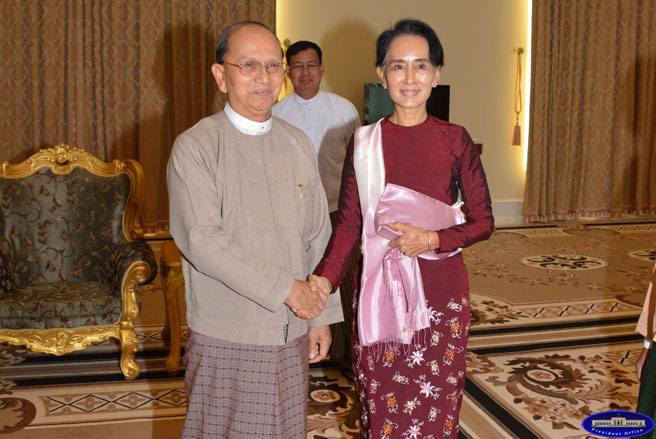
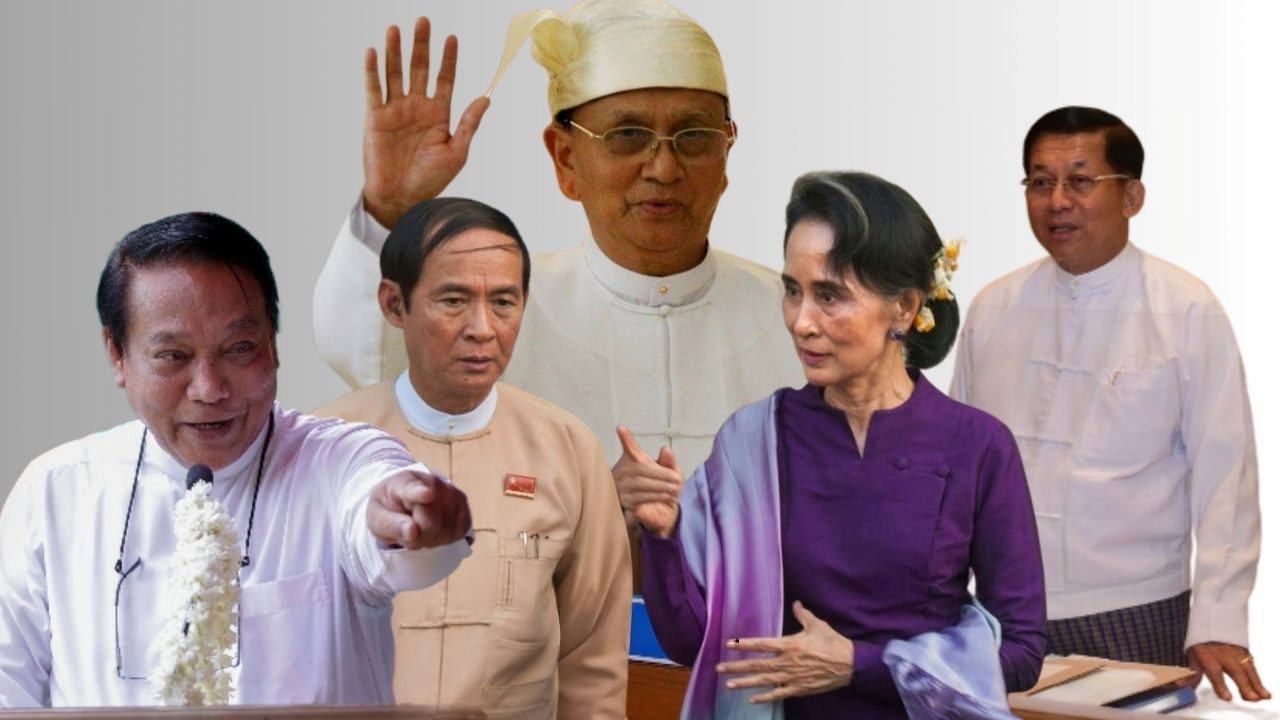
Party and two government leaders seen together
But until now, this has not been implemented. If only the winning party governs alone, it will not be easy to govern for long. Problems with ethnic groups will arise. Therefore, it would be better to start practicing power-sharing now. Without power-sharing, peace may be delayed. Negotiations could fail.
If we are to establish a federal system representing all ethnic groups, the government itself must be structured as a federal government. Therefore, a national unity government that includes all ethnic groups is the best option. That is our advice. Since we do not yet know what form will emerge, we must wait and see.”
Analysts noted that since more than half of Myanmar’s population is Bamar, it is natural that Bamar individuals often dominate government bodies. However, despite Bamar leadership positions within governments, genuine ethnic unity has not yet been achieved.
A political analyst told CNI News that during the era of Myanmar kings, Shan Sawbwas were granted authority to govern Shan State, while the kings handled foreign defense and taxation. He said this arrangement resembled a federal system, and because of that autonomy, ethnic minorities did not feel that they were being directly ruled by the Bamar.
Therefore, unless ethnic groups are granted genuine self-administration and federal rights, conflicts and grievances will continue, he said.
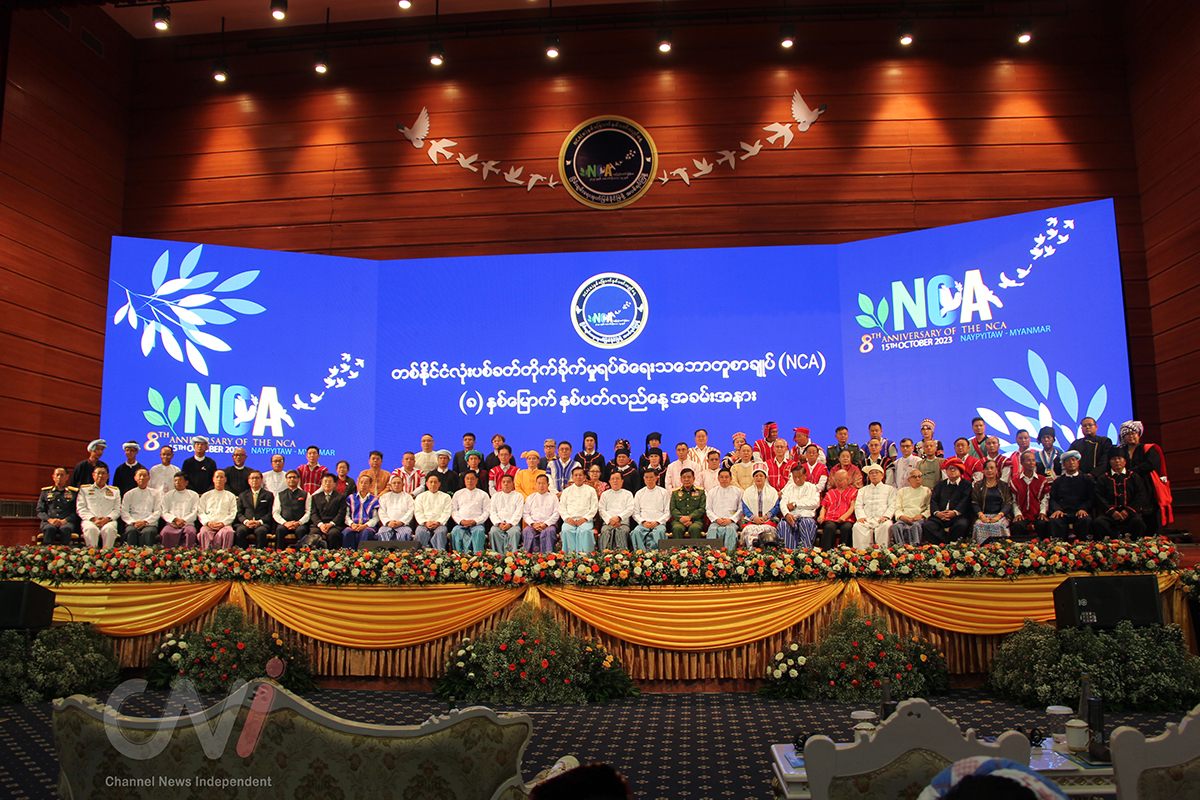
Government and armed group leaders seen together
He further explained: “If we truly practice a federal system, even at the grassroots level — such as ward administrators and township administrators — they must be elected by the people. If township administrators are appointed by the Ministry of Home Affairs, and Bamar officials are assigned who report to the ministry — and if the Home Affairs Minister is someone appointed by the military — then even though there are Shan State or Kayah State governments on paper, actual administration is still controlled by Bamar officials and centrally appointed ministers.
Likewise, state chief ministers are not elected by their respective state parliaments but are nominated by the President from the ruling party nationwide. That is not federalism.
What I mean is that at the top level, there may be a Bamar-majority government representing the country. But unless ethnic groups receive genuine self-administration and federal rights at the lower levels, conflicts and dissatisfaction will continue. That must be understood.”
Military and political observers also pointed out that if ministers assigned to various departments are weak, central control will become stronger.
Political parties have emphasized that in order to resolve the ongoing armed conflicts and political crisis in Myanmar, the incoming government must form a national unity government.
The Myanmar military, during its five-year period of administration, has stated that it intends to move toward a political system based on democracy and federalism.