
CNI News
February 24, 2026
Political parties and observers are suggesting that the incoming government should appoint Chief Ministers from local ethnic parties in certain regions and states as a trust-building measure, even if Section 261 of the Constitution has not yet been amended.
Under Section 261 of the 2008 Constitution, the President has the direct authority to select and appoint the 14 Chief Ministers of the country’s Regions and States. Critics point out that this provision contradicts the aspirations of ethnic parties—who desire for the representative of the majority winning party in a specific region to be appointed—and argue that direct presidential appointment lacks democratic and federal characteristics.
If amending Section 261 proves unfeasible within the next five years, analysts suggest that instead of appointing only ruling party members or military personnel, the President should build trust by selecting individuals from winning local ethnic parties to lead their respective regional governments.
Dr. Aye Maung, Chairman of the Arakan Front Party (AFP), told CNI News that the actual implementation of an amended Section 261 might only occur after the next five-year term.
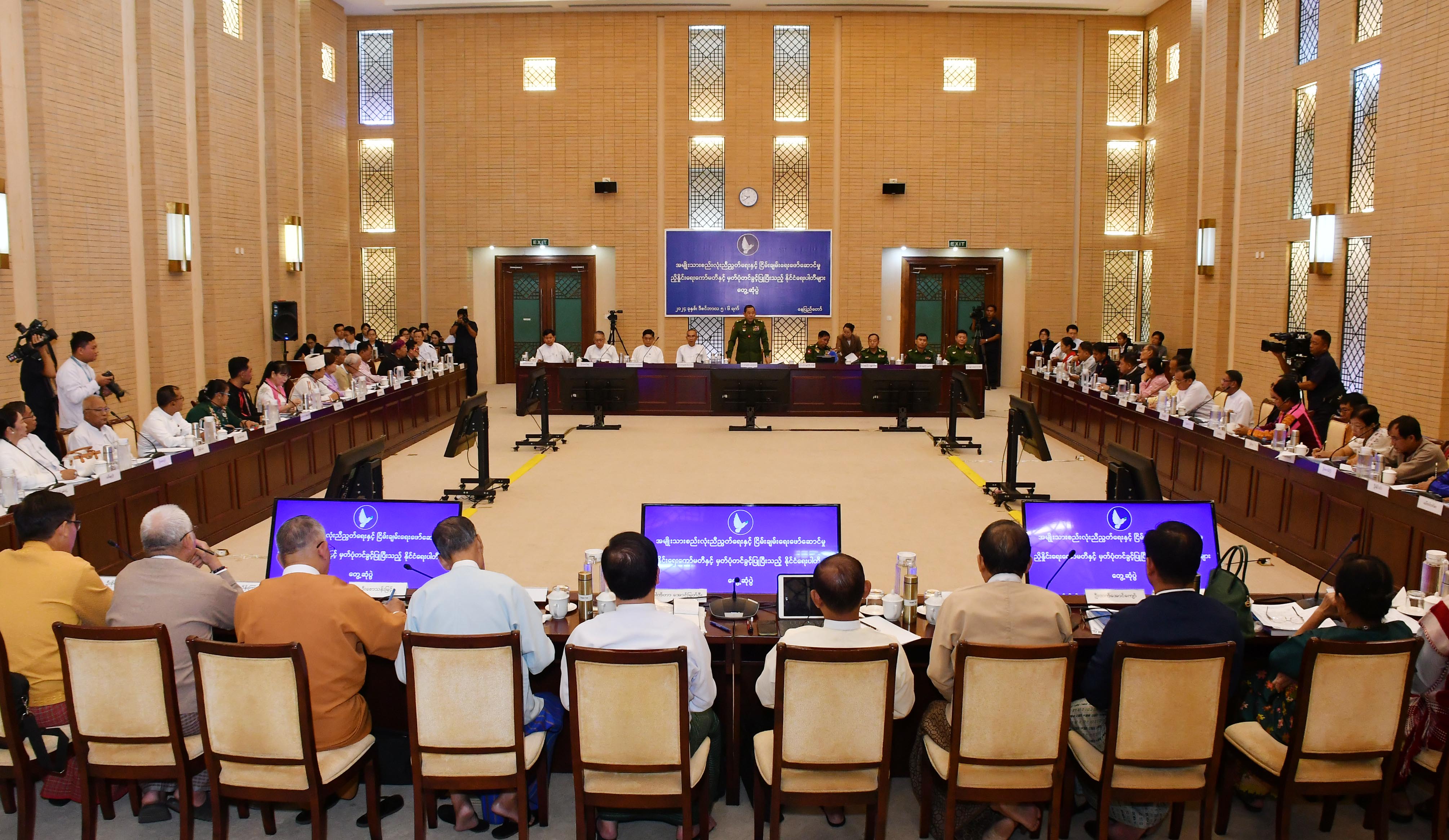
Discussions between political parties, armed groups, and the NSPNC.
"Legislative provisions arising from an amended Section 261 will likely only materialize in the five-year term following this one. Regardless of the current wording of Section 261, if the USDP intends to implement the points we have already agreed upon, the President could confirm individuals proposed by the majority in the Regional/State Parliaments as Chief Ministers. By approving a suitable person nominated by the winning local parties, the head of state can set a political precedent even before the Constitution is formally amended," Dr. Aye Maung said.
While the National Solidarity and Peacemaking Negotiation Committee (NSPNC) and a working group of political parties have preliminarily signed 43 points for constitutional amendment, a guarantee to amend Section 261 is not yet included. Furthermore, the future of these points is unclear as key signatories like U Ko Ko Gyi, Dr. Aye Maung, and Sai Aik Pao lost their election bids, while Dr. Aung Myat Oo did not contest.
U Thein Tun Oo, spokesperson for the Union Solidarity and Development Party (USDP), told CNI News that all necessary amendments, including Section 261, could be considered during the upcoming five-year term.
"It is uncertain if the Constitution can be amended within the first year, as there are many nation-building tasks to attend to. However, the USDP has never said it wouldn't amend it; we have always supported changes made in accordance with the law. I believe we will move toward amendments by considering all necessary issues over the next five years. If Section 261 is deemed necessary to change, it will be changed. Laws must adapt to the times. If the timing is right during the next administration, it will happen," he explained.
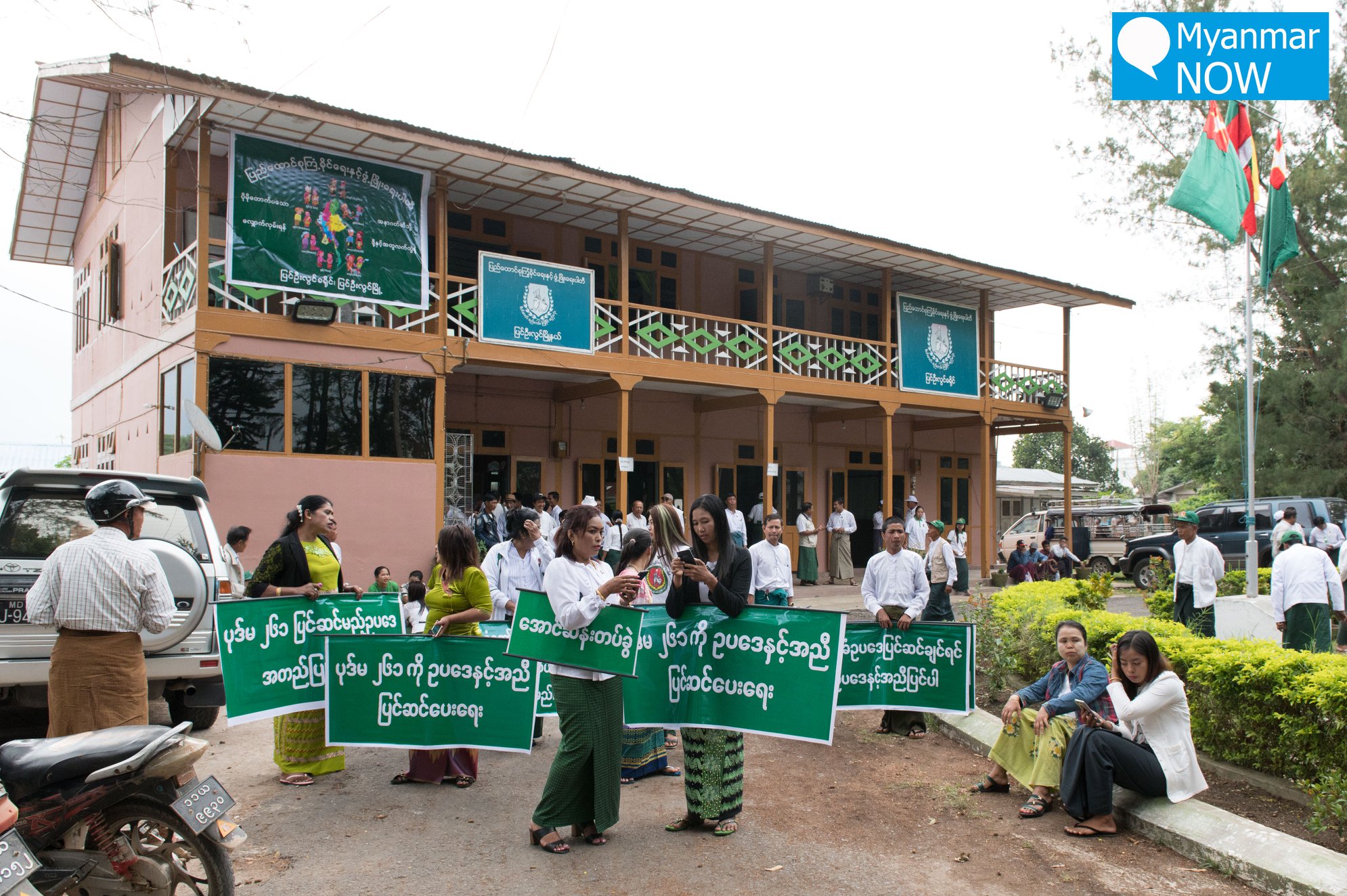
USDP demonstration calling for Section 261 amendment in 2019 (Photo: Myanmar Now).
Historically, the issue of Section 261 has seen shifting stances: during U Thein Sein’s USDP administration, the NLD pushed for the amendment while the military and USDP blocked it. Conversely, during the NLD administration led by Daw Aung San Suu Kyi, the USDP and military supported the amendment, but the NLD opposed it.
Sai Htay Aung, Chairman of the Tai-Leng (Shanni) Nationalities Development Party (TNDP), emphasized that amending Section 261 is essential for a federal system.
"If Myanmar is to move toward federalism, Section 261 must be amended. Doing so involves about 30 related sections that must be changed in tandem. Whether this happens depends on the landscape of the new Parliament. In previous terms, we saw one side propose it and the other oppose it. It will all depend on the parliamentary dynamics," he said.
Following the general elections held in three phases from late 2025 to January 2026, the new Parliament is scheduled to convene in late March, with the new government expected to form in April.