
CNI News
4 February 2026
Since February 2021, Myanmar has seen a steady climb in basic food prices, leading many to question the root causes and search for solutions to stabilize the market.
In Yangon, a bag of Sin Thukha rice has reached 85,000 MMK, while a bag of Pawsan rice exceeds 200,000 MMK. Eggs are priced at 350 MMK each, creating significant hardships for the working class. However, the situation is even more dire in other urban areas; for instance, in Homalin, Sagaing Region, a single egg can cost between 1,500 MMK and 2,000 MMK.
Root Causes of Inflation According to businessman U Aung Pyae Sone, the issue is deeply tied to production and labor. He shared the following insights with CNI:
Labor Shortages: Failure to address the scarcity of labor will keep prices on an upward trajectory.
Supply and Demand: Prices fluctuate based on market availability versus consumer needs.
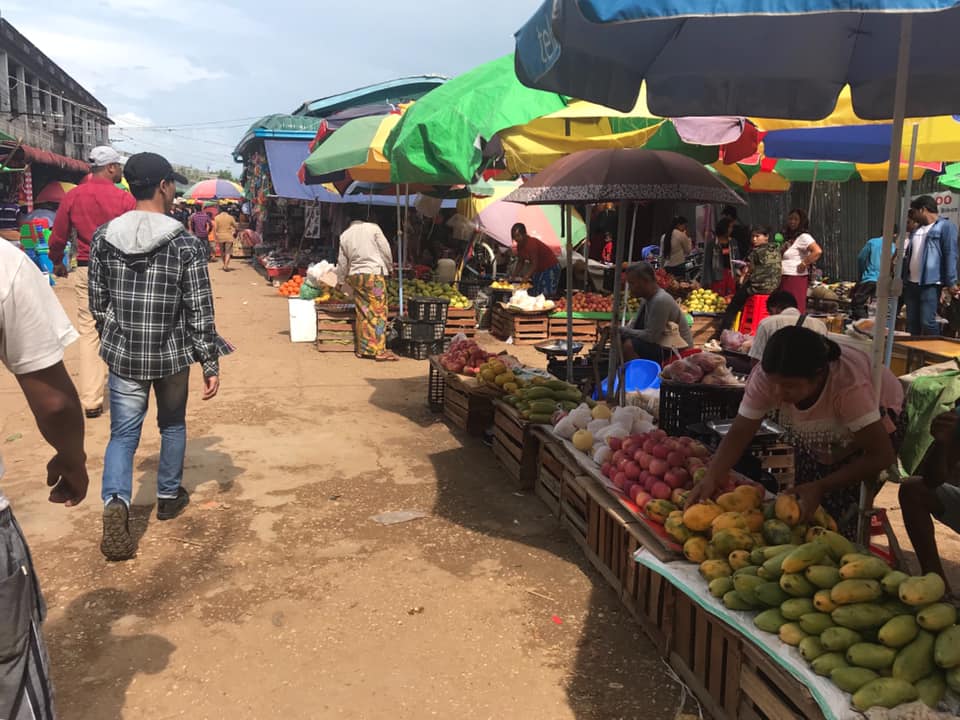
A view of the market in Tamu.
Production Weaknesses: High costs of land, labor, and capital are hindering local output.
Logistics: Instability along transportation routes adds to the final cost of goods.
Operational Costs: Daily expenses and rising wages naturally push commodity prices higher.
Business analysts also point to three fundamental economic factors: Rising Demand, Decreasing Supply, and Currency Inflation.
Furthermore, political analyst U Htet Aung Kyaw noted that bureaucratic hurdles are a major bottleneck. He explained that delays in obtaining import licenses from the Ministry of Commerce are causing shortages and price hikes for goods that cannot be produced locally.
Proposed Solutions Experts suggest that controlling prices requires more than just a centralized government mandate.
Key recommendations include: Boosting Local Production: Encouraging domestic manufacturing to replace expensive imports.
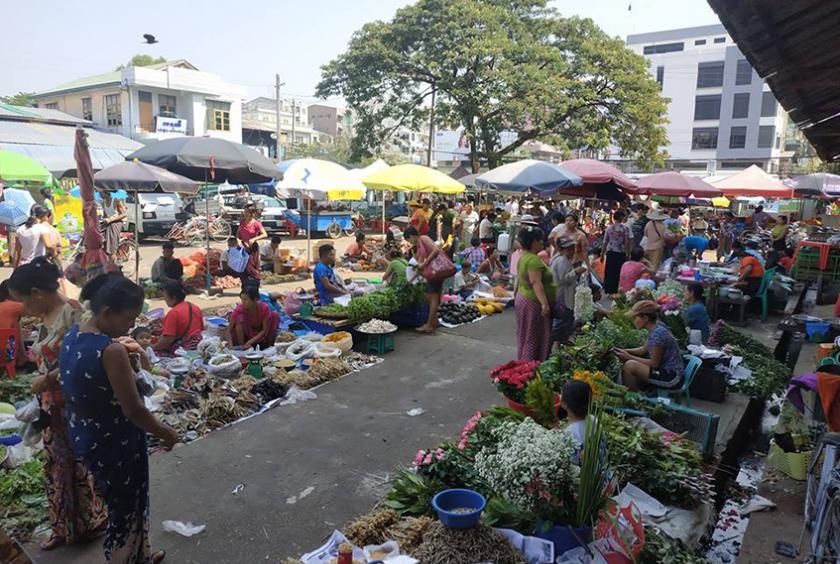
Vendors selling basic produce.
Human Resource Investment: Developing skilled labor to ensure efficient production.
Capital Accessibility: Providing the necessary funding and support for businesses to expand.
Policy Reform: Streamlining the import/export licensing process to prevent market stagnation.
Legislative Action: Utilizing parliament to address these economic challenges and influence ministerial decisions.
The Public Outlook Currently, citizens are forced to spend more cautiously than ever. There is a widespread hope among the people of Myanmar that the new government and parliament following the elections will prioritize controlling and reducing the high cost of living.