

CNI News
2 February 2026
Dr. Nyo Nyo Thin, founder of Yangon Watch, told CNI News that the upcoming new government should relax restrictions on certain social media platforms like Facebook, which currently require a VPN (Virtual Private Network), by implementing a trial period.
Following the political changes in Myanmar after 2021, access to internet-based social media platforms was restricted, with authorities citing security reasons. Due to these limitations, users have been forced to use intermediary applications known as VPNs to access platforms like Facebook.
Dr. Nyo Nyo Thin suggested that if national security is not affected, the government should move forward from a trial phase toward a full relaxation of these restrictions.
"Both young and old have been calling for the relaxation of VPN restrictions for about a year now. However, it seems the national leadership is being cautious due to security concerns and the potential spread of fake news and misinformation. Before the VPN restrictions, fake news was rampant among the public, and ordinary citizens were caught in a whirlwind of misinformation; people were essentially living on it. This likely led to the decision regarding VPNs. Therefore, if the VPN restrictions are lifted now, the authorities seem to be considering whether those issues will resurface from a security standpoint. That is why the VPN issue remains in a state of limbo. From our perspective, they should temporarily lift the VPN restrictions for a trial period. If security issues arise during that trial, they can simply revert to the original status. We believe a trial period is necessary," she said.
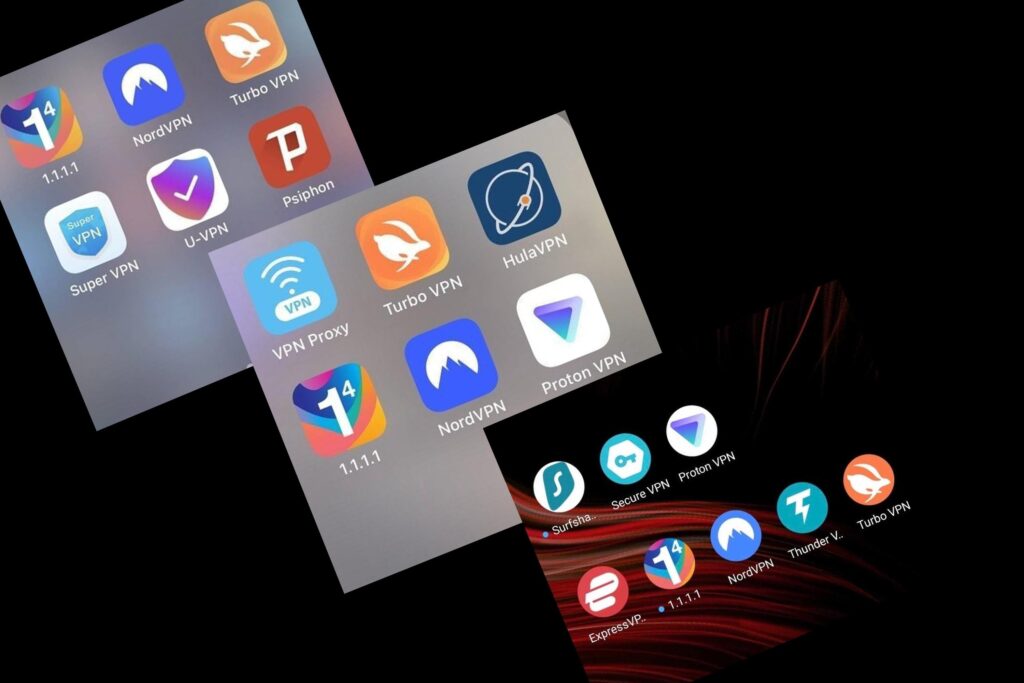
Various VPN application icons.
Currently, all phases of the 2025 multi-party democratic general election have been completed. Senior General Min Aung Hlaing has stated that parliament (Hluttaw) will be convened this coming March, and state responsibilities will be handed over to the winning party in accordance with established procedures.
In some regions, citizens are hoping the new government will address issues such as road closures due to local fighting, lack of electricity, internet blockages, and the cutting of phone lines.
Furthermore, political analysts point out that during the five-year period of military administration, various laws were amended, approved, and enacted without a sitting parliament.
Colonel Khun Okkar, Chairman of the Pa-O National Liberation Organization (PNLO-NCA/S), told CNI News that it would be more beneficial if the incoming government reviews and amends not only the laws enacted during the military administration but also the Constitution.

Senior General Min Aung Hlaing seen with political party leaders.
"I can't say if it will be a 'civilian' government—I don't know what kind of government it will be yet—but it will be a government that emerged from an election. When we say a government born from an election, one thing they can do is address the laws enacted during the five-year military rule. Many laws were passed without a parliament. The new government will have to decide whether to continue upholding them or to review them. If a review is necessary, the new parliament and government will handle it. We used to call the U Thein Sein-led government a 'half-civilian, half-military' government. Back then, he was the President, with Tin Aung Myint Oo and Sai Mauk Kham as Vice Presidents. That's why we called it that. I don't know what 'half' this post-election body will be. Regardless, if they can deal with policies, make changes, and review or amend the Constitution, things will improve. It creates the conditions for necessary work to be done. I think they will start with that at least," he said.
At present, both the international community and domestic military and political observers speculate that Senior General Min Aung Hlaing could become the President following the election. Furthermore, analysts suggest that the incoming government will likely be one dominated and led by the military itself.