
CNI News
2 February 2026
In Myanmar, where security is a top priority, questions are being raised regarding how the government and the media should cooperate.
In a country, cooperation between the government and the media can bring significant benefits. Economics analyst U Htay Aung Kyi told CNI News that the media is referred to as the "Fourth Pillar" because it has the responsibility to keep a country on the right track.
He stated, "In reality, the media should consist of individuals who thoroughly understand economics, political science, and public administration, and who can think with foresight for the sake of the country. On the other hand, the government must work on innovating and reforming systems for a better future. If experts in both fields—government and media—properly understand economics, political science, and public administration, their cooperation could greatly benefit the nation. As the Fourth Pillar, the media has the duty to ensure the country follows the correct path."
Analysts point out that in today’s era, media is evolving rapidly alongside technological advancements, making it crucial to adapt to the changing role of the media.
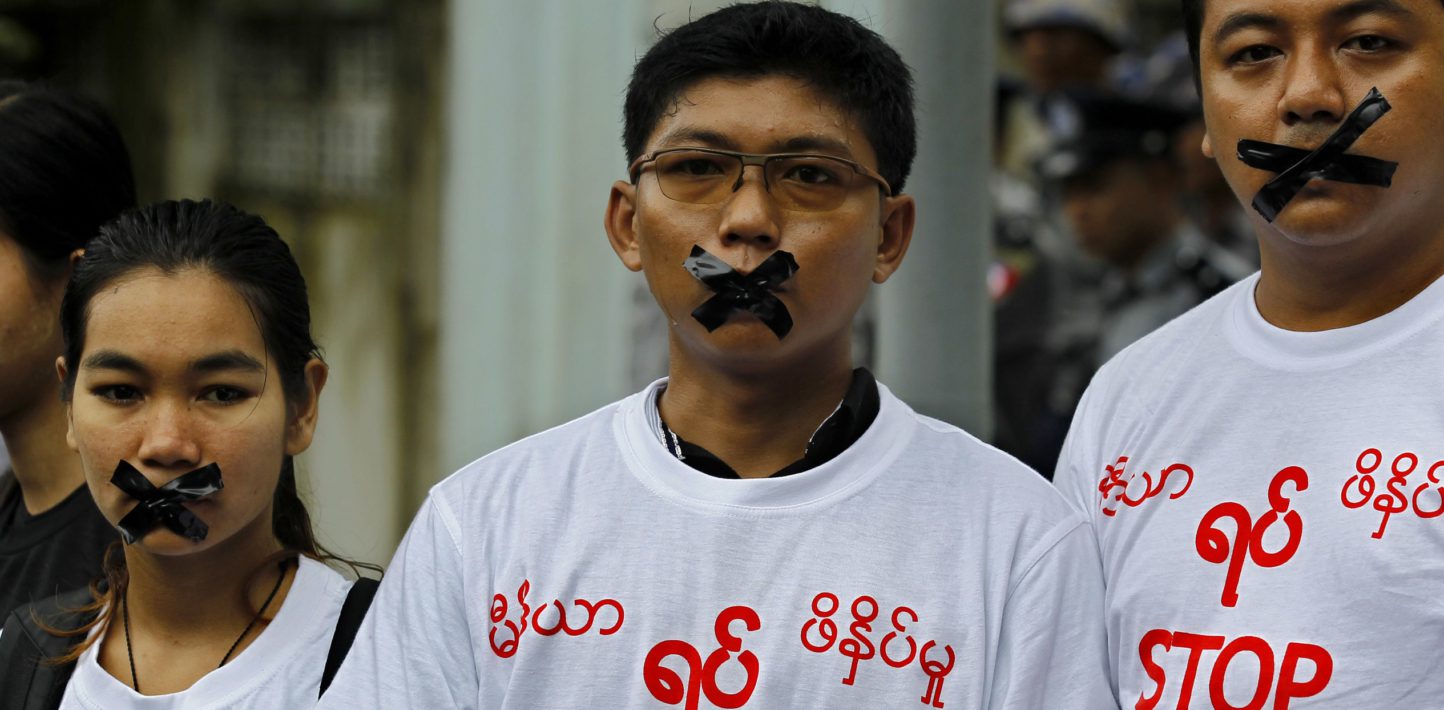
Journalists protesting during President U Thein Sein's era (AI).
Similarly, because news flows extremely fast on social networks, political analysts highlight that it is vital for government departments to use media channels to inform the public of their activities accurately and quickly. It is also essential for these reports to be high-quality and constructive.
Dr. Myo Set Thway, a political analyst, told CNI News that media freedom should be expanded, but there should also be quality control systems to ensure the proficiency of journalists.
"In Myanmar, the period under President U Thein Sein after the 2008 Constitution was enacted was the era when media freedom and strength were at their peak. Journalists were given considerable freedom to write. For the upcoming government, while national security is important and it must prevent public misunderstanding and the spread of fake news, I believe it should also grant a reasonable amount of freedom to the media. Of course, vetting is necessary. Currently, many domestic media outlets no longer exist; they have moved abroad. Due to technical shifts, they have become digital/online media. In other words, media presence has thinned out. There should be a system to monitor the quality of news media. So, there are two parts: more media freedom should be granted, but there should be quality control systems to ensure journalists meet professional standards and ethics. Primarily, there may be a need to enact further media-related laws," he said.
Under the U Thein Sein government, which came to power after the 2010 general election, media freedom was granted, and foreign media outlets were allowed to base themselves in Myanmar. Journalists even had the freedom to protest against the government. During that time, a system of checks and balances was maintained between the media and the government, as well as between the media and parliament.

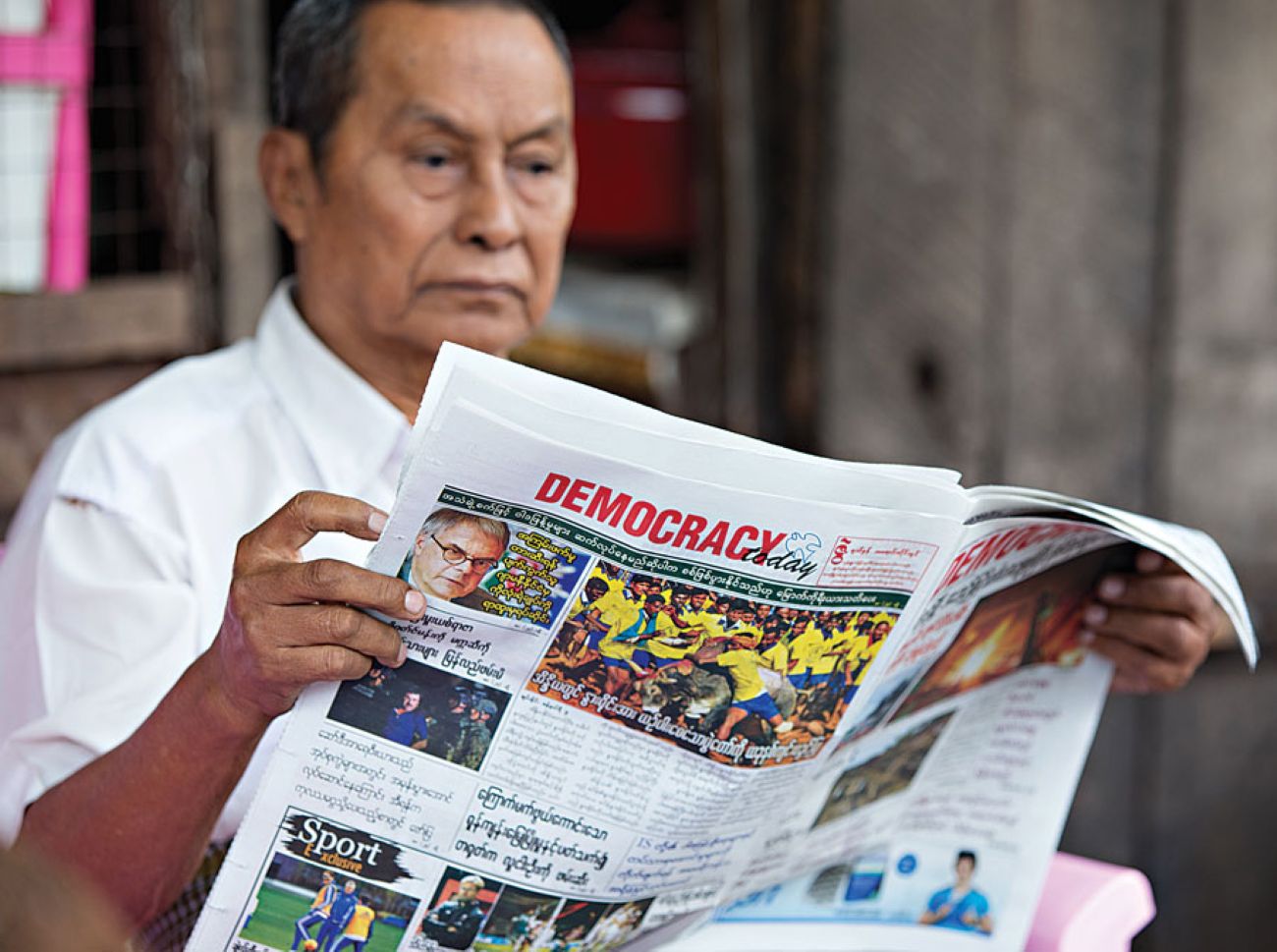
Newspapers seen stacked (IMS).
However, under the Daw Aung San Su Kyi government following the 2015 general election, media freedom faced restrictions, and many journalists were arrested and prosecuted under Section 66(d) and Section 17(1).
Similarly, in the current period, media freedom remains limited, and the landscape for cooperation between the government and the media has weakened.
Sai Mein, Editor-in-Chief of the Shan Herald News Agency, told CNI News that if Members of Parliament (MPs) only act as "nodding yes-men," the path to media freedom will not open.
"The main thing is for MPs in parliament to be able to communicate transparently with the media. If those MPs are afraid to speak out or analyze an issue, it shows that an independent media does not yet exist. They themselves are worried. If that’s the case, how can they represent the people? They must interact openly with the media. They should bravely fight in parliament against laws that act as barriers to the media. But now, many are afraid to answer questions in parliament. If MPs are just at the level of raising their hands and nodding, the path to media freedom will not open," he said.
Political observers and journalists point out that there has been friction and a lack of understanding between successive governments and the media in Myanmar. They emphasize that if cooperation between the government and the media can be established, the country can navigate its transition with stability.