
CNI News
25 December 2025
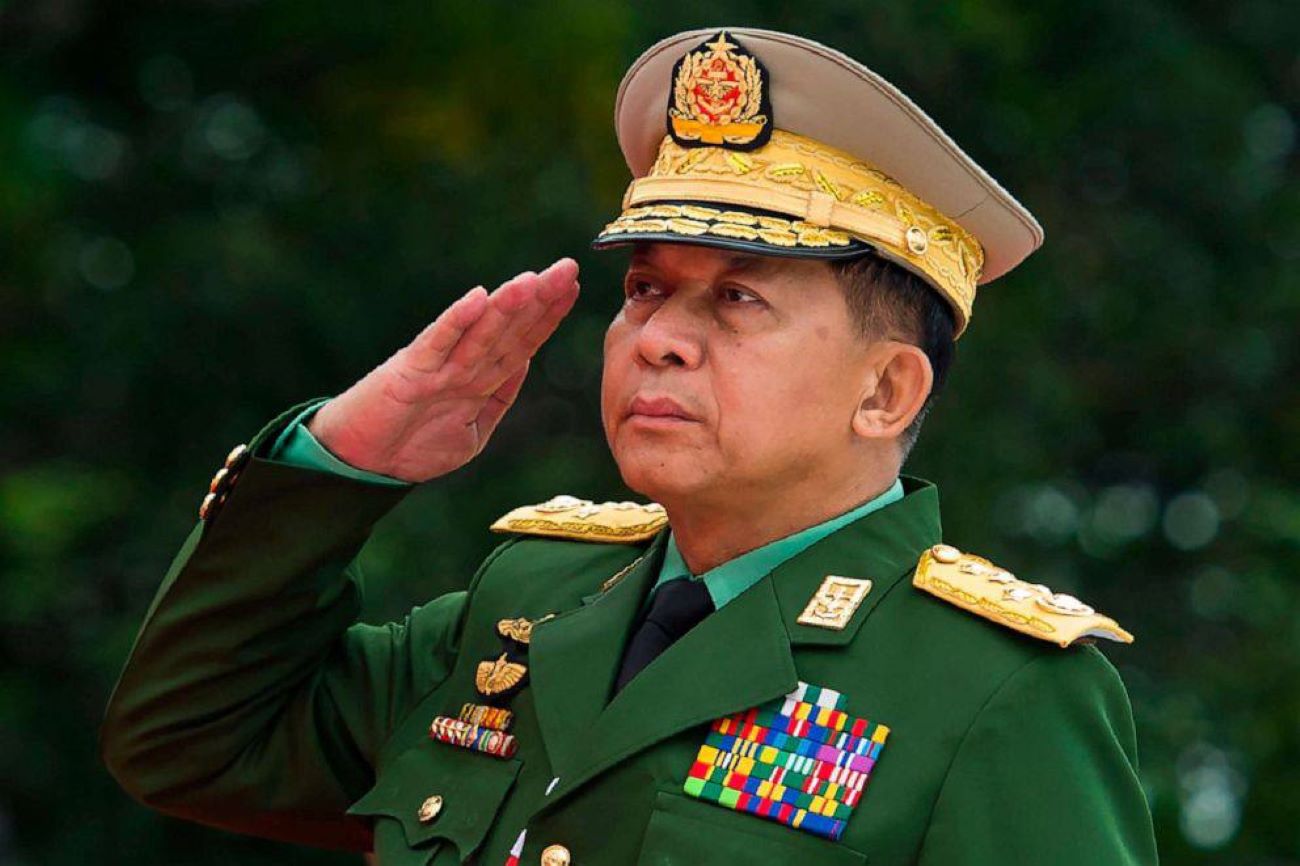
Senior General Min Aung Hlaing, Chairman of the State Security and Peace Commission, has a high percentage chance of becoming the country’s president in the political landscape that will emerge after the election, said Dr. Aye Maung, Chairman of the Arakan Front Party (AFP), speaking to CNI News.
He said that Min Aung Hlaing is the most capable individual who can continue and carry forward everything implemented during the past five-year period, given his extensive experience in Myanmar politics.
“Senior General Min Aung Hlaing has quite a high percentage when it comes to becoming president. His experience goes back to the time when he served as Commander-in-Chief under President U Thein Sein’s administration. After Senior General Than Shwe, he was a long-serving Commander-in-Chief. He has passed through two government terms. Personally, he has now governed the country up to the current five-year term. So when we consider how he will lead a future government, we need to think in line with the Constitution. First, if Senior General Min Aung Hlaing takes up the position of president, will he hand over the Commander-in-Chief post to someone already designated, and then serve as a civilian president? Second, will he appoint a president of his choosing while he himself, through constitutional powers, remains behind the scenes taking charge of national security and defense through mechanisms such as the Defense Council? When we analyze things like his agriculture-based development efforts to boost production and his work to promote education, he appears to be the individual most capable of carrying forward everything implemented during the past five years into the next five.”, he said.
Regarding the political situation that is yet to unfold after the election, it is difficult to predict the form it will take, said Colonel Khun Okkar, Chairman of the Pa-O National Liberation Organization (PNLO-NCA/S), which is a signatory to the NCA.

Senior General Min Aung Hlaing seen meeting with political parties
“Nothing is fixed yet in politics, and nothing is impossible. That’s why it’s hard to predict what form will emerge. If Senior General Min Aung Hlaing becomes president, he would need to step down from the military and become a civilian, like former presidents U Thein Sein, U Win Myint, and U Htin Kyaw. Only as a civilian can he become a president recognized internationally. So if he retires from the military and transfers authority, what form will that take? We need to think about that carefully. Also, electing and confirming the president is done by parliament, especially the Pyithu Hluttaw (Lower House) under the 2008 Constitution. It plays a major role. The party that wins a majority in the Lower House will nominate a presidential candidate. There will be three candidates: one nominated by the Amyotha Hluttaw (Upper House), one by the Pyithu Hluttaw, and one by the military. Parliament then approves one of the three as president. In that situation, power struggles may arise. How the distribution of power will balance out and take shape is difficult for us to predict right now. At present, there are many possibilities and many options.”, he said.
Currently, various analyses are emerging regarding who will lead the government that will come after the election. Political observers believe that Senior General Min Aung Hlaing still maintains control over the three branches of power in the current situation.
Phase (1) of the election in Myanmar will be held on December 28, 2025. Phase (2) will take place on January 11, 2026, and Phase (3) will be held in the final week of January 2026.
Senior General Min Aung Hlaing has stated that he will transfer state power to the government that emerges following the election.
However, analysts in military and political affairs point out that if a civilian government emerging after the election is unable to properly administer the country amid ongoing armed conflicts, a situation could arise once again in which power must be returned to the military.