
CNI News
18 December 2025
The statement by Senior General Min Aung Hlaing that the Myanmar Armed Forces (Tatmadaw) would gradually reduce its participation in parliament(Hluttaw) only when ethnic armed organizations no longer exist is not a convincing reason, said Colonel Khun Okkar, Chairman of the Pa-O National Liberation Organization (PNLO–NCA/S), in an interview with CNI News.
Senior General Min Aung Hlaing made the remark on December 6, 2025, during a meeting with officers, soldiers, their families, and officer cadets at the Pyin Oo Lwin cantonment, stating:
“When democracy fully takes root in our country and ethnic armed organizations no longer exist, the Tatmadaw will be able to gradually reduce its participation in Hluttaw.”
Colonel Khun Okkar told CNI that this statement is effectively the same as saying, indirectly, that the Tatmadaw will remain permanently involved in parliamentary politics.
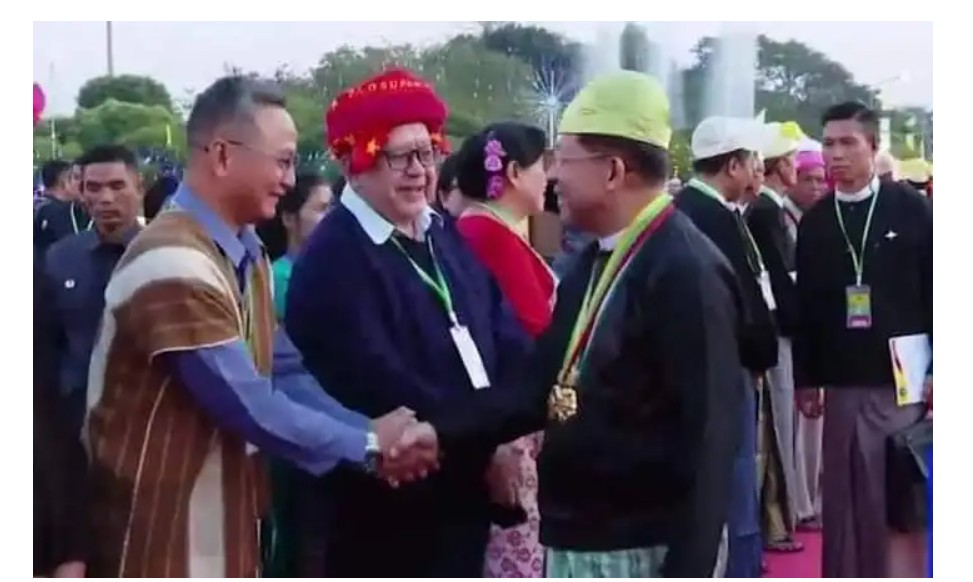
Senior General Min Aung Hlaing and Colonel Khun Okkar (wearing a red headscarf).
He said:“This is essentially the same as saying, in an indirect way, that the Tatmadaw will always remain in parliamentary politics. This is not a good reason. Moreover, even if all armed groups were to say that they are ready to sign agreements to dissolve their organizations, the Tatmadaw would still leave some military representatives in parliament. As long as that remains the case, what are the armed groups supposed to do? That is why this statement carries a negative implication.”
Senior General Min Aung Hlaing has also stated that, based on historical precedents and current circumstances, the Tatmadaw has played a leading role in national politics throughout successive eras and will have to continue participating in a leadership role in national politics.
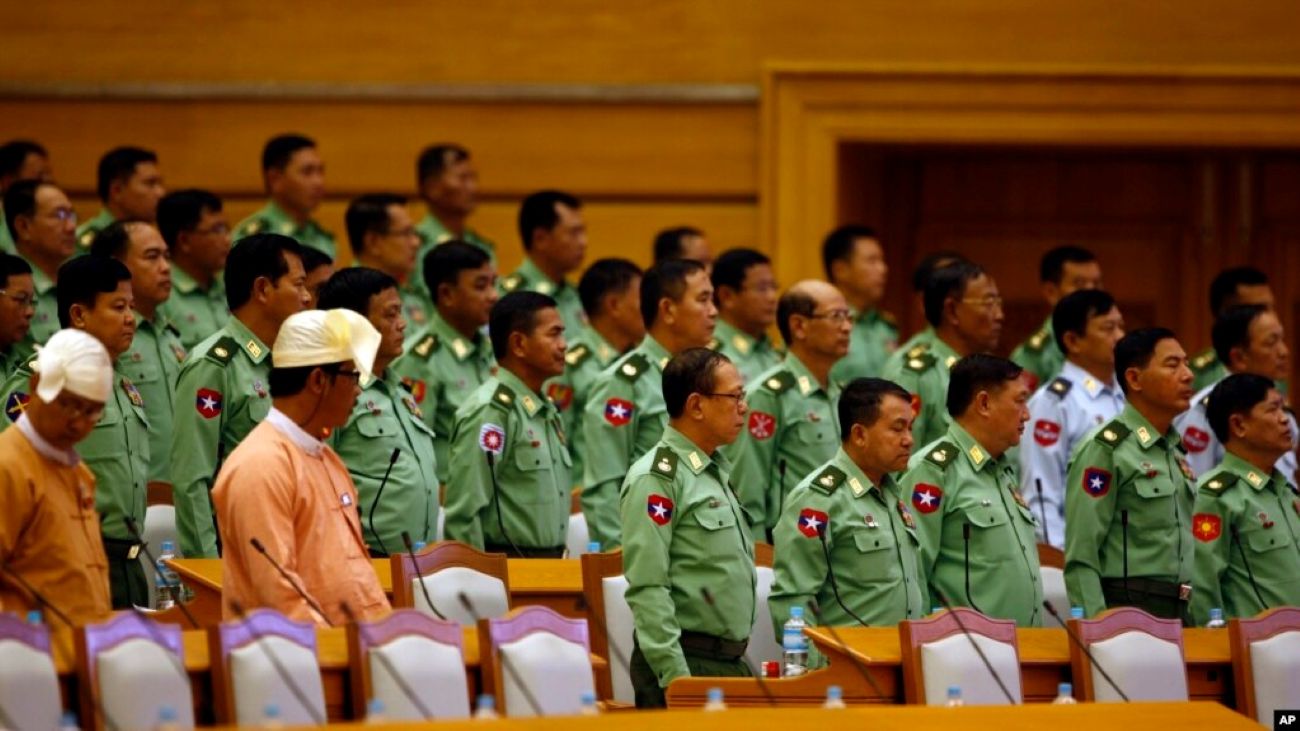
In Myanmar, the Tatmadaw is guaranteed 25 percent of seats—without contesting elections—in the Pyithu Hluttaw (House of Representatives), the Amyotha Hluttaw (House of Nationalities), as well as in regional and state legislatures, under the 2008 Constitution.
Ethnic armed organizations and political parties have called for the withdrawal of these military representatives from parliament or, at minimum, a reduction in their proportion.
Colonel Khun Okkar further said that if there were genuine intent to reduce the Tatmadaw’s participation in parliament, it would be possible only by adopting a policy under which the government and the highest state authority are owned and controlled by an elected civilian government leadership.
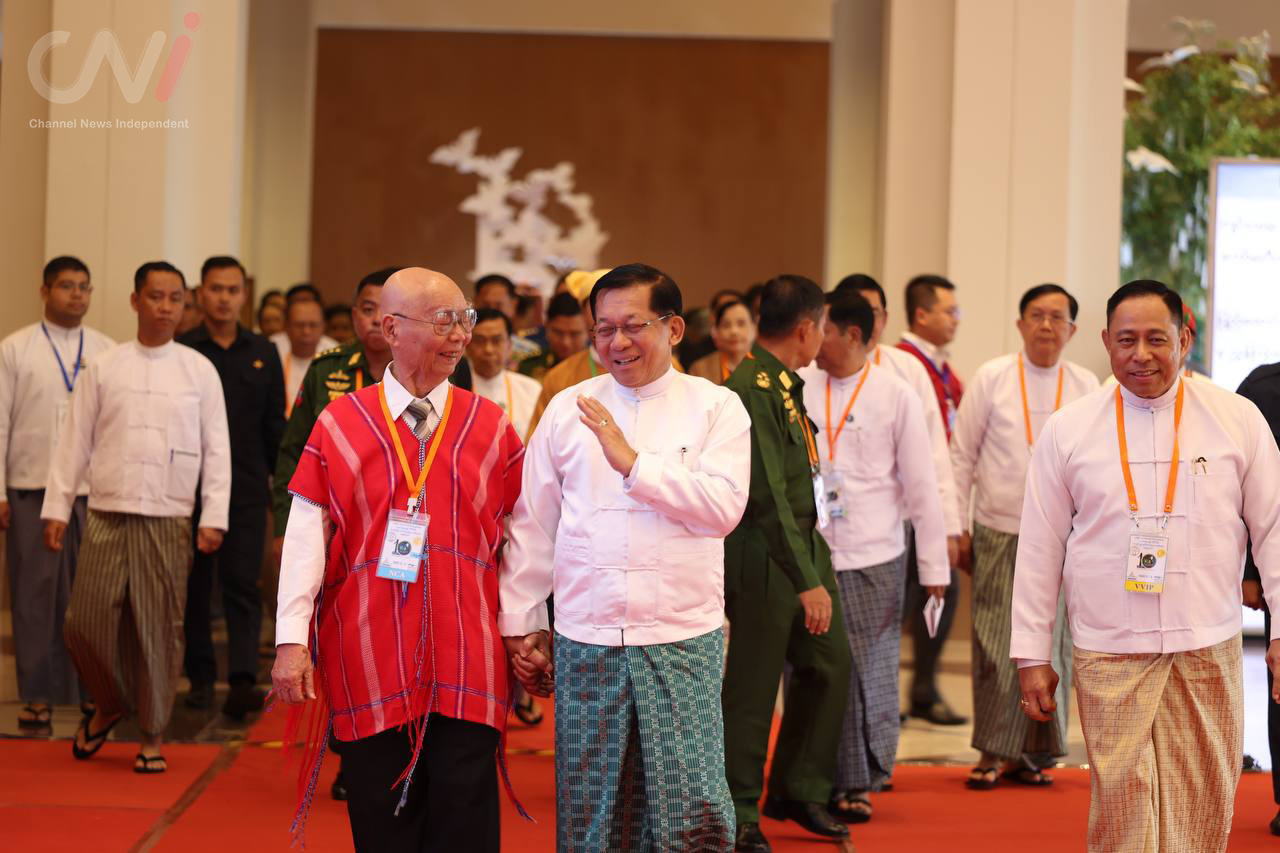
Armed groups and Tatmadaw–government leaders seen together.
He explained:“That is Civilian Supremacy—the principle that the highest authority of the government and the state is held and controlled not by the military, but by civilian leaders. If Civilian Supremacy, which is the essence of democracy under a civilian government, is followed, then all armed forces must come under a civilian Minister of Defense. Under that civilian defense minister, there would be commanders who manage the military. Those commanders would not be directly involved in politics. After retiring from the military and becoming civilians, they could enter politics through a political party and even serve as defense minister if they wish. Under civilian supremacy, the defense minister must be a civilian, and if all armed forces are under a civilian defense minister, then there is no longer a need for the military to participate in parliamentary politics. The army would become a professional army—like the Indian Army, the Nepalese Army, or the Bangladesh Army. Once it becomes a professional army that adheres to civilian supremacy, there is no need for the military to sit in parliament. That is the core policy that needs to be discussed.”
The policy of Civilian Supremacy means that elected civilian governments play the decisive role in political decision-making and the functioning of state institutions, while the military remains under the leadership and oversight of the civilian government in matters of national defense and security.
In other words, it is the principle that political power should be controlled by those chosen by voters, rather than by those who hold guns. This policy is known to be a foundational pillar of nearly all modern democratic countries.