
CNI News
16 December 2025
As questions arise over why the Myanmar military (Tatmadaw) has been unable to exert the same level of pressure on the Kachin Independence Army (KIA) as it has on other ethnic armed organizations, military and political analysts have been examining what makes the KIA distinctive.
At present, fighting has resumed between the Myanmar military and joint KIA–PDF forces in Kachin State, while clashes are also continuing in Sagaing Region.
According to U Khun Sai, who has been involved in peace processes, the KIA is distinctive not only because of its geographical position compared to other regions in Myanmar, but also because it is more skilled diplomatically than other armed groups. He told CNI News:
“The KIA has two or three distinctive features. First, unlike groups such as the ‘Wa’ that rely solely on China, Kachin State lies between India and China. This is a unique geographical position. In other words, it is something China must carefully consider before exerting full, one-hundred-percent pressure. Second, what distinguishes the KIA from most revolutionary forces is that although it is fighting Naypyidaw on one front, it is also constantly engaging in dialogue with Naypyidaw through intermediaries. It is understood that this intermediary role is played by the Peace Talks Creation Group (PCG), which has been active in Kachin State since around the 1990s. The KIA has always pursued this approach—fighting on one side while negotiating on the other. Third, while the KIA cooperates with the NUG and opposition forces, it does not do so officially as the KIO. Instead, it maintains peace as an intermediary framework and engages in joint cooperation through that channel. Because it does not take a position of completely opposing Naypyidaw one hundred percent like some other groups, it has greater room to maneuver.”
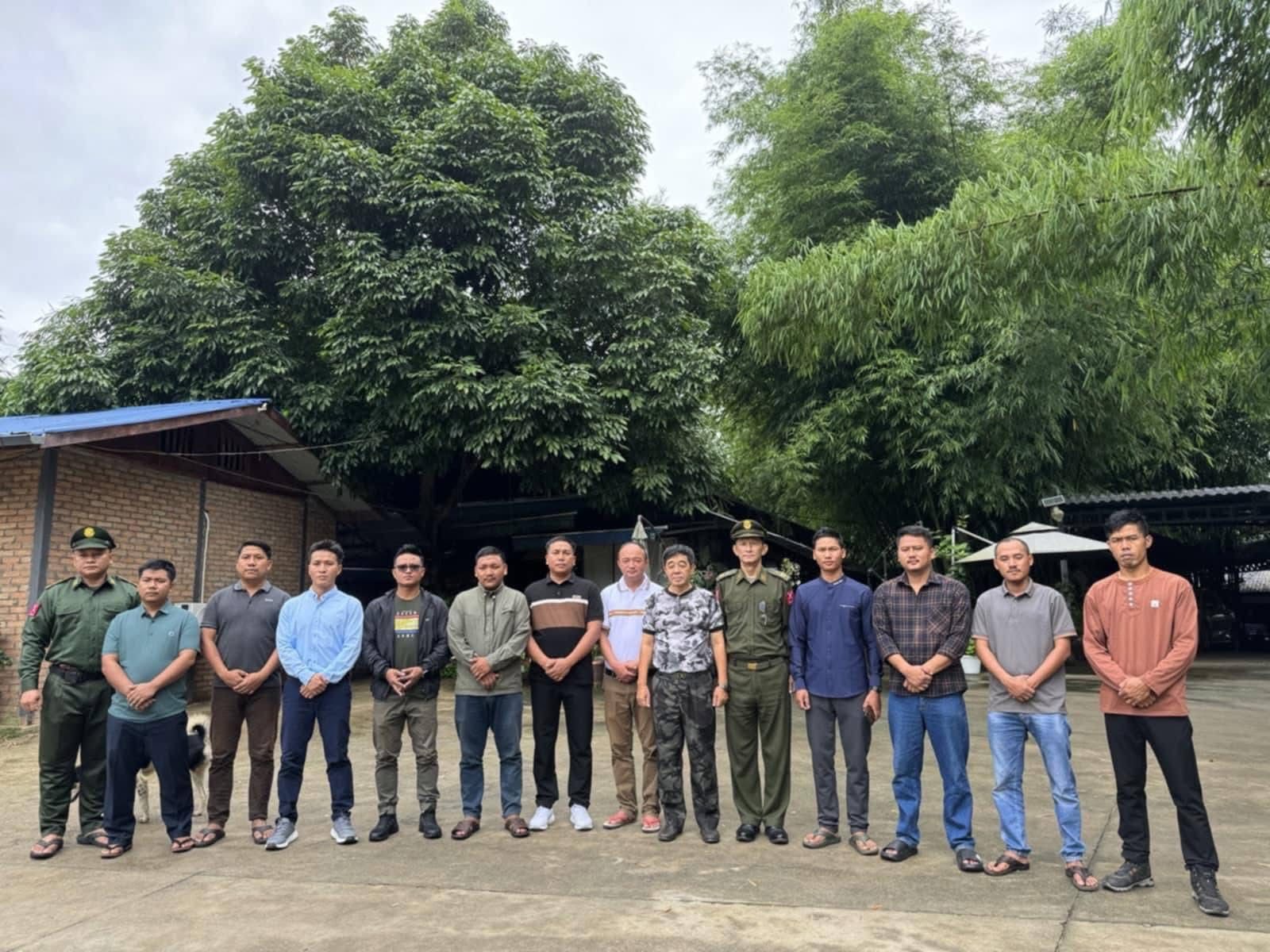
KIA Vice Chair Lt. Gen. Gun Maw meeting with Chin Brotherhood
Currently, among ethnic armed organizations, the Brotherhood Alliance members—the Myanmar National Democratic Alliance Army (MNDAA), the Ta’ang National Liberation Army (TNLA), and the Arakan Army (AA)—as well as the Karen National Union (KNU), have been officially designated as terrorist organizations, while the KIA has not been so designated.
Moreover, since the Spring Revolution began in 2021, the KIA has grown stronger than before and has provided many revolutionary forces with weapons and ammunition, military training, and assistance for living arrangements. It has also supported joint operations in Sagaing Region and Kachin State.
According to Sai Htay Aung, Chair of the Tai-Leng (Shanni) Nationalities Development Party (TNDP), revolutionary forces support the KIA because their own interests are being served. He told CNI News:
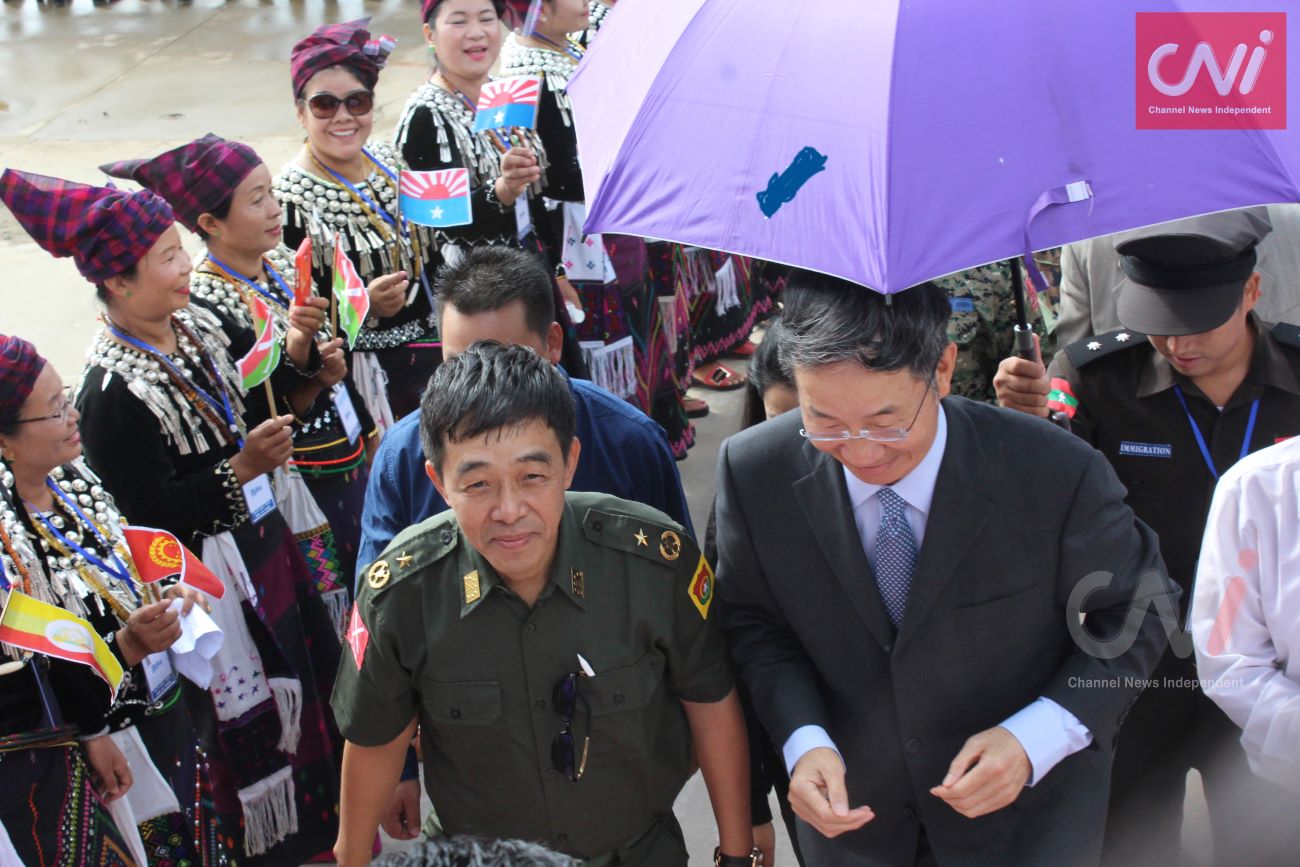
KIA Vice Chair Lt. Gen. Gun Maw meeting with former Chinese Special Envoy to Myanmar, Mr. Sun Guoxiang
“It is understood that during the Spring Revolution, the KIA has granted operating rights in Hpakant—such as jade mining rights—to revolutionary leaders, leaders of the Arakan Army (AA), as well as CNF and Naga armed groups. When tax collection rights are also granted, those groups have little choice but to cooperate with the KIA. If they do not, they would not receive such rights. From an economic and authority standpoint, the KIA maintains control.”
Military and political analysts have also pointed out that the KIA is striving for liberation across Myanmar’s northwestern regions, including Kachin State, Sagaing Region, Chin State, and Rakhine State.
At present, although there are already plans for talks between the Myanmar military and the KIA, the venue for such meetings has yet to be decided.
As a result, analysts note that if some form of accommodation can be reached between the KIA and the Myanmar military, China–India connectivity routes would be beneficial for Myanmar.