
CNI News
15 December 2025
A political analyst told CNI News that for the Myanmar military to regain public trust, it must walk the path of reform and demonstrate tangible changes in practice as a corrective response to the developments that have occurred since 2021.
He said:“The government that emerges from the election will essentially represent political change. If it cannot demonstrate that there is a genuine desire to carry out reforms, then it will not gain public trust or support.How important public support is has already been shown in history during President U Thein Sein’s administration in 2012. It is extremely important. The same issue handled by a government that has public support versus one that does not will not receive the same public response.When a government with public support takes action, public reactions are different. For example, during the NLD government’s term, when electricity meter fees were increased despite already being low, there was no major backlash. But when a similar move was made during U Thein Sein’s administration, protests and public dissatisfaction erupted. That is clear evidence.The current armed conflict exists because the military seized power in 2021. Since that is the cause, it must be corrected. The military has to return to the path of reform. Only if it can demonstrate this in practice will the public regain trust.”
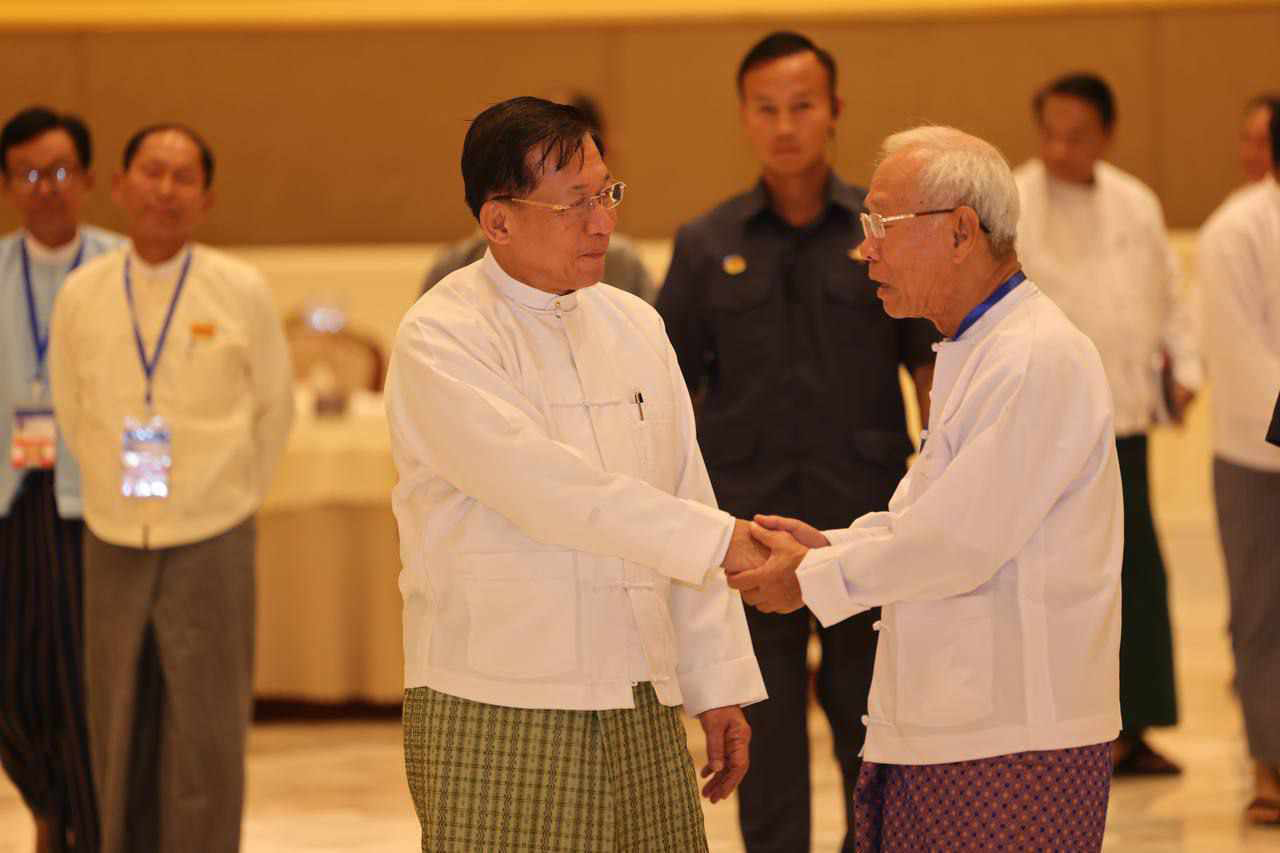
Senior General Min Aung Hlaing meeting with political parties
At present, various analyses are emerging regarding the leadership of the government that will take office after the elections. Political observers believe that Senior General Min Aung Hlaing may continue to hold all three branches of power in their current form.
They also speculate that either U Khin Yi, Chairman of the Union Solidarity and Development Party (USDP), or the current Prime Minister U Nyo Saw could become president, while Senior General Min Aung Hlaing may continue to retain the position of Commander-in-Chief of the Defence Services.
However, military and political analysts view that neither Senior General Min Aung Hlaing nor USDP Chairman U Khin Yi possess the same flexible attitude as U Thein Sein, nor are they likely to actively pursue reforms.
Political analyst Sai Mein told CNI News that if Senior General Min Aung Hlaing continues to concentrate all power in his own hands after the elections, the parliament will merely function as “water in the palm of his hand.”
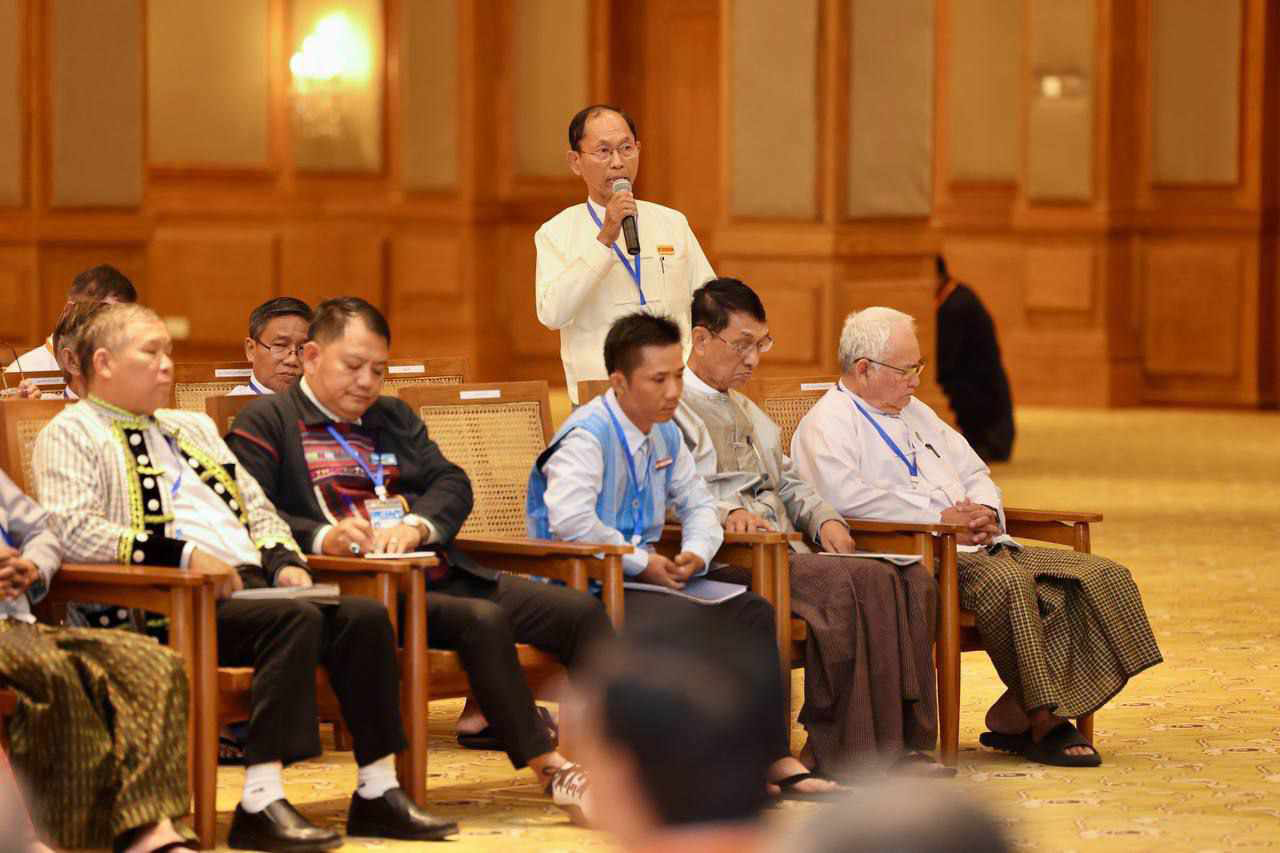
Political parties during a meeting
He said:“After the 2010 election, most people were already able to predict who would become president, and it indeed turned out to be U Thein Sein.But with this election, led by the military, even one month before voting, no one knows who will become president. Most predictions suggest that the military leader, Senior General Min Aung Hlaing, will himself become president, retain the position of Commander-in-Chief, and also remain prime minister—meaning all power would be concentrated in one individual.Even during Senior General Than Shwe’s time, he did not personally assume all leadership positions. Although he controlled power, he handed the presidency to U Thein Sein. But in the current situation, if one person controls everything, it is extremely concerning.Based on what we can observe, no matter how much the parliament is said to have changed, it will still be water in the palm of the military leader’s hand. There are analyses suggesting that the level of change may not even reach 50 percent of what was seen during the U Thein Sein era.”
Analysts further point out that even if a civilian government comes to power after the elections, if it is unable to operate the administrative mechanism normally amid widespread armed conflict, a situation in which power is handed back to the military could re-emerge.
The elections will be held in three phases—on December 28, 2025; January 11, 2026; and in the final week of January 2026. Senior General Min Aung Hlaing has stated that state power will be transferred to the government that emerges from the elections.