
CNI News
8 July 2026
It is estimated that over 10 Ethnic Armed Organizations (EAOs) can be mobilized during the 100-day period offered by the transitional government in Myanmar to hold peace talks, Colonel Khun Okkar, patron of the Pa-O National Liberation Organization (PNLO-NCA/S)—an NCA signatory—told CNI News.
"Compared to five years ago, the current situation feels a bit more negotiable. There is also a sense of moving forward with restraint. This is because inviting and gathering everyone with completely different situations all at once would not produce good results. Therefore, they are meeting with the NCA-signatory groups first. After that, they will meet with the three northern groups that have not signed the NCA but have ceasefire agreements. Then, they will recall the groups that signed the NCA but later withdrew. Only after that will they consider other remaining groups. Through this step-by-step approach, it is estimated that about 14 or 15 groups can be mobilized before the 100-day deadline. I think it will proceed step-by-step. Therefore, the 100-day period does not mean reaching a final, complete resolution. It is more about establishing initial contact within 100 days. It is like starting the process. Once connections are established gradually, discussions will proceed step-by-step," he said.
The peace invitation was extended for a 100-day period from April 20, 2026, to July 31, 2026, following the transition to a government led by President U Min Aung Hlaing.
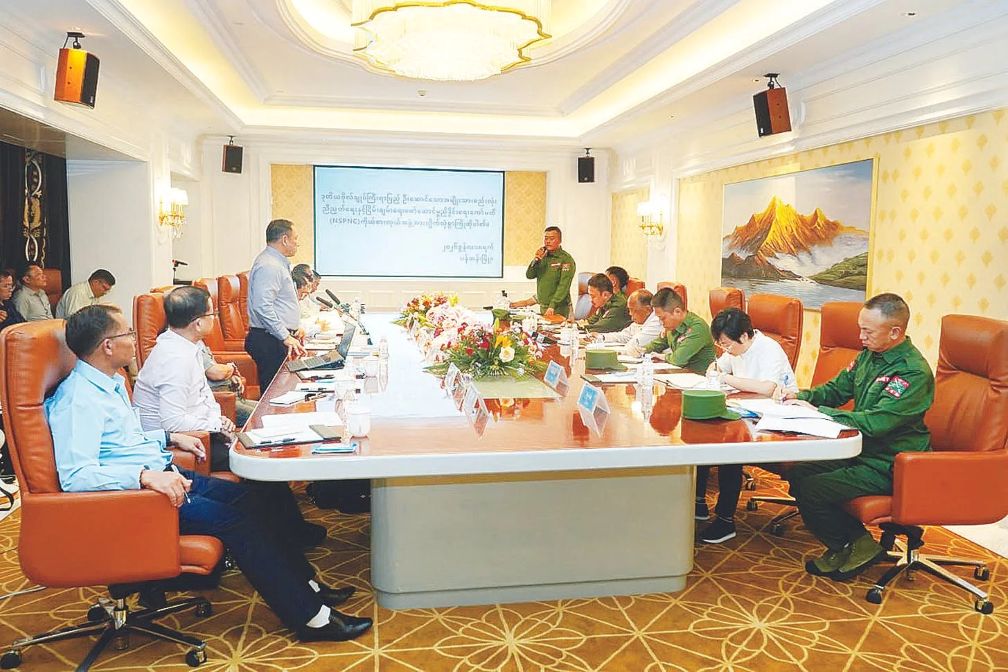
NSPNC and UWSA seen during a discussion meeting.
Since then, the National Solidarity and Peacemaking Negotiation Committee (NSPNC) has held peace invitation talks with several ethnic armed groups.
Kachin politician U Gun Gawng Awng Kham told CNI News that achieving peace depends on all relevant organizations, and that peace will only be achieved if the process moves forward in a way that is free of obstacles for the future.
"From our analysis, peace is not going to be easy. It mainly depends on the key stakeholders, the Burmese military. I believe peace can only be achieved if they take full responsibility, engage in talks on all feasible options, act with genuine accountability, and approach it with a deep, sincere desire for a future free of obstacles. We need it to be a genuine peace. I want to say that everyone shares the responsibility to achieve this. Genuine peace is followed by development, mutual respect, the building of a democratic federal union, and reconciliation. That is why peace is vital for everyone. Therefore, achieving a genuine peace depends entirely on all the relevant and responsible organizations," he said.
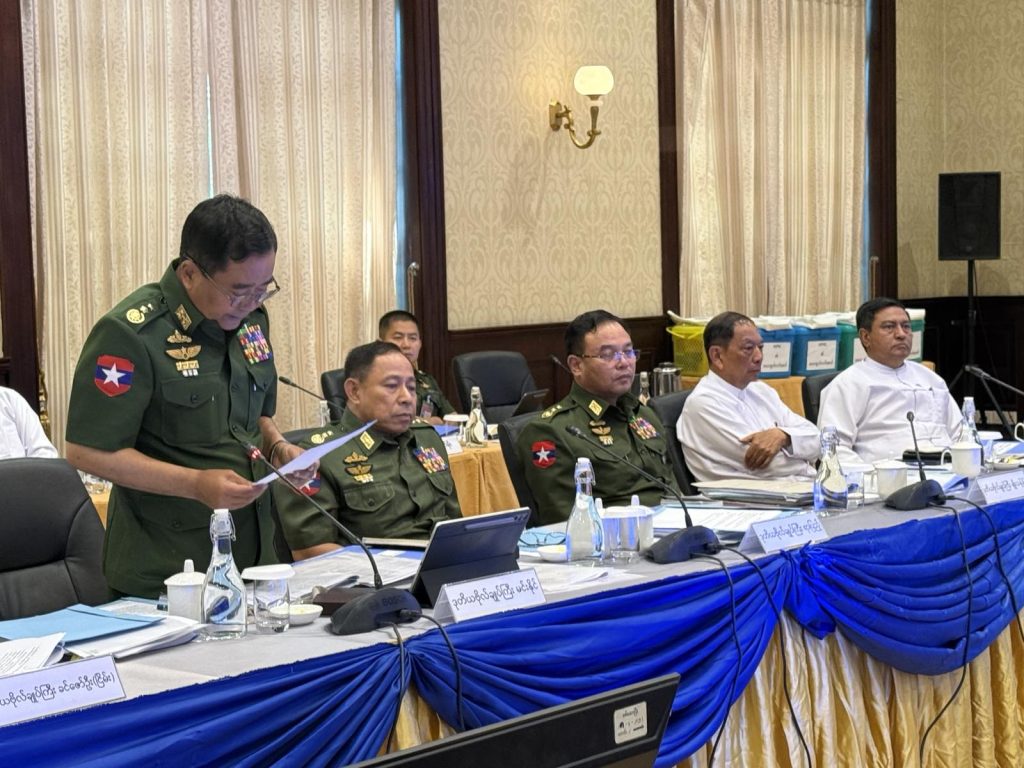
NSPNC representatives seen during a meeting.
Currently, the NSPNC has held separate discussion meetings with several organizations:
June 4, 2026: Shanni Nationalities Army / Shanni Nationalities United Council (SNA/SNUC), June 10, 2026: The 7 EAO Alliance (NCA signatories), June 12, 2026: Shan State Progress Party (SSPP), June 17, 2026: National Democratic Alliance Army (NDAA), June 18, 2026: United Wa State Party (UWSP).
Following these, the NSPNC held further meetings with the New Mon State Party (NMSP) on July 2 and the Karen National Union/Karen National Liberation Army-Peace Council (KNU/KNLA-PC) on July 6.
Similarly, reports have emerged that northern groups have been invited to visit Naypyidaw this coming August to hold peace talks.
Furthermore, it is learnt that the NSPNC is scheduled to meet with several other ethnic armed organizations as well.