
CNI News
2 July 2026
There are differing views among domestic and international political communities regarding whether the peace process being implemented in Myanmar is related to the 2008 Constitution.
Saw Khun Kyaw Win, spokesperson for the Pa-O National Organization (PNO), told CNI News that Myanmar's peace process is not related to the 2008 Constitution.
"Our view is not like that. The mechanism by which our country currently operates is based on the 2008 Constitution. However, I understand that the peace issue is not related to 2008. For instance, when moving towards a democratic federal system, the military, the government, and EAOs (Ethnic Armed Organizations) discuss freely as separate entities outside [the constitutional framework]. Once everyone reaches an agreement, there is the government and the parliament on the path forward, and we can amend it in parliament. If parliament amends it in accordance with the constitution, it can be done. Even though it is the 2008 Constitution, the parliament can modify and amend it. A path for modifications and amendments already exists. Therefore, while it is true that the government currently holds onto the 2008 Constitution to operate the country's mechanism, the peace issue is not related to 2008. It is discussed freely, and once a common consensus is reached, it can be approved and amended in parliament. That is how we understand it," he said.
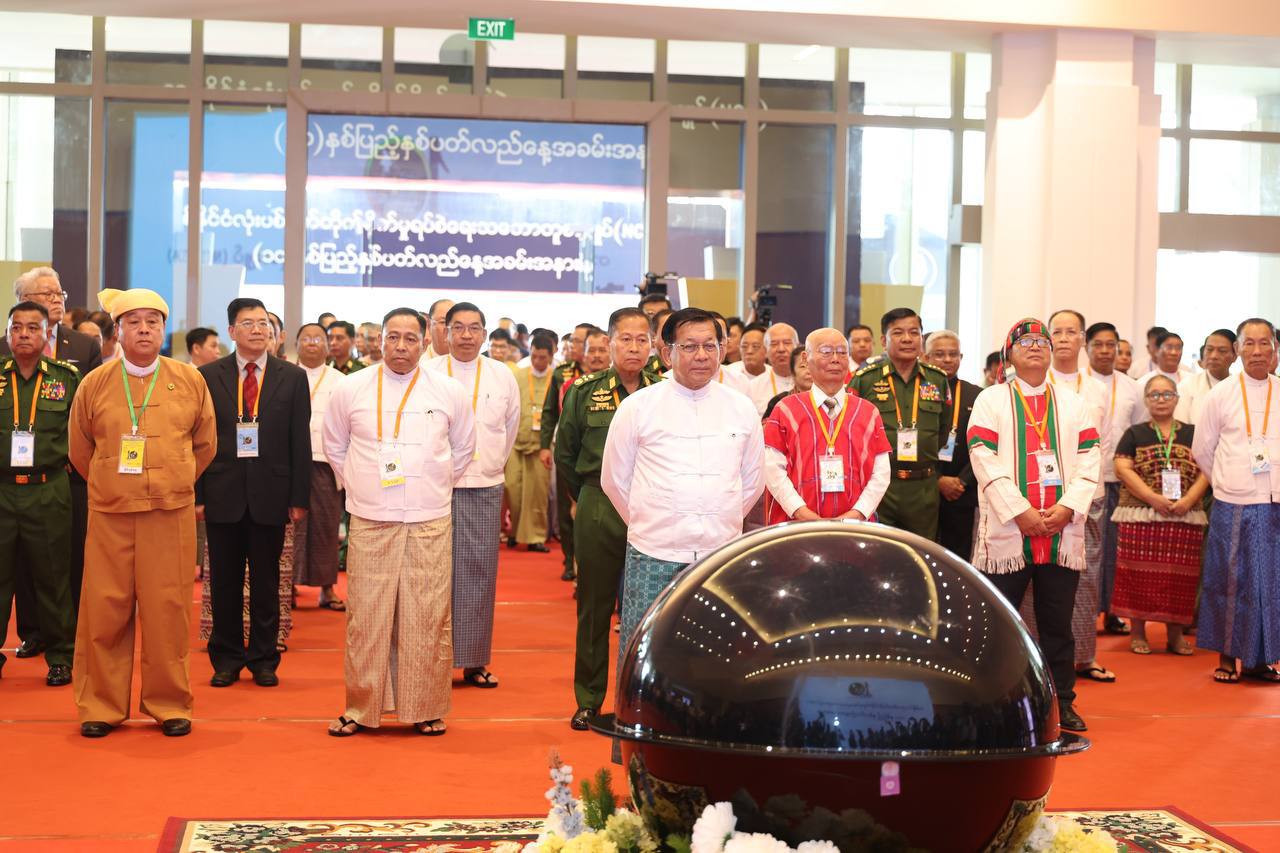
Attendees seen at the NCA anniversary ceremony.
Military and political analysts point out that to resolve the ongoing ethnic armed conflicts and communal conflicts in Myanmar, the specific rights and privileges of ethnic minorities should be explicitly included in the 2008 Constitution.
On the other hand, some ethnic armed organizations desire a political status that goes beyond federalism and is not lower than a confederal level.
Furthermore, they point out that Myanmar's problem is a constitutional one, and a new federal democratic constitution that is acceptable to all parties must be drafted.
U Li Paw Reh, chairman of the Lisu National Development Party (Dulei Party), told CNI News that peace and certain aspects of the 2008 Constitution are directly linked, and peace cannot be achieved unless ethnic issues are taken into consideration when amending the constitution.
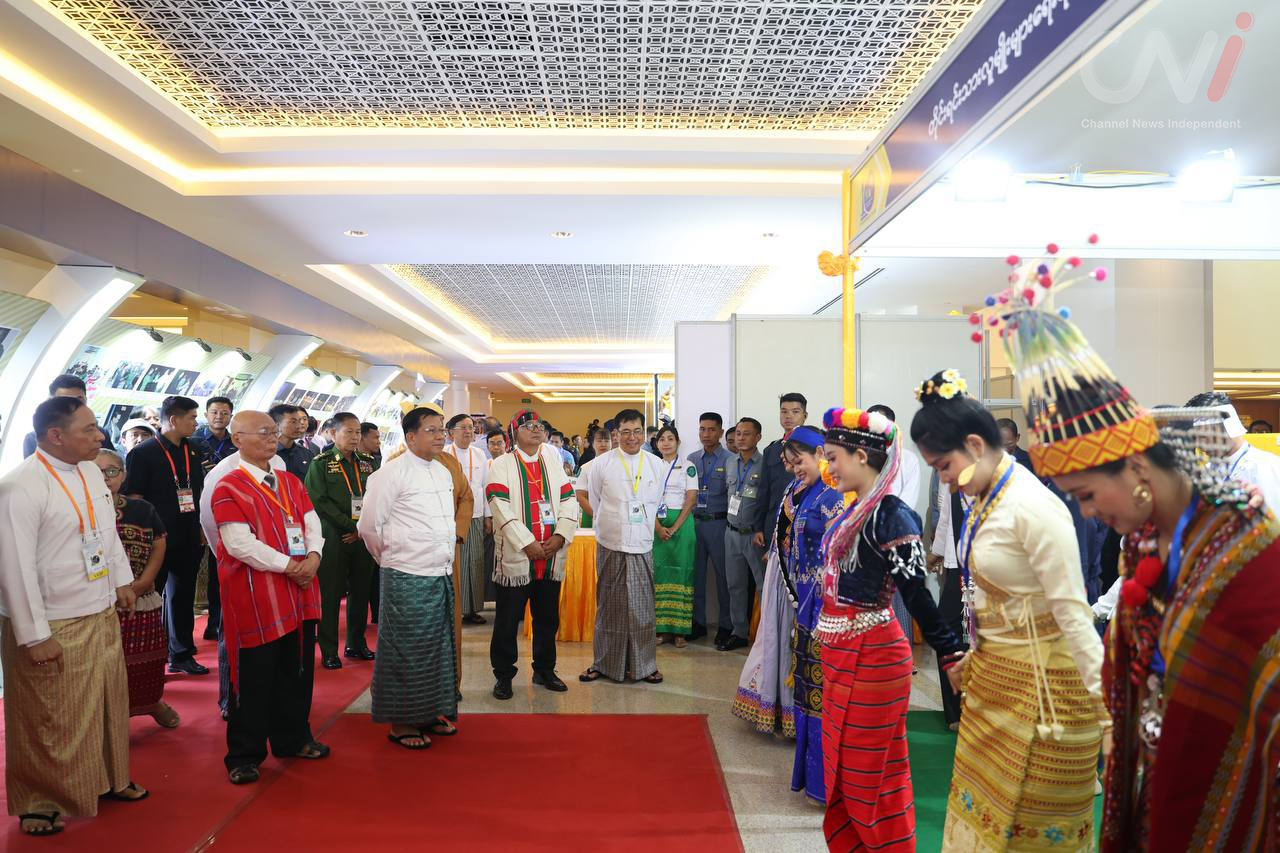
Attendees seen at the NCA anniversary ceremony.
"The main thing is that if the constitution can be amended regarding ethnic nationals, peace will definitely be achieved. However, if other matters are amended in the constitution while ethnic issues are left unconsidered, whether there is satisfaction or not depends on the ethnic armed organizations. Certain parts of the constitution are directly related to peace. In the past, when ethnic armed organizations signed the NCA (Nationwide Ceasefire Agreement), the plan was to amend the constitution based on points agreed upon by everyone at the peace conference in order to reform ethnic rights and privileges. Therefore, some details are directly related to peace," he said.
Political analysts point out that various forms of peace processes carried out by successive governments in Myanmar have failed, and there is a need to consider and implement new methods to achieve peace.
Military and political analysts also analyze that the peace process will not be workable unless the root causes of the conflict—such as political ideologies, historical backgrounds, and doctrinal disputes—are taken into consideration during peace negotiations.
According to Paragraph 22(d) of the NCA, it is agreed to amend, supplement, and repeal laws, including the constitution, as necessary and in accordance with procedures based on the decisions emerging from the Union Peace Conference.