
CNI News
26 June 2026
Myanmar President U Min Aung Hlaing stated that the management of border trade between Myanmar and its neighboring countries is solely the responsibility of the government and does not concern any other organization.
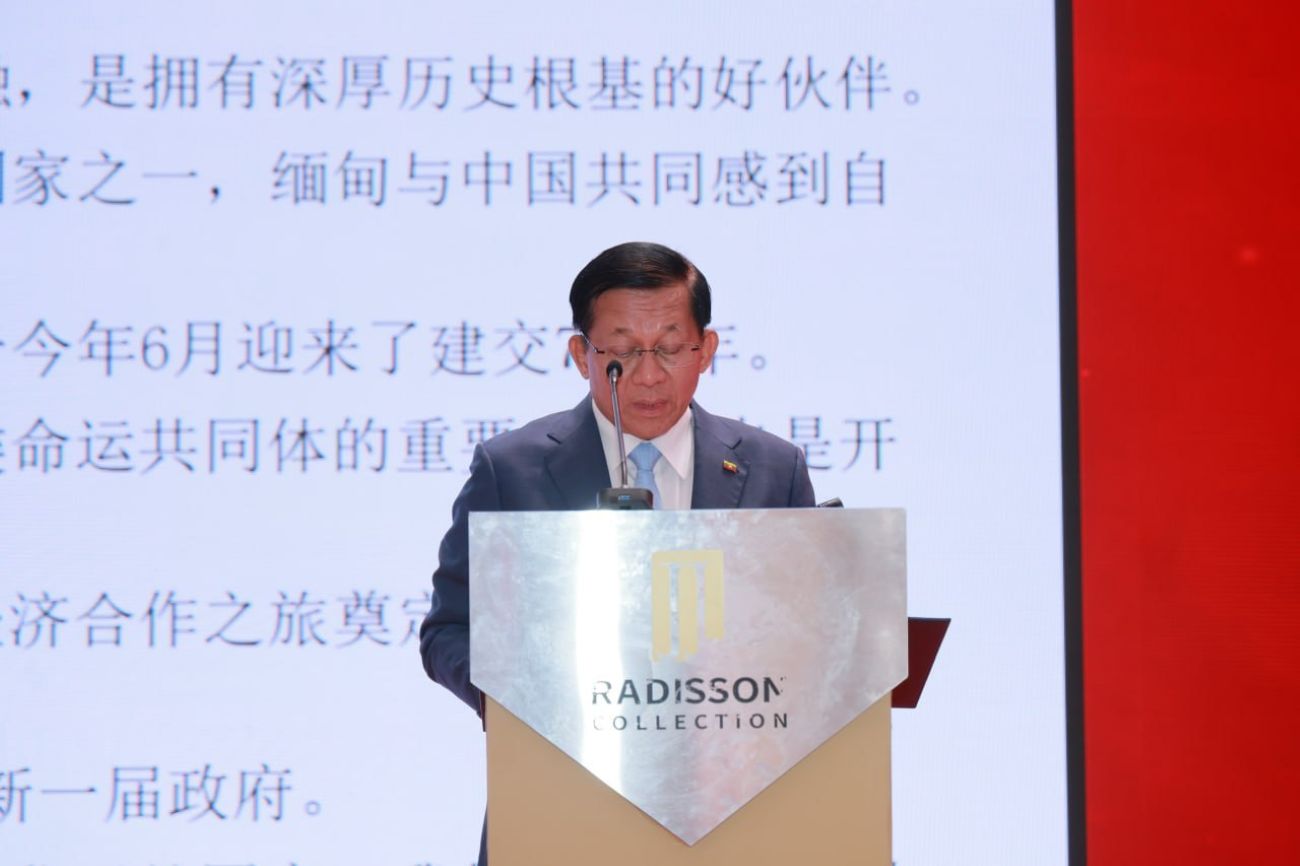
President U Min Aung Hlaing made these remarks during an interview with China's Phoenix Media during his visit to China, adding that efforts are currently underway to ensure border trade operations comply with the law.
He stated, "Border area management concerns only the government. The government must handle it. No other organization can intervene. Similarly, not just border area management, but also issues regarding border trade and bilateral cross-border matters must be handled by the government. We must work to achieve this. We must strive to handle the ongoing issues in accordance with the law."
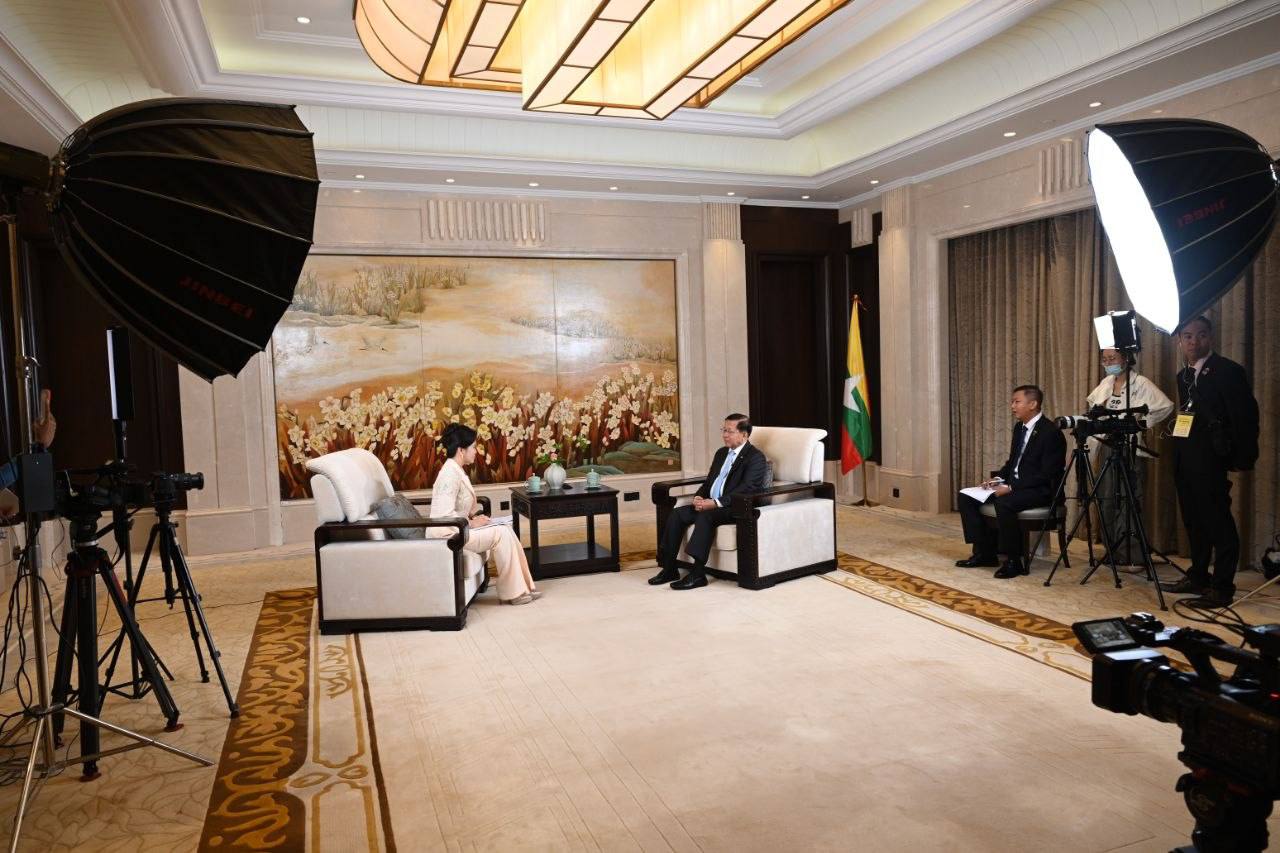
Myanmar President U Min Aung Hlaing during an interview with Phoenix Media
Currently, official border trade in Myanmar has come to a standstill because armed groups control border trade gates and routes, leaving maritime routes as the only option for some trade activities.
Myanmar shares border trade gates with Bangladesh, Thailand, China, and India.
Regarding China-Myanmar border trade, business owners pointed out that under the current circumstances, China's stance is crucial, given the Chinese government's influence over the ethnic armed organizations (EAOs) controlling the border areas.
U Htay Aung Kyi, an economic and banking expert, told CNI News that China-Myanmar border trade will only improve once an acceptable solution is reached among the Myanmar government, China, and the ethnic armed organizations.
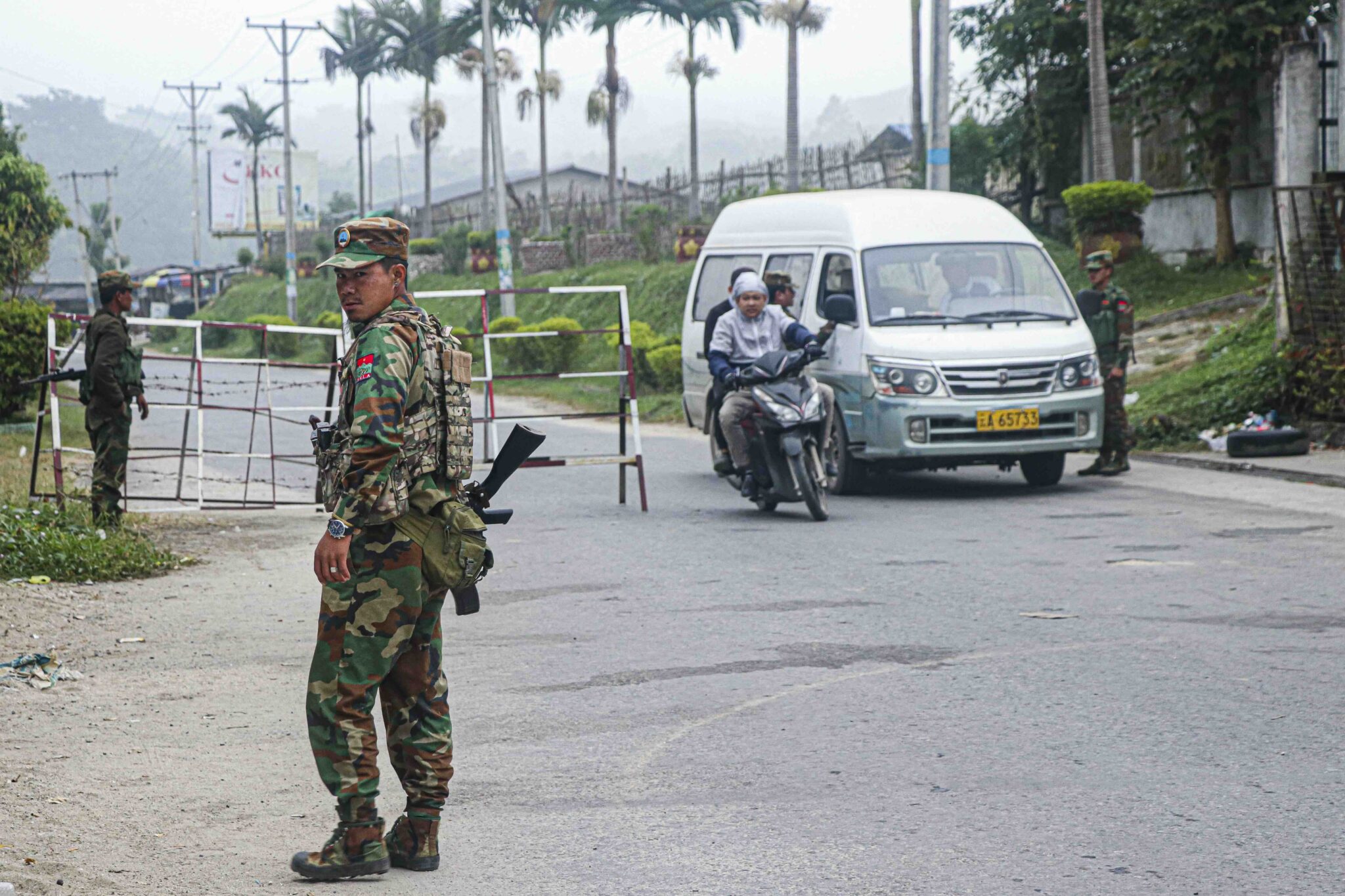
TNLA members seen at a checkpoint in Namhkam, a town on the Myanmar-China border, on November 10, 2023. (Photo: AFP)
He said, "According to the existing 2008 Constitution, the governing authority must be the government. This includes the border trade sector. Therefore, if the government is not the governing authority, it won't work out. Saying the government is the governing authority refers to the country as a whole, not just speaking in favor of the government side. It is unnatural for ethnic armed groups to intervene, manage, and collect taxes in border trade. So, how will they negotiate to prevent such a situation? In my view, China's stance has become crucial at this time. How will China help mediate? Currently, China holds more influence over them than the Myanmar government. Therefore, China's attitude is important. Another factor is the broad-mindedness of the ethnic armed groups. It is a fact that the government is the governing authority. They need to accept this. There needs to be a method to make them accept it. If so, border trade—especially trade with China—will return to how it was before."
Regarding border trade in Myanmar, some ethnic armed organizations are reportedly demanding a share of customs revenue. It is understood that the KNU has requested 10 percent in Thailand-Myanmar border trade, while the MNDAA and TNLA have requested 30 percent in China-Myanmar border trade.
However, political and economic analysts point out that allocating tax percentages between the government and ethnic armed groups in border trade would amount to the government recognizing the armed groups. Therefore, the government is unlikely to engage in such a compromise.