
CNI News
23 June 2026
Despite Myanmar being rich in natural resources, it remains a poor country. Furthermore, questions have been raised among the public as to why the ethnic regions where these natural resources originate are experiencing a lack of development.
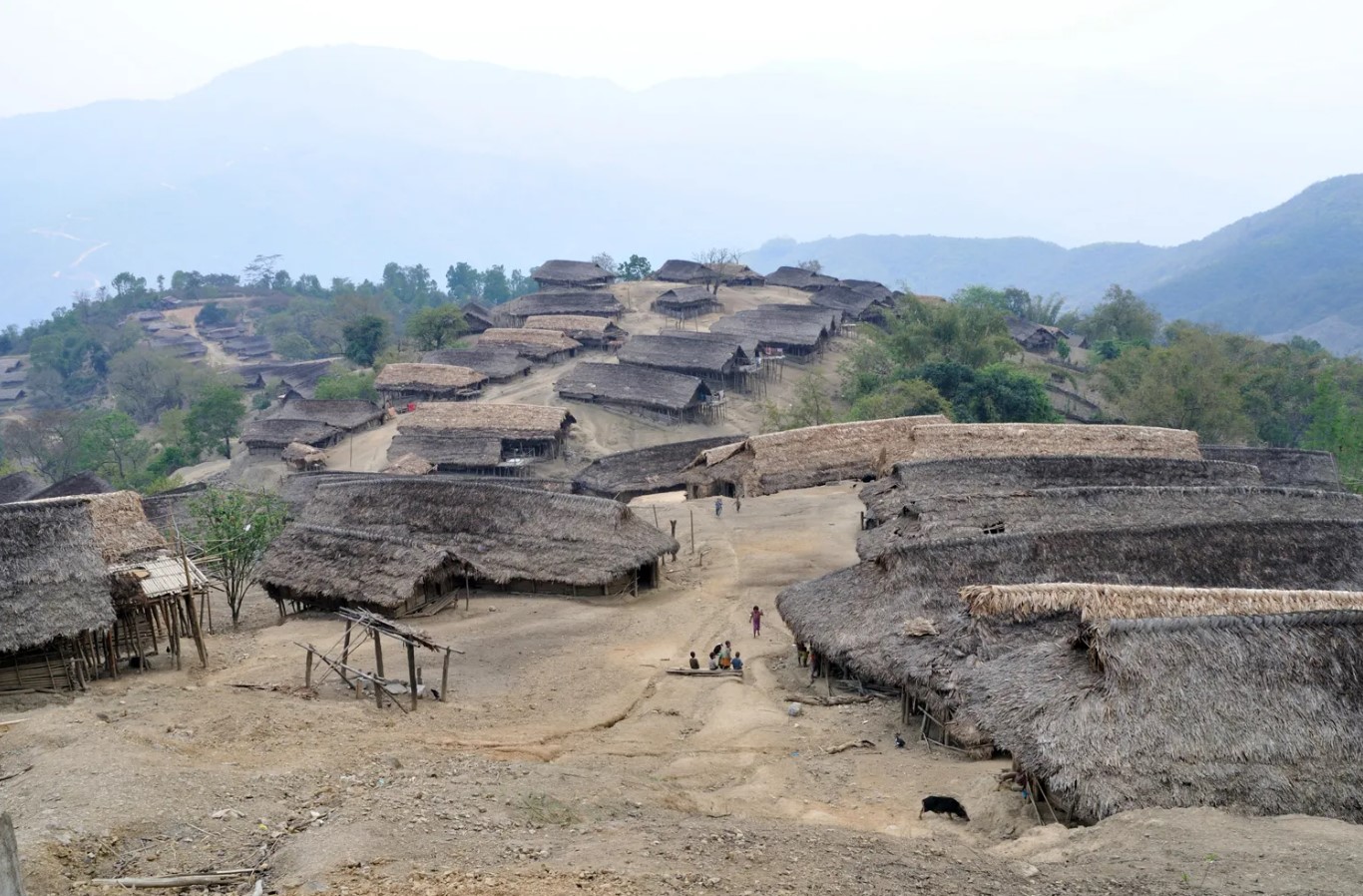
In non-Bamar ethnic state regions, healthcare, education, economy, electricity supply, and living conditions for the public are not only underdeveloped but are also deteriorating year after year.
Daw Saw Mra Rar Zar Lin, Chairperson of the Arakan Liberation Party (ALP), told CNI News that this situation is due to regional instability and armed conflicts, which force money to be spent only on battles, leaving them unable to carry out regional development.
"In the past, Myanmar was famous as an 'Asian Tiger'. However, after gaining independence, civil war came along with it. Battles are happening everywhere. If battles are ongoing, peace cannot be achieved. A country can only develop when there is peace. Only with peace will international investment flow into Myanmar. International visitors will know more about Myanmar when they visit, and when tourists arrive in different areas, locals can generate funds, among various other benefits. For that to happen, peace needs to be achieved as quickly as possible. A country will develop only when it is peaceful. If it is not a peaceful country and battles continue, I see that the people of Myanmar will face many difficulties. The reason for the lack of development is that a vast amount of money and human resources have to be used in battles. Revolutionary organizations also have to spend the money they obtain on battles. The state government also has to spend an enormous amount of money on the war. Therefore, I want to say that it delays and slows things down immensely," she said.
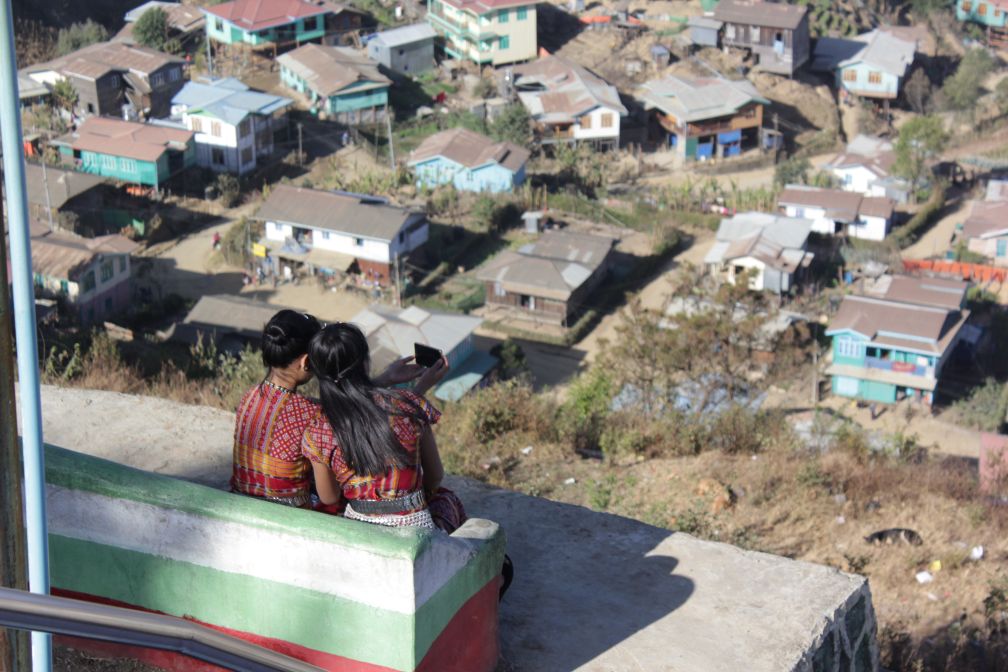
Hakha town in Chin State.
Although it is said that regional development is lacking due to armed conflict, self-administered zones like Naga, Danu, and Pa-O—where no active battles are taking place—are also found to be weak in development.
Political analysts pointed out that because these zones are located within Shan State and Sagaing Region, they only receive financial allocations through the budget shares of Shan State and Sagaing Region, and they do not receive governing authority commensurate with being a self-administered zone, making them unable to carry out development projects.
Furthermore, it is known that under successive past governments, tenders were invited to construct dirt roads in the Naga Self-Administered Zone using regional funds, but no companies purchased the tenders due to the difficult transportation access within the region.
This is because the Naga region experiences heavy rainfall and is a difficult area for transportation, making it impossible to travel on roads during the rainy season to transport project materials. Communication difficulties when presenting completion percentages also cause delays in withdrawing funds, leading to numerous obstacles in conducting operations.
A political analyst also told CNI News that the underdevelopment is due to political instability, government instability, the occurrence of armed conflicts, and the weakness of the rule of law.
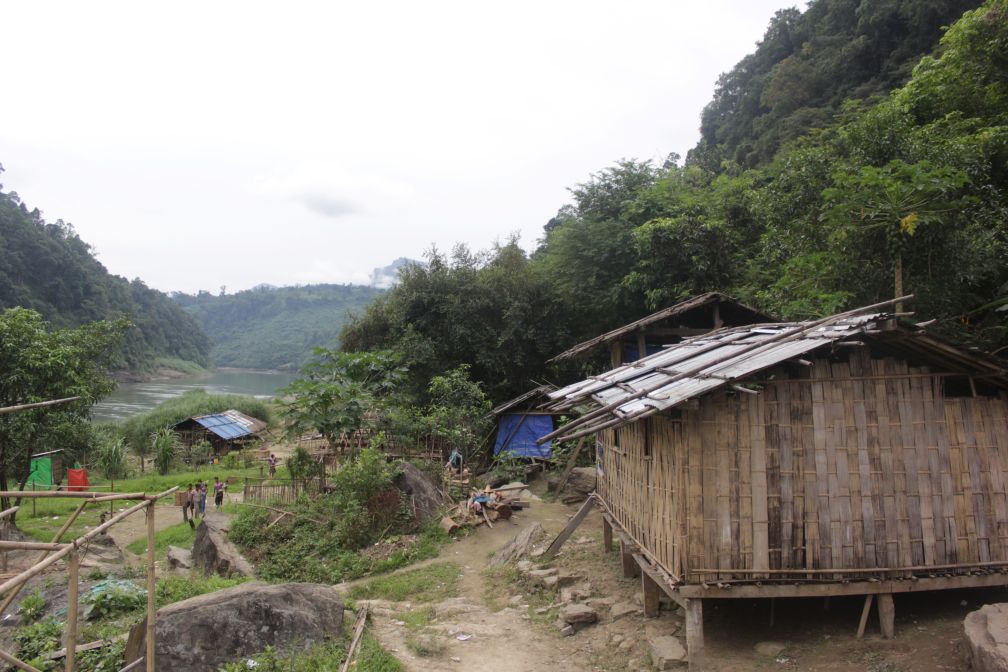
Some residential houses are seen beside the Kaladan River.
"The main thing is state stability and peace. When talking about state stability and peace, it includes all aspects. Speaking of stability, a government that comes into power through elections also needs to have the capacity to accept changes resulting from elections. This is also stability. Another thing is for armed conflicts to cease. And another thing is the need for the rule of law," the analyst said.
Experts point out that the primary requirements for the development of most regions in Myanmar are political stability and the cessation of armed conflicts. It is also essential to actively support and promote the education and health sectors, transportation, basic infrastructure, technology, and vocational sectors.
Currently, due to armed conflicts in Myanmar, the country is found to be the least developed nation among the 11 ASEAN countries.